Our system will evaluate the answer based on this AI-generated description.
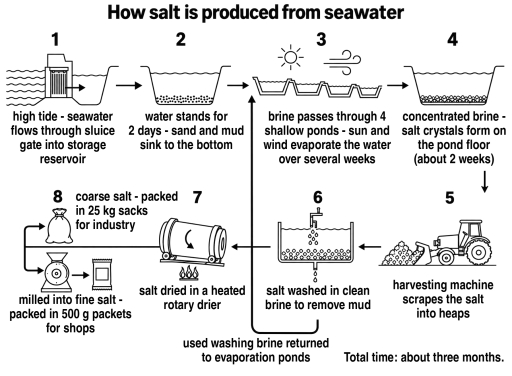
The image features a process diagram titled "How salt is produced from seawater" detailing an 8-step cycle, concluding with a note stating "Total time: about three months." Step 1 shows "high tide - seawater flows through sluice gate into storage reservoir". In step 2, "water stands for 2 days - sand and mud sink to the bottom". In step 3, under sun and wind icons, "brine passes through 4 shallow ponds - sun and wind evaporate the water over several weeks". In step 4, "concentrated brine - salt crystals form on the pond floor (about 2 weeks)". In step 5, a "harvesting machine scrapes the salt into heaps". In step 6, "salt washed in clean brine to remove mud", with a return arrow labeled "used washing brine returned to evaporation ponds" feeding back into step 3. In step 7, "salt dried in a heated rotary drier". In step 8, the product diverges into two paths: "coarse salt - packed in 25 kg sacks for industry" and "milled into fine salt - packed in 500 g packets for shops".
Given the complexity of the image, the above description may not be entirely accurate.
Skyrocket your IELTS band score by 1-2 points in under a month with our premium plan!
Note: Both the topic and the answer were created by one of our users.
This diagram illustrates the process of which seasalt is made from seawater, from its initial collections straight from the sea to the packaging of the finished product.
Overall, the process consists of eight different stages and takes approximately three months to complete. It starts with water being collected into the storage reservoir and ends with the production of two different types of salt for various purposes.
Initially, seawater enters a storage reservoir through a sluice gate during high tide. It is then left in there for two days, allowing for sand and mud to settle at the bottom. Subsequently, the remaining brine passes through four shallow ponds, where the sun and wind gradually evaporates the water over several weeks. After approximately two weeks, salt crystals form on the bottom of the pond.
After that, a harvesting machine collects the salt and transfers it into heaps. The harvested salt is then washed with clean brine to remove any remaining mud and degree before being dried in a heated rotary drier. Finally, the dried salt is packaged into 25 kilogram sacks for industrial use. Alternatively, it is milled into fine salt and packaged in 500 gram packets for sale in shops. The brine used in the washing process is then returned to evaporation ponds.
Word Count: 212
