Our system will evaluate the answer based on this AI-generated description.
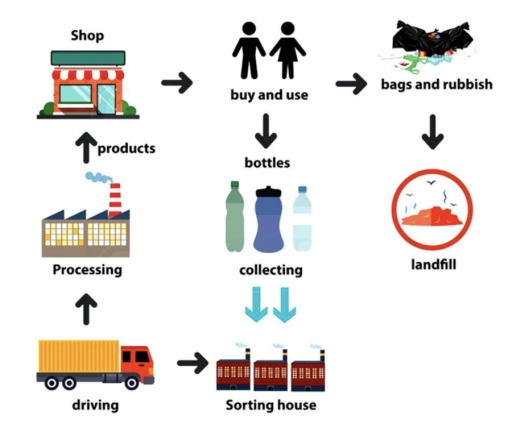
The image shows a diagram representing the lifecycle of a product from the shop, through processing, driving, a sorting house, collecting bottles, and use by individuals, to the final stage of becoming bags and rubbish in a landfill. The initial step depicts a shop selling products, followed by a man and woman icons representing the stage of buying and use. The next depiction is a black garbage bag with discarded items, symbolizing the transformation into bags and rubbish. A factory portrays the processing stage, while a truck signifies the transportation or driving phase. A graphic of a building with multiple windows indicates a sorting house, and a series of bottles symbolizes the collecting stage. Finally, a circular arrow encloses an image of a landfill, marking the end of the product lifecycle. No numerical data points, percentages, or specific country/category/year information is present.
Given the complexity of the image, the above description may not be entirely accurate.
Skyrocket your IELTS band score by 1-2 points in under a month with our premium plan!
Note: Both the topic and the answer were created by one of our users.
This illustration depicts the plastic recycling process. Overall, smaller plastic items and bags are discarded in landfills, while some plastic products, such as bottles, are recycled after use. The recycling procedure for gathered plastic garbage is described in the paragraphs that follow.
At first, recyclable plastic garbage that has been collected is brought to a sorting plant. After being divided into groups according to colour, shape, and size, the plastics are then temporarily held in the facility’s warehouse until they are moved on to the following step of the procedure.
The sorted plastics are then driven by trucks to the location of the last processing step. Once at the factory, which is specifically designed for processing plastic trash, the plastics are subjected to heat to cause melting. After being melted, the plastics are reshaped into new products. These three steps result in plastic bottles being transformed into new products which are then offered to customers through retail establishments.
Word Count: 158
