Our system will evaluate the answer based on this AI-generated description.
The image shows a bar chart titled "People who ate five portions of fruit and vegetables per day" with three categories: Men, Women, and Children, represented over the years 2001 to 2008. The percentage of men who ate five portions ranged from just over 20% in 2001, dipping to just below 20% in 2002, rising to about 25% in 2003, falling slightly in 2004, then increasing steadily to just over 25% in 2005, just under 30% in 2006, just over 30% in 2007, and reaching almost 35% in 2008. The percentage of women was consistently the highest, starting at just under 30% in 2001, rising to just over 30% in 2002, increasing sharply to nearly 35% in 2003, dropping slightly in 2004, then jumping to almost 40% in 2005, falling back to just over 35% in 2006, rising to nearly 40% again in 2007, and reaching 40% in 2008. The percentage of children eating five portions started at just over 10% in 2001, increased to about 15% in 2002, remained stable in 2003, rose to just over 20% in 2004, dropped back to just under 20% in 2005, increased to about 25% in 2006, remained stable in 2007, and rose to just under 30% in 2008.
Given the complexity of the image, the above description may not be entirely accurate.
Skyrocket your IELTS band score by 1-2 points in under a month with our premium plan!
Note: Both the topic and the answer were created by one of our users.
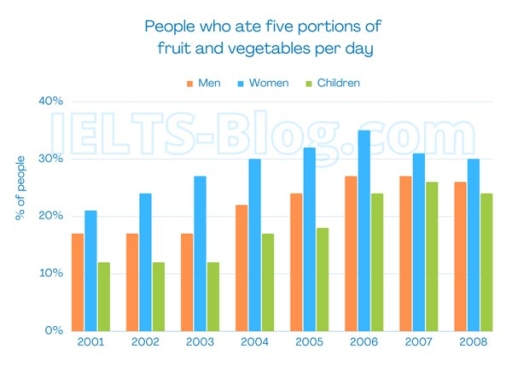
The bar graph illustrates the proportion of men, women, and children consuming five portions of fruit and vegetables daily in the UK over the course of 8 years, culminating in 2008.
Overall, the highest rate of people eating five portions of fruit and vegetables daily belonged to women throughout the entire period. Notably, an upward trend was seen across all demographics during the same time frame.
In 2001, slightly more than 20% women followed this diet, 5% more than men and double that of children. Subsequently, the percentage of women consistenly rose over next three years to nearly 30%, while the figures for men and children remained unchanged.
Thereafter, the number of women who opted for this diet increased to a peak of approximately 35% in 2006 before declining to 30% two years later, still ranking first. The proportion of men followed a similar trend, but less pronounced, with the highest figure being above 25% in the same year and slightly decline at the end of the period. Meanwhile, children witnessed a dramatic growth to around 30% in 2005, surpassing the figure for men in 2004 and ending with about a quarter, almost the same as the rate for men.
Word Count: 200
