Our system will evaluate the answer based on this AI-generated description.
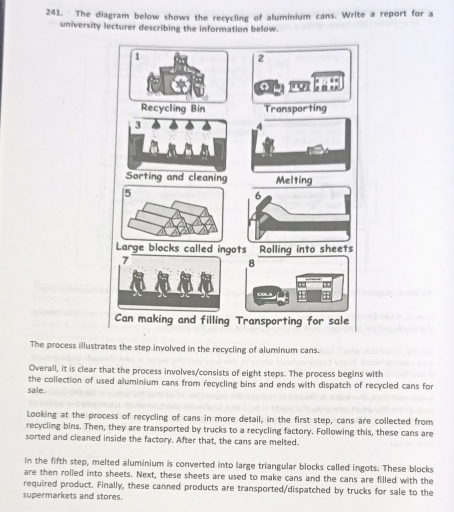
The image shows a process diagram with eight steps in the recycling of aluminum cans. Step 1: Recycling Bin; Step 2: Transporting; Step 3: Sorting and cleaning; Step 4: Melting; Step 5: Large blocks called ingots; Step 6: Rolling into sheets; Step 7: Can making and filling; Step 8: Transporting for sale. The process begins with the collection of used aluminum cans from recycling bins and ends with the dispatch of recycled cans for sale. In the first step, cans are collected from recycling bins, then transported by trucks to a recycling factory. After sorting and cleaning, the cans are melted into sheets. Next, the melted aluminum is converted into large triangular blocks called ingots, then rolled into sheets. Finally, these canned products are transported/dispatched by trucks for sale to supermarkets and stores. The diagram also includes graphical representations of each step, including images of recycling bins, trucks, factory processes, and supermarkets.
Given the complexity of the image, the above description may not be entirely accurate.
Skyrocket your IELTS band score by 1-2 points in under a month with our premium plan!
Note: Both the topic and the answer were created by one of our users.
The provided process illustrates the various stages involved in recycling of used aluminium cans.
Overall, the entire process consists of eight distinct sequential steps, starting with the collection of waste cans in recycling bins and ending in the transportation of newly manufactured products to stores for sale.
In the initial stage of the sequence, discarded aluminium cans are gathered from recycling bins and transported via garbage trucks to specialized recycle plant. Following this, the old cans undergo through automated sorting and cleaning process to remove waste materials. After fully cleaned, the empty aluminium cans are heated and completely melted inside a large heating machine.
Subsequently, the melted metal is transformed into massive blocks known as ingots. These thick ingots are further rolled out using heavy machinery to produce thin sheets of metal. In the final phase, these aluminium sheets are used to manufacture completely new cans, which are filled with beverages. Eventually, the products are distributed across markets for sale.
Word Count: 160
