Our system will evaluate the answer based on this AI-generated description.
The image shows a horizontal bar chart comparing leisure activities between 1995 and 2010. In 2010, Cooking is around 8, Art is approximately 2, Watching TV or DVDs is about 30, Games (not computer or card) is roughly 8, Cards is close to 6, Computer games is around 18, Reading (Internet materials) is about 8, Reading (books) is around 12, Stamp collecting is roughly 1, Playing a musical instrument is about 6, Sport (not swimming) is around 10, and Swimming is roughly 15. In 1995, Cooking is around 5, Art is approximately 3, Watching TV or DVDs is about 25, Games (not computer or card) is around 18, Cards is close to 5, Computer games is roughly 4, Reading (Internet materials) is about 1, Reading (books) is around 8, Stamp collecting is approximately 7, Playing a musical instrument is about 5, Sport (not swimming) is roughly 10, and Swimming is about 2.
Given the complexity of the image, the above description may not be entirely accurate.
Skyrocket your IELTS band score by 1-2 points in under a month with our premium plan!
Note: Both the topic and the answer were created by one of our users.
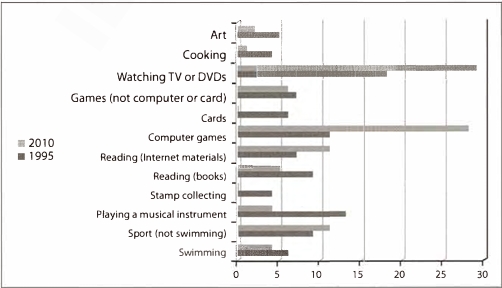
The horizontal bar chart illustrates how freetime activities made by young people in California, USA.
Overall, several changes are represented in the chart, particularly in watching TV or DVDs and computer games. While these two categories received high popularily among children in California, some certain activities, including arts, cooking, and stamp collecting, gained lower attention from young people.
In 1995, watching TV or DVDs was the highest preferenced activities among children in their freetime, at over 15% of them do this . The second highest category was computer games, accounting for over 10%. On the other hands, stamp collecting and cards were two types of activity, which approximately 5% favoured to do in leisure time.
By 2010, although the top hobby remained watching TV or DVDs, at around 28%, children played computer games dramatically increased as the second highest activity, reaching at over 25%. Notably, stamp collecting and cards were two type of activities, distracting attention from children in California.
Word Count: 160
