

Part 1
You should spend about 20 minutes on this task. Write at least 150 words.
Part 2
You should spend about 40 minutes on this task. Write at least 250 words.
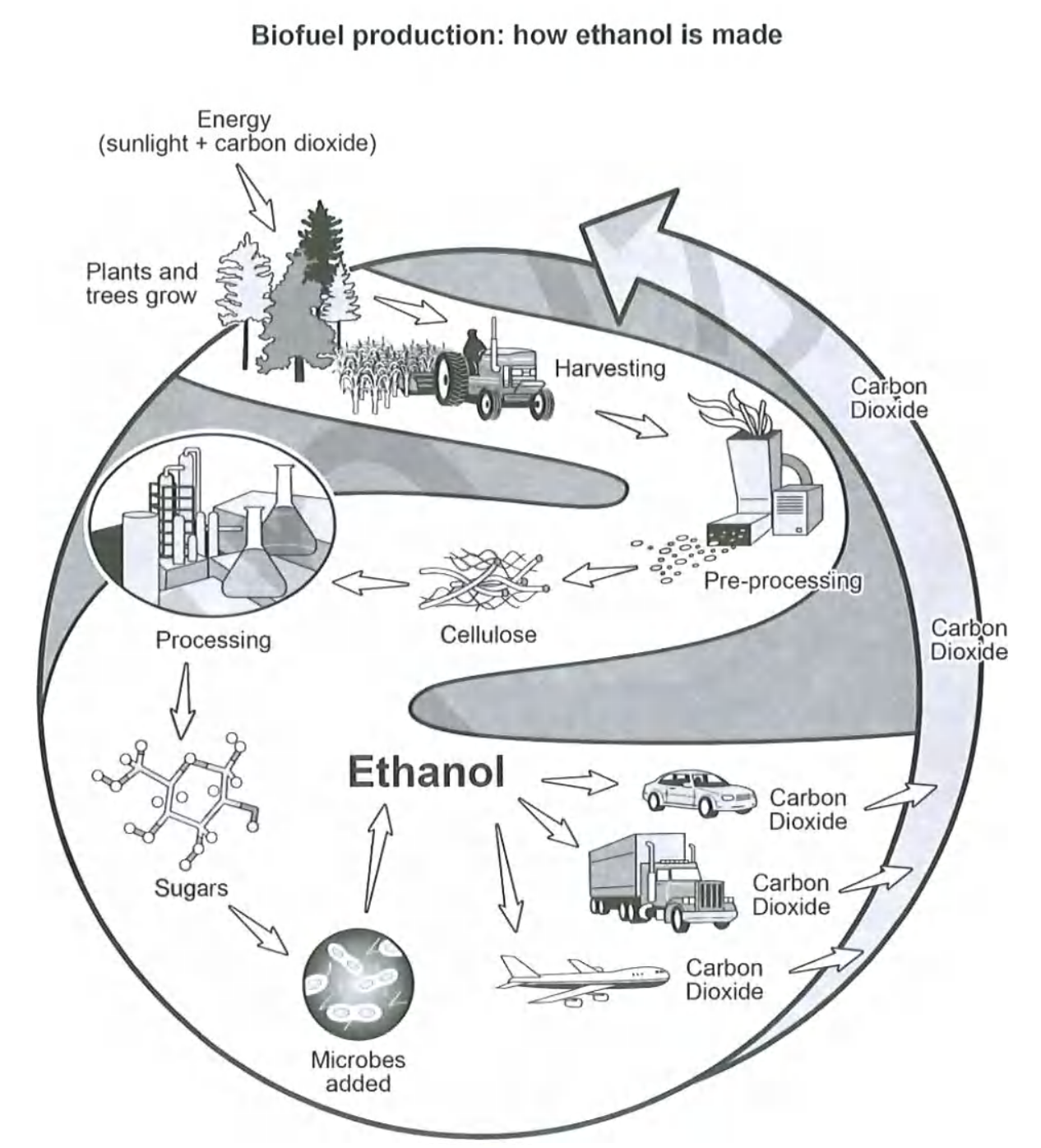
The diagram below shows how a biofuel called ethanol is produced.
Summarise the information by selecting and reporting the main features, and make comparisons where relevant.
Samples
Words: 0
It is important for everyone, including young people, to save money for their future.
To what extent do you agree or disagree with this statement?
Samples
Words: 0
Saving money is an essential practice for the majority of people’s future, regardless of age. I strongly agree with the statement because financial well-being can reassure people to enhance their motivation, and management skills can nurture their own self-discipline. This essay will examine the reasons with relevant examples. One major factor is that saving money can contribute to reducing individuals’ financial stress since it can broaden their choices widely. This implies that financial stability heightens their quality of life, which is associated with their mental resilience. For example, although people’s anxiety has been increasing alongside inflation and mortgage rates, saving money can stabilize their sense of insecurity and psychological vulnerability. In other words, economic stability reinforces individuals’ financial awareness, which allows people to live without stress. Another key point is that this habit can empower them to have management ability that encourages people to facilitate their own lives. This indicates that this positive lifestyle offers cognitive skills and critical thinking, which can strengthen self-awareness to anticipate their own future life. For instance, the way of spending money for households is that parents have to consider their children’s educational expenses. Regardless of parents, fiscal intention can hinder their extravagant lifestyle in terms of early phase. That is why saving money skill enrich their management skills and decision-making. In conclusion, saving money grows social awareness to mitigate some financial risks, which fosters them to have a comprehensive understanding and organization.
People are now very much concerned about their savings to overcome financial upsets in later life. Do this development really assists them in the hour of need?
There are sifnificant advantages of savings. Due to an increase in unpredictable inflation, inhabitants of developed nations prefer to open a saving account to fulfill their requriements when they get retired. Collection of money in saving form allows people to spend it on economic needs when they do not have a specific source of income. For example, residents of Bangladesh choose to save money rather than spending it on non-essentials needs e.g. attending club parties. they wanr This allows them to save enough money when they want to buy a car or a house, which denmads a huge amount of money. Similarly, saved money can help in the time of emergency.
In contrast, people who do not focus on gathering the money, may face numerous hurdles to achieve their future goals. Employees, for instance, who spend a major part of their income on unnecessary desires, instead of saving penny by pennny, regret in older life when they have no savings at the time of need. Furthermore, they face several financial issues at the time of paying considerable tution fees of their childern. Another setback is lack of entertainment in older life to people who do not save money.
Although, saving can disturb someone monthly budget, with the surge of prices of daily routine products, i totally agree that this way of gathering the money, helps people to spend on their needs when they get retired.
In today’s modern world, money is a crucial part of our life, and it is widely believed that everyone should save money for their future. I completely agree with this statement for two main reasons.
First, in case of an unpredictable situation, you have a ‘safety net’ which can save your time, health, and money. For instance, your rent has not been paid because your boss delays payment. If you save 10% or some part of your paycheck every month, this problem will be easily solved. Likewise, your car has broken down, but you also saved money for the future and, on the same day, sent the car to the auto service. Therefore, the ability to save money provides financial security and reduces stress during unexpected circumstances.
Second, saving money allows people to take advantage of investment opportunities. People who have enough savings can invest their money into education, real estate, or their own business; this can lead to extra income in the future. For example, people who regularly save money can invest in company shares or build their own company. Such investments not only increase financial stability but also can bring long-term economic growth. As a result, saving is an effective way to create new opportunities and improve one’s financial situation.
In conclusion, saving skills helps avoid various problems related to time and health, and it can also lead to investment opportunities. I believe that this will help everyone, especially young people, to learn financial literacy and develop good habits.
It necessary for people, such is young people to have saving for future. Which will help them out in future graviest situation. I go along with those who are agree with holding money. Because we must look after our education and also the risks of not to be jobless.
Firstly, While in some poor countries unemployement is on it boom. And its very competitive to get a job in government secotors, because states have not much vacancies of jobs. So, in this situations those who have jobs must look after their future childrens edcucations to save money for it, In addition to it, they must also have look on other jobless people to lend them some money if they needs of it. Because god know in future he might be git rid of his jobs. And non of his family members will dare to get jobs in future and their child educations which will be sufers alot . However, if they reduce daily expenses to certain limit they can save enough after the end of the months or years. And can make big assets.
Secondly, saving is also crucial for the teen students, for further educational hurdle they will face in their desire sectors and ambitions. There for, if they look upon their daily expenditure so they can save enough for the achievement of success.
Finally, keeping assets is important for people and young students to face every worst situation, Remember if you respect money today it will respect you tomorrow but also in every difficult tomorrow.
The process displays step-by-step method of ethanol production passing through various steps.
Overall, the process consists of 9 steps. Which starts and end from the same point.
In first step, trees grow through the process of photosynthesis, then cut down into pieces to prepare for factory pre-processing. Following this, they are then crushed into pieces to form cellulose for the next chemical process.Cellulose is filtered with various techniques to find sugars from it, making it ready for the next steps.
After all, with addition of chemicals it forms sugars, in the next step, the addition of microbes forms ethanol, which is widely used in various engines such as aeroplanes, trucks cars which emit carbon dioxide in large amounts, which evaporates to clouds. Then plants use CO2 with addition of sunlight is a source of energy for the preparation of food and growth.
In today’s world, financial security is increasingly essential, and the habit of saving money plays a critical role in achieving it. While some argue that young people should focus more on spending money on education, experiences, or personal growth, I strongly agree that saving money from an early age is important for their future stability and independence.
On the one hand, savings help individuals, especially young people, prepare for unexpected circumstances and long-term goals. They provide the financial and emotional strength to handle challenges such as illness, accidents, or sudden unemployment. Having savings also prevents people from falling into debt or becoming dependent on others during difficult times. Moreover, financial reserves give young people the ability to plan for milestones such as higher education, starting a business, or purchasing a home. Without this habit, such goals may become harder to achieve or require borrowing at high interest rates.
On the other hand, the absence of savings often leads to stress and financial insecurity, particularly in retirement. Nowadays, many young people are influenced by consumer culture and spend excessively, which results in debt and poor financial planning. For instance, student loan debt in countries like the UK and USA has left many struggling to afford higher education or housing. Financial hardship can also push some towards risky behavior, creating wider social issues. However, developing the habit of saving—even a small portion of income—teaches young people the value of budgeting and ensures a more stable life both before and after retirement.
Admittedly, some may argue that spending on education, skill development, or experiences is equally important, as these investments also improve future prospects. While this is valid, saving and spending are not mutually exclusive. By balancing both, young people can enjoy growth opportunities while still securing their financial future.
In conclusion, saving money is not only about financial security but also about building resilience and responsibility. Therefore, I believe it is essential for everyone, including young people, to cultivate the habit of saving, as it ensures long-term stability and reduces dependence on external support.
In today’s world, financial security is increasingly essential, and the habit of saving money plays a critical role in achieving it. While some may argue that young people should focus more on spending on education, experiences, or personal growth, I strongly agree that saving money from an early age is important for their future stability and independence.
On the one hand, savings help everyone, including young generations, to prepare for unexpected circumstances and long-term goals. It gives strength to tackle any tough situations, both financially and mentally. For instance, life is unpredictable, and emergencies such as illness, accidents, or sudden unemployment can create hard situations; having savings ensures that individuals can face those stiff conditions with ease. In addition, financial stability does not force people into debt or to be reliant on others during difficult times. Moreover, financial reserves provide young people with the ability to plan for significant milestones, such as higher education, starting a business, and buying a new home. Without a habit of saving, these aspirations may become harder to achieve or may require borrowing at high interest rates.
On the other hand, a lack of money makes people’s lives miserable, creates stress, and makes retirement life dull. Nowadays, many young people are exposed to the trending consumer culture and unnecessary spending. People are now drowning because of debt and improper financial planning. For example, many young people in the UK and the USA find their life hard due to debt and are not able to afford higher education for better prospects. Furthermore, this scarcity of money pushes young people into unethical activities and causes societal unrest. However, money is an element that is required at every stage of life, especially after retirement. So developing a habit of setting aside a portion of income, even if modest, teaches them the value of budgeting, which might stabilize their life before and after retirement.
Admittedly, some may argue that young people should prioritize spending on education, skill development, or travel experiences, since these investments can also enhance their prospects. While this is true, saving and spending are not mutually exclusive. By balancing both, young people can enjoy personal growth opportunities while still securing financial protection for the future.
In conclusion, saving money is not only about financial security but also about building resilience and responsibility. Therefore, I believe it is essential for everyone, including young people, to cultivate the habit of saving, as it ensures long-term stability and reduces dependence on external support.
Very good
most irritating website ever seen.
decent website