Our system will evaluate the answer based on this AI-generated description.
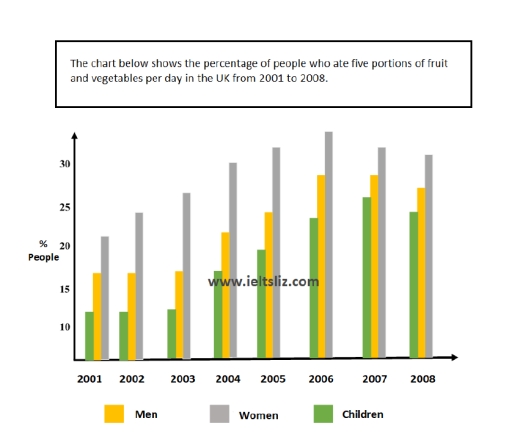
The image contains a bar chart comparing the percentage of men, women, and children who ate five portions of fruit and vegetables per day in the UK from 2001 to 2008. In 2001, the percentages were approximately 22% for men, 25% for women, and 11% for children. In 2002, the figures were roughly 23% for men, 27% for women, and 10% for children. The 2003 data shows about 22% for men, 28% for women, and 11% for children. In 2004, the percentages were approximately 24% for men, 29% for women, and 12% for children. In 2005, about 25% of men, 30% of women, and 14% of children consumed the recommended portions. The 2006 data shows roughly 27% for men, 30% for women, and 16% for children. In 2007, the percentages were approximately 26% for men, 32% for women, and 18% for children. Lastly, in 2008, about 25% of men, 31% of women, and 20% of children met the five-a-day guideline.
Given the complexity of the image, the above description may not be entirely accurate.
Skyrocket your IELTS band score by 1-2 points in under a month with our premium plan!
Note: Both the topic and the answer were created by one of our users.
The bar chart illustrates the proportion of men, women and children who ate five portions of fruit and vegetables, located in the UK, between 2001 and 2008.
Overall, the proportion of people eating five portions of fruit and vegetables increased for all three groups over the period. Women consistently recorded the highest figures, while children had the lowest.
In the early years, the percentages for all three groups rose gradually. In 2001, around 20% of women consumed five portions daily, compared to about 15% of men and only around 10% of children. These figures increased steadily, reaching approximately 30% for women, 20% for men, and 15% for children by 2004.
In the later years, the upward trend continued, with all groups peaking around 2006 to 2007. Women reached a high of about 30%, while men and children rose to approximately 25% and 20%, respectively. However, after this peak, the figures declined slightly in 2008, although women still remained the highest, followed by men and children.
Word Count: 165
