
Choosing Courses At The College - IELTS Listening Answers & Explanations
From Oxford IELTS Practice Tests Academic Listening Test 4 · Part 3 · Questions 21–30
Audio
Questions
Questions 21–24 Summary Completion
Complete the summary below by writing NO MORE THAN THREE WORDS in the spaces provided.
To many employers, academic success and personal development as a result of being at 21 can be as important as course content, so choose interesting 22 that you may do well in. You should, however, think more carefully about your choice if your course is 23 . In this case the course normally includes all the modules necessary for professional training, but if you are in any doubt check with your academic department or the 24 at the university.
Questions 25–29 Matching
Write the appropriate letters A–C against questions.
Which modules have the following features?
A. Applied Chemical Engineering
B. Fluid Mechanics
C. Chemical Engineering: Science 1
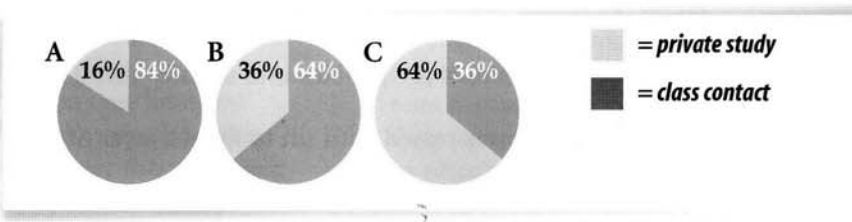
Questions 30–30 One Choice
Choose the correct letter, A, B or C.
Answers & Explanations Summary
| # | Answer | Evidence | Explanation |
|---|---|---|---|
| Q21 | university | Employers will often be at least as interested in how well a student has performed academically, and how the whole experience of university has developed the student as a person, as in the detail of the course options chosen | Excerpt/Transcript Explanation: The transcript states that employers often care just as much about good grades and how university life helps a student grow as a person as they do about specific module choices. Answer Explanation: The answer means a higher education institution where students study for a degree. Reason For Correctness: The correct answer is "university" because the tutor states that employers care about how the entire experience of university has helped a student grow as an individual (personal development). Therefore, being at university matches the context in the summary. |
| Q22 | modules | Selecting modules that will interest you and in which you think you will be particularly successful is therefore also likely to make good sense in career terms | Excerpt/Transcript Explanation: The transcript explains that picking units of study (modules) that you find interesting and that you can do well in is a smart choice for your future career. Answer Explanation: The answer "modules" refers to individual study units or subjects that make up a degree course. Reason For Correctness: The correct answer is "modules" because the tutor advises students to pick courses they enjoy and can succeed in. The summary sentence states, "...so choose interesting that you may do well in." In the transcript, "Selecting" matches "choose", "that will interest you" matches "interesting", and "in which you think you will be particularly successful" matches "that you may do well in". Therefore, the word that fills the gap is "modules". |
| Q23 | vocational | On certain degree courses, though, module choice can be important. This applies mainly to vocational courses where the degree confers an accredited professional training as well as university education | Excerpt/Transcript Explanation: The transcript explains that picking the right modules matters mostly for vocational courses, because these courses give students official professional training for their future careers. Answer Explanation: The answer "vocational" describes courses or training designed to prepare students directly for a specific job or profession. Reason For Correctness: The correct answer is confirmed by the tutor when explaining that choosing modules can be especially important for certain types of study. Specifically, this applies to "vocational courses," which provide recognized professional training in addition to general university education. |
| Q24 | careers service | Your academic department, in this case Chemical and Process Engineering, and the university's Careers Service will be able to advise you, and will be pleased to help you sort out anything you're not certain about | Excerpt/Transcript Explanation: The transcript states that students can ask their academic department or the university's Careers Service if they need help or are unsure about choosing modules. Answer Explanation: The answer refers to the university department that provides students with professional advice and guidance about jobs and future careers. Reason For Correctness: The correct answer is supported by the tutor's advice on where students can get help if they are unsure about module choices. The tutor explains that both the academic department and the university's "Careers Service" can offer advice and help students solve any questions or doubts. |
| Q25 | A | TUTOR Through lectures, practical classes and personal tutorials. Applied Chemical Engineering lasts all year of course, so there's plenty of time. RAJAV And what about assessment? TUTOR Through project work, usually, or dissertation. Not exams as such. RAJAV Is that the same for the Information Technology part of the module? TUTOR Yes, things like word processing and learning to create spreadsheets are tested in a similar way on this module | Excerpt/Transcript Explanation: The transcript shows that the Applied Chemical Engineering module includes an Information Technology section where students learn and are tested on computer skills such as word processing and making spreadsheets. Answer Explanation: The answer "A" means that the "Applied Chemical Engineering" module includes developing computer skills. Reason For Correctness: The correct answer is A because Rajav asks about the "Applied Chemical Engineering" module, specifically inquiring about the "Information Technology" part. The tutor confirms that students work on computer tasks like "word processing" and "learning to create spreadsheets" in this module, which directly refers to developing computer skills. |
| Q26 | C | In practice it means that students who have already studied physics are excused the physics lectures, while those who've done biology are exempt from attending the biology lectures | Excerpt/Transcript Explanation: The transcript states that students who previously studied physics do not need to attend the physics lectures, and those who already took biology do not have to attend the biology lectures. Answer Explanation: The answer "C" refers to the module titled "Chemical Engineering: Science 1". Reason For Correctness: The correct answer is C because the tutor explains that in the module "Science 1 in Chemical Engineering", students who already learned physics or biology before university do not have to go to those classes. The tutor uses the keywords "excused" and "exempt from attending", which directly match the concept of an "exemption from part of a module". |
| Q27 | B | SONIA Yes, I'm considering doing Fluid Mechanics. The work on flow analysis looks interesting and I like the look of some of the other topics, too. So how is that module tested? TUTOR That's one of those which still uses written exams. The sit-down, formal type I'm afraid | Excerpt/Transcript Explanation: The transcript shows Sonia asking how students are tested in Fluid Mechanics, and the tutor answers that it uses sit-down, formal written exams. Answer Explanation: The answer B corresponds to the module called Fluid Mechanics. Reason For Correctness: The correct answer is B because Sonia asks how the Fluid Mechanics module is evaluated, and the tutor explains that it is assessed using traditional, sit-down "written exams" of the "formal type". |
| Q28 | A | RAJAV I'd like to ask a few things about the Applied Chemical Engineering module. TUTOR Fine. What would you like to know? RAJAV Well, apart from the work on practical engineering, what other topics are covered? TUTOR Some that might surprise you. One that students always seem to like includes interviewing techniques, presentation skills and producing written reports | Excerpt/Transcript Explanation: The transcript shows Rajav asking about the Applied Chemical Engineering course, and the tutor explaining that students in this course learn how to do interviews, give presentations, and write reports. Answer Explanation: The answer A means that the Applied Chemical Engineering module helps students practice and improve their speaking and writing abilities. Reason For Correctness: The correct answer is A because Rajav asks what topics are included in the Applied Chemical Engineering module. The tutor replies that it includes "interviewing techniques, presentation skills and producing written reports". In this context, giving presentations and doing interviews are speaking skills, while producing reports relates to writing skills. |
| Q29 | C | PAT Yes, I was wondering about Science 1 in Chemical Engineering. How is that organized? It's a bit different from other modules isn't it? TUTOR Yes, it aims to give the necessary basis of physics and biology for those students who haven't studied the relevant subject at A level or equivalent. In practice it means that students who have already studied physics are excused the physics lectures, while those who've done biology are exempt from attending the biology lectures. In the second part of the module you're assessed on your project work in one of those subjects. PAT And does the teaching approach differ, too? TUTOR Yes, particularly in one respect: you are encouraged to learn by working out the solutions to problems for yourself | Excerpt/Transcript Explanation: The transcript shows that when Pat asks about the module "Science 1 in Chemical Engineering" and how it is taught, the tutor explains that students learn by finding answers to problems on their own. Answer Explanation: The answer "C" means the module called "Chemical Engineering: Science 1". Reason For Correctness: The correct answer is C because Pat asks about the module "Science 1 in Chemical Engineering" and asks if the teaching method is different. The tutor replies that students in this module are encouraged to "learn by working out the solutions to problems for yourself", which directly matches "learning through problem solving". |
| Q30 | C | The module comprises thirty-six hours of class contact, mainly in tutorial groups of sixteen to twenty, and students are expected to do approximately sixty-four hours of private study | Excerpt/Transcript Explanation: The transcript states that the course has 36 hours of classroom learning with teachers and around 64 hours of independent study done by students on their own. Answer Explanation: The answer indicates that Chart C shows the correct breakdown of study time for the Spanish 1A module. Reason For Correctness: The correct answer is supported by the tutor's statement about how the Spanish 1A course hours are divided. The tutor explains that the module includes "thirty-six hours of class contact" and about "sixty-four hours of private study." Together, this equals a total of 100 hours (36 + 64 = 100), meaning private study accounts for 64% of the total time and class contact accounts for 36%. Therefore, the chart representing these figures correctly illustrates the module's time distribution. |
Transcript
TUTOR As you know, this week you choose your modules for the first year of study, so this introductory meeting is aimed at helping you make informed choices. I think the best way to do this is on a question-and-answer basis, so who'd like to start? Pat?
PAT Yes, there's something I've been wondering about: will my choice affect my career opportunities?
TUTOR Well, for most students the choice of Level One modules won't be crucial in terms of a later career. In fact, many graduate level jobs will accept graduates from a range of degree courses. Employers will often be at least as interested in how well a student has performed academically, and how the whole experience of university has developed the student as a person, as in the detail of the course options chosen. Selecting modules that will interest you and in which you think you will be particularly successful is therefore also likely to make good sense in career terms. On certain degree courses, though, module choice can be important. This applies mainly to vocational courses where the degree confers an accredited professional training as well as university education. Usually the modules students are required to take will include all those needed to meet those professional requirements. Your academic department, in this case Chemical and Process Engineering, and the university's Careers Service will be able to advise you, and will be pleased to help you sort out anything you're not certain about.
PAT Right.
RAJAV I'd like to ask a few things about the Applied Chemical Engineering module.
TUTOR Fine. What would you like to know?
RAJAV Well, apart from the work on practical engineering, what other topics are covered?
TUTOR Some that might surprise you. One that students always seem to like includes interviewing techniques, presentation skills and producing written reports.
RAJAV Hmm ... they sound interesting. How are they taught?
TUTOR Through lectures, practical classes and personal tutorials. Applied Chemical Engineering lasts all year of course, so there's plenty of time.
RAJAV And what about assessment?
TUTOR Through project work, usually, or dissertation. Not exams as such.
RAJAV Is that the same for the Information Technology part of the module?
TUTOR Yes, things like word processing and learning to create spreadsheets are tested in a similar way on this module.
SONIA That's not the case in some other modules, is it?
TUTOR No, it isn't. Are you thinking of any in particular?
SONIA Yes, I'm considering doing Fluid Mechanics. The work on flow analysis looks interesting and I like the look of some of the other topics, too. So how is that module tested?
TUTOR That's one of those which still uses written exams. The sit-down, formal type I'm afraid!
SONIA Oh that doesn't matter. I quite like that kind as it happens.
TUTOR Pat, you've got a question.
PAT Yes, I was wondering about Science 1 in Chemical Engineering. How is that organized? It's a bit different from other modules isn't it?
TUTOR Yes, it aims to give the necessary basis of physics and biology for those students who haven't studied the relevant subject at A level or equivalent. In practice it means that students who have already studied physics are excused the physics lectures, while those who've done biology are exempt from attending the biology lectures. In the second part of the module you're assessed on your project work in one of those subjects.
PAT And does the teaching approach differ, too?
TUTOR Yes, particularly in one respect: you are encouraged to learn by working out the solutions to problems for yourself.
PAT I like the sound of that.
TUTOR OK, anything else?
SONIA Yes, I believe it's possible to do a modern language as part of the course. Can you tell me a bit about the Spanish 1A module?
TUTOR Certainly. The main emphasis in 1A is on understanding and speaking, but students also learn to carry out some straightforward reading and writing tasks. Basic aspects of grammar are also introduced and practised. The module comprises thirty-six hours of class contact, mainly in tutorial groups of sixteen to twenty, and students are expected to do approximately sixty-four hours of private study.
SONIA It sounds interesting. I did some Spanish at the Cervantes Institute last year. Passed an exam, in fact.
TUTOR Ah, I'm afraid that means you can't do 1A. The regulations say 'this module may NOT be taken by students with a qualification in Spanish'. Though you could do 1B ...
question 30 answer is wrong. It should be B.
It’s so hard ,I got 20/40