
Impact of Environmental Noise - IELTS Listening Answers & Explanations
From Cambridge IELTS 03 Academic Listening Test 4 · Part 4 · Questions 31–40
Audio
Questions
Questions 31–34 Short Answers
Write NUMBERS AND/OR NO MORE THAN FOUR WORDS for each answer.
Questions 35–35 One Choice
Choose the correct letter A-D.
Questions 36–38 Table Completion
Complete the table showing where devices used in reducing noise could be fitted in the houses.
Write: W for walls
D for doors
C for ceilings
| 36 | double thickness plaster board |
| 37 | mechanical ventilation |
| 38 | air conditioning |
Questions 39–39 Visual Labeling
Choose the correct letters A-D.
Questions 40–40 Visual Labeling
Choose the correct letters A-D.
Answers & Explanations Summary
| # | Answer | Evidence | Explanation |
|---|---|---|---|
| Q31 | 7.30pm to 5.30am / 7:30pm to 5:30am / 7:30pm and 5:30am / 7.30pm and 5.30am | The only noise after dark is from the highway and the traffic is somewhat reduced between 7.30pm and 5.30am | Excerpt/Transcript Explanation: The transcript explains that after it gets dark, the only noise comes from the highway, but there are fewer cars on that road during the time from 7:30 pm to 5:30 am. Answer Explanation: The answer says that there is less traffic on the road from 7:30 in the evening until 5:30 in the morning. Reason For Correctness: The correct answer is found when the speaker explains noise levels at night. She mentions that the traffic is 'somewhat reduced' between 7:30 pm and 5:30 am. When traffic is 'somewhat reduced', it means there are fewer cars, which is another way of saying the traffic is 'lightest'. |
| Q32 | housewives / housewifes | So, the people most affected by the noise will be, I expect, housewives | Excerpt/Transcript Explanation: The transcript says that the speaker predicts that women who work at home (housewives) will be the ones bothered the most by the loud sounds. Answer Explanation: The answer refers to women who stay at home to take care of their house and family. Reason For Correctness: The correct answer is housewives because the speaker explicitly mentions them as the group of people who will be 'most affected' by the noise. The speaker explains that by the time workers and students come home, the noise has become quieter, meaning those who stay home during the day are the ones who hear it the most. |
| Q33 | Sundays / Sunday | The weekends are still a problem of course, but the traffic is certainly reduced on Saturdays to a large extent and even more so on Sundays | Excerpt/Transcript Explanation: The transcript says that traffic goes down a lot on Saturdays, and it goes down even more on Sundays. Answer Explanation: The answer means that Sunday is the day when there are the fewest cars on the road. Reason For Correctness: The correct answer is Sunday because the speaker compares Saturday and Sunday traffic. She says that on Saturdays, the traffic is reduced, but on Sundays, it is reduced even more. The phrase 'even more so' tells us that the reduction is greater on Sunday than on any other day mentioned. |
| Q34 | about $25 000 / about $25,000 / $25 000 / $25,000 / about $25000 / $25000 / about 25 000 dollars / about 25,000 dollars / 25 000 dollars / 25,000 dollars / about 25000 dollars / 25000 dollars | The modifications I am about to outline will add about $25,000 to the price of a newly-built house | Excerpt/Transcript Explanation: The transcript says that the special building work will increase the price of a new home by twenty-five thousand dollars. Answer Explanation: The answer is the extra money, which is twenty-five thousand dollars, that must be paid to make changes to the houses. Reason For Correctness: The correct answer is based on the part of the talk where the speaker discusses the price of building. She uses the word modifications to mean the changes needed for the houses. She says these changes will add about $25,000 to how much the house costs. |
| Q35 | C | At this site the levels have been recorded as high as 67 decibels | Excerpt/Transcript Explanation: The transcript states that people have measured the sound levels at this location and found that they go as high as 67 decibels. Answer Explanation: The answer means that the loudest noise measured at this specific building location is 67 decibels. Reason For Correctness: The correct answer is C because the speaker provides two different numbers. The number 55 is mentioned as the normal limit for noise, but for this particular site, the speaker says the noise has gone up to 67 decibels. The phrase 'can reach' in the question asks for the maximum or highest level recorded. |
| Q36 | C | All ceilings will require double thickness plaster board to be used in the construction | Excerpt/Transcript Explanation: The transcript states that every ceiling in the houses must be built using a board that is twice as thick as normal boards. Answer Explanation: The answer "C" means that the thick boards used to block sound (double thickness plaster board) should be placed in the ceilings of the houses. Reason For Correctness: The correct answer is "C" because the speaker lists specific materials needed for construction to stop noise from entering the homes. She clearly states that every house needs "double thickness plaster board" in the ceilings. The letter "C" represents "ceilings" in this task. |
| Q37 | W | In the noisiest areas mechanical ventilation will have to be installed in the exterior walls for those houses closest to the highway two layers of plasterboard will be needed for the interior bedroom walls |
Excerpt/Transcript Explanation: The first part of the transcript says that air ventilation systems must go into the outside walls of the house. The second part explains that bedroom walls in noisy houses need two layers of board for extra protection against noise. Answer Explanation: The answer 'W' is a code meaning 'walls'. It shows that the noise-stopping features should be installed in the walls of the house. Reason For Correctness: The correct answer is 'W' because the speaker gives specific instructions for placing items in the walls. First, they state that 'mechanical ventilation' (a system to move air) must be 'installed in the exterior walls.' Second, while 'double thickness plaster board' is used on ceilings, the speaker also mentions that 'two layers of plasterboard' (which means the same thing) are required for the 'bedroom walls' in houses that are very close to the highway. |
| Q38 | C | All ceilings will require double thickness plaster board to be used in the construction | Excerpt/Transcript Explanation: The transcript states that for every single house built on this site, the top part of the rooms inside (the ceilings) must be made with thick plaster board during the building process. Answer Explanation: The answer 'C' means that double thickness plaster board should be used in the ceilings of the houses to block out noise. Reason For Correctness: The correct answer is 'C' because the speaker specifies that every house in the development must have 'double thickness plaster board' used in the ceilings to help with the sound problem. In the instructions, 'C' is the code for 'ceilings'. The speaker also mentions 'two layers of plasterboard' for walls, but the specific phrase 'double thickness plaster board' is directly linked to the ceilings of all houses in the construction plan. |
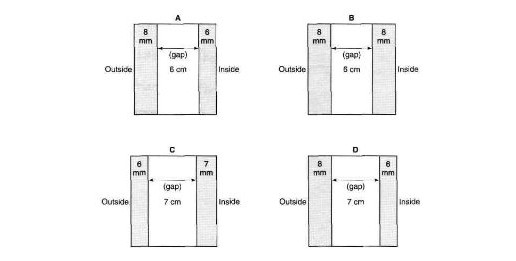
| Q39 | D | Coming back now to the double glazing I mentioned before. Specialised double glazing requires a larger air gap between the inner and outer glass than normal double glazing. The gap must be at least 7 centimetres. The thickness of the glass is also a factor, 8 millimetres on the outside and 6 on the inside pane. It is essential that the glass be thicker on the outside than on the inside and that the gap between the panes of glass be a minimum of 7 centimetres | Excerpt/Transcript Explanation: The transcript explains that for these special windows, the empty space between the glass layers must be at least 7 centimeters wide. It also states that the outside glass piece must be 8 millimeters thick, while the inside glass piece should be 6 millimeters thick. Answer Explanation: The answer identifies the correct measurements for building a window that blocks noise using two layers of glass. Reason For Correctness: The correct answer is choice D because it follows the specific technical requirements mentioned by the speaker for 'specialised double glazing.' According to the lecturer, to block noise properly, the outer pane of glass must be 8 millimetres thick, the inner pane must be 6 millimetres thick, and there must be a space or 'air gap' of at least 7 centimetres between the two pieces of glass. |
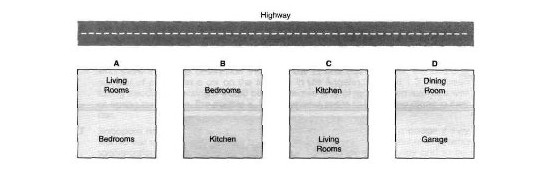
| Q40 | C | Living areas will have to be designed at the back of the houses away from the highway. Bedrooms and living rooms will have to be built towards the back, and for those houses closest to the highway two layers of plasterboard will be needed for the interior bedroom walls. Those rooms constructed at the front of the houses should be garages, laundries, kitchens, bathrooms and dining rooms | Excerpt/Transcript Explanation: The transcript explains that the rooms people sleep or relax in (bedrooms and living rooms) must be at the back of the house to stay away from the noisy road. The front part of the house should be used for rooms like the kitchen, bathroom, and garage. Answer Explanation: The answer C refers to a house plan where busy rooms like the kitchen and garage are in the front, while quiet rooms like bedrooms are in the back. Reason For Correctness: The correct answer is based on the speaker's advice for dealing with loud traffic. Since the highway is at the front of the site, the house layout must place bedrooms and living rooms at the back to keep them quiet. On the other hand, rooms that people use for shorter times or that are naturally noisier—such as kitchens, dining rooms, garages, and bathrooms—should be placed at the front of the house near the noise. |
Transcript
Good afternoon. I’m Paula Bundell and I am giving you the lectures on Environmental Noise this term. Today we are going to look into the effects of noise on a planned housing estate in a particularly difficult part of the new Manchester Park area. This site is not as bad as some 1 have researched in the past. The Blacktown airport is closed from 6pm to 7am and this is a great advantage to the site. The only noise after dark is from the highway and the traffic is somewhat reduced between 7.30pm and 5.30am. So, the people most affected by the noise will be, I expect, housewives. By the time most of the students and workers have arrived back home in the evening during the week the noise will have abated to a fairly large extent. The weekends are still a problem of course, but the traffic is certainly reduced on Saturdays to a large extent and even more so on Sundays. Of course modifications to houses will be necessary at a site like this and they come at a significant cost to the developer and home buyer. The modifications I am about to outline will add about $25,000 to the price of a newly-built house. That will still mean a cheaper house than in a less noisy and more desirable area. A bit of background would not go astray. I understand that you are all familiar with the proposed development site at Manchester Park. It’s a particularly difficult one in terms of noise with the highway along the eastern perimeter and the Blacktown airport not 3 kilometres away to the north. Of course, those nearest the highway will be the worst hit, with heavy traffic noise as well as the noise from the light planes overhead. As you all know, the normal noise threshold for private housing is 55 decibels. At this site the levels have been recorded as high as 67 decibels.
The construction of the houses has to be somewhat modified from houses in most areas. In the houses on the highway and in the noisiest areas of this site there will be a need for specialised double glazing and special acoustic seals will have to be fitted to the doors. All exterior doors in this especially noisy pocket will have to be solid core wood doors with hinges. Every house built on this site, not just those adjacent to the highway or nearest to the airport, will require high density insulation materials in the roof. Not only will all the roofs need insulating, the exterior walls will be required to be double brick. All ceilings will require double thickness plaster board to be used in the construction. In the noisiest areas mechanical ventilation will have to be installed in the exterior walls. In those areas with sealed windows it will be necessary to fit fans with absorbers to cut out the noise in those particular houses. Air conditioning units could also be fitted in the ceilings of such houses but this is substantially more expensive than fans, and may not be needed on this site. Coming back now to the double glazing I mentioned before. Specialised double glazing requires a larger air gap between the inner and outer glass than normal double glazing. The gap must be at least 7 centimetres. The thickness of the glass is also a factor, 8 millimetres on the outside and 6 on the inside pane. It is essential that the glass be thicker on the outside than on the inside and that the gap between the panes of glass be a minimum of 7 centimetres. Obviously, the noise factor will have to be taken into consideration with the layout of the houses. Living areas will have to be designed at the back of the houses away from the highway. Bedrooms and living rooms will have to be built towards the back, and for those houses closest to the highway two layers of plasterboard will be needed for the interior bedroom walls. Those rooms constructed at the front of the houses should be garages, laundries, kitchens, bathrooms and dining rooms. I have come to the conclusion that this development should go ahead, but with various acoustic modifications according to the position of the block in relation to the highway and intersection.