
Library System - IELTS Listening Answers & Explanations
From Achieve IELTS Practice Tests Academic Listening Test 2 · Part 2 · Questions 11–20
Audio
Questions
Questions 11–15 Plan Labeling
Label the plan below.
Choose FIVE answers from the box and write the correct letter A – G
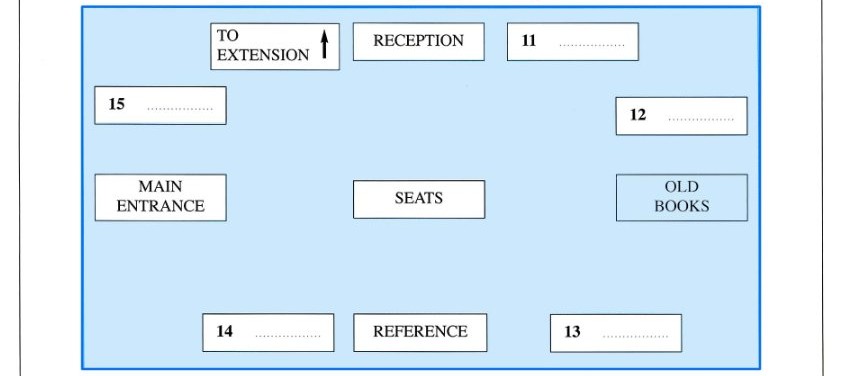
A. Arts section | B. Computers | C. Languages section
D. Law | E. Magazines | F. Science
G. study desks
Questions 16–20 Note Completion
Complete the notes below.
Write NO MORE THAN TWO WORDS AND/OR A NUMBER for each answer.
Library system:
Maximum borrowing period: 16
Renew books in person or by: 17
Overdue charge: 18
Unavailable books: complete 19
Extra services: 20
Answers & Explanations Summary
| # | Answer | Evidence | Explanation |
|---|---|---|---|
| Q11 | E | Next to the reception, where you can see those old desks, is where we keep the magazines because you can sit down and read there | Excerpt/Transcript Explanation: The transcript states clearly that the magazines are kept near the reception area where people can sit at the desks and read them. Answer Explanation: The answer "E" means "Magazines". Reason For Correctness: The correct answer is E because the library assistant explains that the area next to the reception with the old desks is where the library keeps the magazines. Therefore, option E matches this location. |
| Q12 | A | That used to be the Science section but now on those shelves you'll find the Arts section | Excerpt/Transcript Explanation: The transcript explains that the shelves in that location used to hold science books in the past, but currently they hold the arts books. Answer Explanation: The answer "A" refers to the "Arts section" in the library. Reason For Correctness: The correct answer is A because the library assistant explains that although that area previously held the Science books ("used to be the Science section"), after a re-organisation, those shelves now contain the Arts section ("now on those shelves you'll find the Arts section"). |
| Q13 | G | OK, then in the corner, next to the reference section, is where we thought it was quietest, and away from the phones and printers and things, so we've put the study desks there | Excerpt/Transcript Explanation: The transcript explains that the staff placed the study desks in the corner next to the reference section because it is the quietest spot. Answer Explanation: The answer "G" means the location refers to the study desks. Reason For Correctness: The correct answer is G because the library assistant describes the layout and points out that they placed the "study desks" in the quietest area, specifically in the corner next to the reference section, away from noisy items like phones and printers. |
| Q14 | D | Then, as we come back to the main entrance, is the next section, where we used to have the languages. It got very busy and noisy, so when we moved everything round we decided to put the law books here | Excerpt/Transcript Explanation: The transcript states that the area leading back to the main entrance now contains law books. Answer Explanation: The answer D means the section or area is for Law books. Reason For Correctness: The correct answer is D because the library assistant explains that on the way back towards the main entrance, they previously kept language books, but after rearranging the library, they decided to place the 'law books' in this section. |
| Q15 | B | Then just between reception and the door here is where we decided to put the computers but the computer magazines are in the magazine section as we found too many went missing here | Excerpt/Transcript Explanation: The transcript explains that the area located directly between the reception and the door is where the computers have been placed. Answer Explanation: The answer is option B, which refers to "Computers". Reason For Correctness: The correct answer is B because the library assistant describes the location between the reception desk and the door, stating that they decided to place the computers in that area. |
| Q16 | 6 weeks / six weeks | Over the last two months we've been introducing a new system for this and you can now take books out for six weeks | Excerpt/Transcript Explanation: The transcript states that with the library's new system, members can borrow books for a total of six weeks. Answer Explanation: The answer means that people are allowed to borrow and keep books for a maximum duration of six weeks. Reason For Correctness: The correct answer is 'six weeks' because when the student asks about borrowing rules, the library assistant states that under the new system, people can now borrow ('take books out for') a period of six weeks. Key phrase to listen for: 'take books out for six weeks' which means the 'borrowing period'. |
| Q17 | You used to have to come in to get the book stamped because we don't like doing it over the phone as there's no record of it. But now you can do all that via email | Excerpt/Transcript Explanation: The transcript explains that members used to visit the library to renew their books, but now they can complete the renewal process by email. Answer Explanation: The answer refers to electronic mail (email), which is a digital way of sending messages online. Reason For Correctness: The correct answer is "email" because the library assistant explains how readers can extend (renew) their book loans. In the past, people had to visit the library in person ("come in to get the book stamped"), but now they can renew their books "via email". |
|
| Q18 | £1.50 / 1.50 pounds | The good news is that there is only one charge – I know some libraries charge £1 for one week and then it goes up with each week it's late! We ask for £1.50 as we think that's high enough to stop people being overdue | Excerpt/Transcript Explanation: The transcript explains that the library charges a single fee of £1.50 if a person keeps a book past its due date. Answer Explanation: The answer means that the fee or fine for returning a book late is £1.50. Reason For Correctness: The correct answer is £1.50 because the library assistant discusses the fee for overdue books (books not returned or renewed on time). While mentioning that some other libraries charge £1 per week, the speaker clearly states, 'We ask for £1.50 as we think that's high enough to stop people being overdue.' Therefore, the overdue charge at this library is £1.50. |
| Q19 | yellow form | All you have to do is fill in a yellow form, behind those blue ones on the desk, and give it to someone at reception | Excerpt/Transcript Explanation: The transcript states that to reserve an unavailable book, the student just needs to write the necessary information on a yellow form and hand it in at the reception desk. Answer Explanation: The answer refers to a specific yellow paper slip or document that a person must write on to reserve a book. Reason For Correctness: The correct answer is confirmed by the library assistant when explaining what to do about books that are not on the shelves (unavailable books). The assistant mentions that to reserve one, you need to 'fill in a yellow form'. In the task, 'complete' is a synonym for 'fill in'. Therefore, 'yellow form' is the correct phrase to complete the note. |
| Q20 | ordering service / ordering | Also, sometimes you will need a journal article that we don't have but can get from other libraries, so we offer an ordering service if you need it | Excerpt/Transcript Explanation: The transcript explains that if the library does not have a specific article, they can order it from another library using their ordering service. Answer Explanation: The answer means requesting items from other libraries through an ordering service. Reason For Correctness: The correct answer is "ordering" (or "ordering service") because the speaker mentions an extra service provided by the library when a journal article is not available in their own collection. Specifically, the library assistant states, "we offer an ordering service if you need it." |
Transcript
Library assistant: Hi. Can I help you?
Student: Erm – yes – I wanted to join the library.
Library assistant: OK. First of all, let me show you round the library and explain a few things for you. (pause) OK, now we're here at the main entrance. You can see the reception, which is where you bring back and take out books and also we can order books and answer your questions there. Next to the reception, where you can see those old desks, is where we keep the magazines because you can sit down and read there. They're divided into sections for Sciences, Geography, Arts, etcetera. Then, at the back of the library you can see the section for old books. Next to that is where the books proper start. That used to be the Science section but now on those shelves you'll find the Arts section. We had a big re-organisation in the summer, which I think has made it clearer. The numbering is standard so you should be able to find what you want quite easily. However, if you can't find something, it probably means it's been borrowed. OK, then in the corner, next to the reference section, is where we thought it was quietest, and away from the phones and printers and things, so we've put the study desks there. They all have computer access, if you need it for your laptop. We do ask that you don't just read magazines there, though. OK, then there's the reference section where you can look up the files. Then, as we come back to the main entrance, is the next section, where we used to have the languages. It got very busy and noisy, so when we moved everything round we decided to put the law books here. Also, because it's a smaller section it fits quite well here. OK, then we're back at the main entrance. Over there, by reception, there's a door that goes to the extension and we have further sections, such as Languages, and study desks through there so you could have a look round when we've finished. Then just between reception and the door here is where we decided to put the computers but the computer magazines are in the magazine section as we found too many went missing here! OK, is that everything ...
Student: That's great thanks. Can you just tell me a bit about borrowing and the rules and whatever?
Library assistant: Of course. Over the last two months we've been introducing a new system for this and you can now take books out for six weeks. That's generally enough for most people – we usually get books back within thirty days. Of course, you may decide to renew the period. You used to have to come in to get the book stamped because we don't like doing it over the phone as there's no record of it. But now you can do all that via email. If you do forget to renew, then we do make a charge, I'm afraid. That helps our costs, of course, – but we do insist on it. The good news is that there is only one charge – I know some libraries charge £1 for one week and then it goes up with each week it's late! We ask for £1.50 as we think that's high enough to stop people being overdue. The other thing you may want to know is what you do about books that are not on the shelves. We do have a system for reserving them. All you have to do is fill in a yellow form, behind those blue ones on the desk, and give it to someone at reception. We'll let you know when it comes in. Also, sometimes you will need a journal article that we don't have but can get from other libraries, so we offer an ordering service if you need it. Now if you'd like to ... (fade) ...