
Product Sales Report - IELTS Listening Answers & Explanations
From IELTS Recent Actual Test 1 Academic Listening Test 3 · Part 3 · Questions 21–30
Audio
Questions
Questions 21–22 Visual Labeling
Choose the correct letters, A-C, and write each next to questions 21 and 22.
According to Betty, what can be said about the sales of both cheese and oil in New Zealand and Colombia?
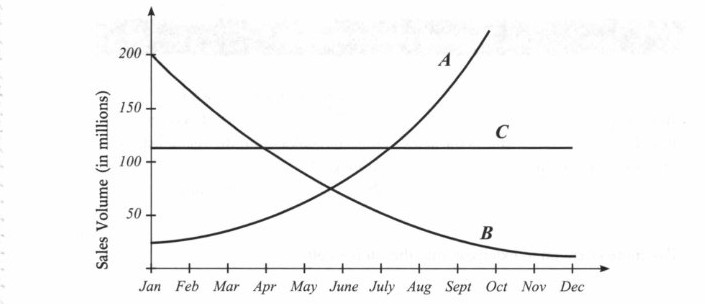
Questions 23–24 Two Choices
Write the correct letters, A-E, next to questions 23 and 24.
Which TWO of the following are sales strategies for chocolate in Italy and Germany?
Questions 25–30 Table Completion
Complete the table below.
Write NO MORE THAN TWO WORDS for each answer.
Product Sales Report
| Research plan next week | |
|---|---|
| Interested in:
how 25 affects the sales of cosmetics and 26 |
Going to be concerned with:
the 27's effects on sales of cookies and the relationships among 28, 29, and sales |
| Pay more attention to extension into the study of 30 | |
Answers & Explanations Summary
| # | Answer | Evidence | Explanation |
|---|---|---|---|
| Q21 | B | Well, in New Zealand, the sales of both oil and cheese have declined pretty steadily | Excerpt/Transcript Explanation: The transcript shows that in New Zealand, the total number of cheese and oil products sold has become smaller. To 'decline' means to go down in number or amount. Answer Explanation: The answer B means that the amount of cheese and oil being sold in New Zealand is going down over time. Reason For Correctness: The correct answer is B because Betty says that sales for these items in New Zealand have 'declined pretty steadily.' In this context, 'declined' is a synonym for decreased or dropped. She explains that fewer people are buying these products now than before. |
| Q22 | C | On the other hand, in Colombia, the volume of sales for both products has remained the same | Excerpt/Transcript Explanation: The transcript clearly states that in the country of Colombia, the amount of cheese and oil products being bought by people has not moved up or down. Answer Explanation: The answer means that the quantity of cheese and oil sold in Colombia did not increase or decrease; the numbers stayed at a stable level. Reason For Correctness: The correct answer is C because Betty describes the market situation in Colombia by saying that the volume of sales for both products has 'remained the same.' This indicates that, unlike in New Zealand where sales went down, the sales in Colombia did not change. Key terms to notice are 'remained the same,' which is a synonym for staying stable or a lack of change. |
| Q23 | — | — | |
| Q24 | A / B | In Italy, "Kostig", the most expensive brand, pays shop owners to put the candy just about knee-high for an adult. PROFESSOR: I don't see BRUCE: For little kids, that's about eye level! That bright red candy is the first one they see, so they buy it! Even better, they start telling their moms to buy it, too! PROFESSOR: So, you mean BRUCE: Well, I mean, in Italy if you locate your product at the right location of shelves, sales do great For a long time, the biggest selling brand was "Schmutzig", mostly because it was the second cheapest, but didn't taste too bad |
Excerpt/Transcript Explanation: The transcript explains that in Italy, putting candies in a special place on the shelf helps kids see them and buy them. It also says that in Germany, many people chose the brand Schmutzig because it was the second cheapest chocolate available. Answer Explanation: The answer consists of choice A and choice B. This means that placing candy in a specific area on the store shelves and making a brand the second least expensive choice are two ways to improve chocolate sales according to the discussion. Reason For Correctness: The correct answer is A and B because Bruce describes two different sales methods. First, for Italy, he explains that paying to place candy at a specific height on the shelves (knee-high for adults, which is eye level for kids) makes it the 'first one they see' and increases sales. Second, for Germany, he says the brand 'Schmutzig' was very successful because it was the 'second cheapest' option. These points match the options for changing product location and setting the price as the second cheapest. |
| Q25 | colour / color | I'm especially interested in the effects of colour on sales of products, so I'll be looking at ads for cosmetics and cleaning products in the local market | Excerpt/Transcript Explanation: The transcript shows Betty explaining her new project. She wants to see if the color of a product, like the orange on a bottle of cleaner, makes people want to buy it more. Answer Explanation: The answer is the word "colour" (or the American spelling "color"). This is the specific feature Betty wants to study to see how it changes how many items people buy. Reason For Correctness: The correct answer is found when Betty talks about her plan for the next week. She says she is interested in the "effects of colour" on how much is sold (sales). She mentions she will look at ads for two types of items: "cosmetics" and "cleaning products." |
| Q26 | cleaning products | BETTY: I'm especially interested in the effects of colour on sales of products, so I'll be looking at ads for cosmetics and cleaning products in the local market | Excerpt/Transcript Explanation: The transcript shows that Betty wants to look at how color changes the sales of beauty items (cosmetics) and soap or detergent items (cleaning products). Answer Explanation: The answer refers to items used for washing and tidying, like soaps or sprays. Reason For Correctness: The correct answer is cleaning products because Betty explains her research plan for next week. She says she will study sales for two types of items: 'cosmetics' and 'cleaning products.' This matches the table's request for what she is interested in besides cosmetics. |
| Q27 | container | I'm focusing on the effects of different containers on sales of cookies | Excerpt/Transcript Explanation: The transcript shows Bruce stating that his main topic of study is how different boxes or packages (containers) change how many cookies are sold. Answer Explanation: The answer is 'container', which is an object like a box, jar, or bag used to hold something. Reason For Correctness: The correct answer is 'container' because Bruce explains that his research for the following week will focus on the impact that different kinds of cookie containers have on sales. In marketing, the word 'container' refers to how a product is held or kept, and Bruce links this directly to the 'sales of cookies' mentioned in the question. |
| Q28 | materials | So I'm going to look into packaging for cookies and how the materials they use will affect the image, and in turn sales | Excerpt/Transcript Explanation: The transcript shows that Bruce plans to research cookie boxes. He mentions that the substances used to make the boxes (materials) will change the product's look or reputation (image), which will then change the number of cookies people buy (sales). Answer Explanation: The answer "materials" refers to the specific substances, such as paper or metal, that are used to create the boxes or containers for cookies. Reason For Correctness: The correct answer is "materials" because Bruce explains his research plans for the following week. He states that he will study cookie packaging and specifically looks at how the **materials** used for the boxes **affect** (meaning change or influence) the product's **image** (what customers think) and the total **sales** (the amount of product sold). This establishes the relationship between these three factors. |
| Q29 | image | I'm focusing on the effects of different containers on sales of cookies. So I'm going to look into packaging for cookies and how the materials they use will affect the image, and in turn sales | Excerpt/Transcript Explanation: The transcript tells us that Bruce plans to research how cookies are packaged. He wants to know how the materials used for those packages change the "image" of the cookies and how that leads to changes in "sales." Answer Explanation: The answer is 'image,' which means the mental picture or feeling customers have about a product. Reason For Correctness: The correct answer is based on Bruce's research plan for the following week. He says he wants to study how the types of boxes or bags (containers) used for cookies impact how many are sold. He explains that the stuff the packaging is made of (materials) changes the way the product looks to people (image), which then changes how much they buy (sales). In the task chart, this shows the connections between materials, image, and sales. |
| Q30 | advertisement / advertising / advertizement / advertizing | But as always in this course, I urge you both to pay much more attention to the advertisement extensions | Excerpt/Transcript Explanation: The transcript shows the professor giving final advice to his students, telling them that they need to look more closely at advertisement extensions because it is a very important part of the course. Answer Explanation: The answer is the subject that the professor wants the students to focus on more in their research. Reason For Correctness: The correct answer is found at the end of the conversation. The professor gives advice to Betty and Bruce about their future studies. He uses the words 'pay much more attention to' which matches the prompt 'Pay more attention to'. He specifically mentions 'advertisement extensions' as the key area for them to study. |
Transcript
(Knocking at the door)
PROFESSOR: Come in!
BETTY: Professor Dundee? We're ready to make our presentation.
PROFESSOR: Oh, yes. I did say one o'clock, didn't I? Please, sit down. So, who goes first? Bruce? Or you, Betty?
BETTY: I guess I could. Bruce is always a little shy.
PROFESSOR: Not after he's had a lager for lunch, eh Bruce?
BRUCE: Heh, heh. No, Betty really should go first.
BETTY: OK. Well, I'm reporting on the effects of different marketing strategies on the cheese and oil markets. Different strategies obviously affect the sales volume differently. I looked at the sales in two countries, New Zealand and Colombia.
PROFESSOR: And what did you find, pray tell?
BETTY: Well, in New Zealand, the sales of both oil and cheese have declined pretty steadily. And in fact, the sales have decreased more quickly than the population. On the other hand, in Colombia, the volume of sales for both products has remained the same.
PROFESSOR: Wait, so you said sales in New Zealand have been going down?
BETTY: Correct. Suppliers have introduced two new upscale brands of each product, which are a bit expensive but very tasty. The big ad agencies are trying out a new series of ads that shift the focus from health to great taste. They think that will get sales moving up in New Zealand, where the population is less affluent and generally less health-conscious.
PROFESSOR: Brilliant. Thank you. And Bruce?
BRUCE: Uhhh... yeah. My report is about chocolate sales in Italy and Germany. The two countries' marketers have found out that you have to market chocolate differently in each country.
PROFESSOR: For example?
BRUCE: In Italy, "Kostig", the most expensive brand, pays shop owners to put the candy just about knee-high for an adult.
PROFESSOR: I don't see...
BRUCE: For little kids, that's about eye level! That bright red candy is the first one they see, so they buy it! Even better, they start telling their moms to buy it, too!
PROFESSOR: So, you mean...
BRUCE: Well, I mean, in Italy if you locate your product at the right location of shelves, sales do great. They say it doesn't matter much what brand of chocolate you're selling. As for Germany...
PROFESSOR: "Das Land der Schokolade".
BRUCE: Huh?
PROFESSOR: That's German. It means "The Land of Chocolate". Germans love the stuff, so people make a joke and call Germany that.
BRUCE: Oh... uh, right...
PROFESSOR: So, you were saying?
BRUCE: Well, like you pointed out, Germans love chocolate. But they're thrifty. For a long time, the biggest selling brand was "Schmutzig", mostly because it was the second cheapest, but didn't taste too bad.
PROFESSOR: Again brilliant! A pretty good job, both of you. Tell me, what do you plan to investigate next week?
BETTY: I'm especially interested in the effects of colour on sales of products, so I'll be looking at ads for cosmetics and cleaning products in the local market. You know, like the distinct orange colour of Mr. Muscle, lavatory cleaning products.
PROFESSOR: And you, Bruce?
BRUCE: I'm focusing on the effects of different containers on sales of cookies. So I'm going to look into packaging for cookies and how the materials they use will affect the image, and in turn sales. You know, most containers are paper, but some expensive cookies come in metal boxes. The shiny metal boxes catch people's attention and the image remains in the memory longer.
PROFESSOR: Well, it sounds like you two are all set. But as always in this course, I urge you both to pay much more attention to the advertisement extensions. That's often the key. Alright, any questions for me before you go?
BETTY: No, I think I'm all set. Thanks!
BRUCE: Me too. Thanks, Professor Dundee. See ya later.