
Battle Of The Bag - IELTS Reading Answers & Explanations
From IELTS Practice Test Plus 2 General Training Reading Test 1 · Part 3 · Questions 28–40
Reading Passage
You should spend about 20 minutes on Questions 28-40, which are based on Reading Passage 3 below.
Battle of the Bag
The world has declared war on the plastic bag. What did this harmless item do to attract such a negative reaction? Caroline Williams explains.
For a growing number of environmentalists, the humble plastic bag has become public enemy number one — an unnecessary evil that must be stopped. The only people who have a good word to say about plastic bags are the plastic-bag industry, unsurprisingly. They claim that plastic bags are nowhere near the world's worst environmental problem and say the reason they are under attack is because they are an easy and emotive target that reflects individuals' guilt about general environmental responsibility. So who is right?
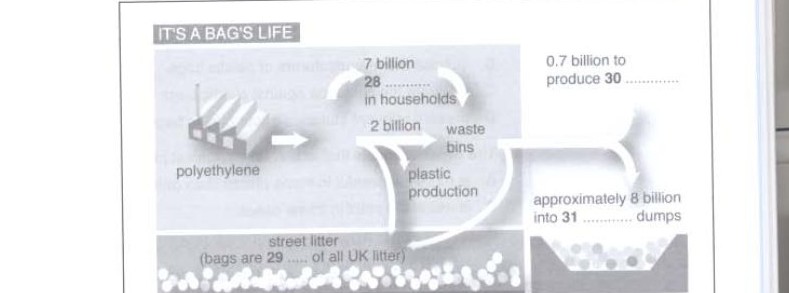
Since it was introduced in the 1970s, the plastic bag - made from high-density polyethylene - has become part of our lives, and today most people around the world don't use anything else to carry their shopping. Estimates differ, but it is thought that the UK gets through at least 9 billion plastic bags a year. Globally, we carry home between 500 billion and a trillion every year. That is 150 bags a year for every person on Earth, or, to put it another way, a million a minute and rising. In the UK, even though up to 7 billion plastic bags may be reused, they still end up in rubbish bins, while a few become street litter. But ultimately the vast majority end up in landfill sites as waste. Only a fraction are incinerated for energy production and an even smaller number are recycled into heavy-duty plastic.
Startling as these statistics may be, they do not explain why plastic bags have become so hated, as they still constitute only 1% of UK litter. Claire Wilton of the environmental group Friends of the Earth claims that plastic bags are 'a waste of resources in that we use them once and throw them away'. But there are bigger and better examples of fossil fuel waste, so the issue is also about visible pollution.
Samantha Fanshawe of the UK Marine Conservation Society points out that, 'Plastic bags exceed what you would anticipate to be their pollution impact because they are so much more mobile than other types of litter. Once the wind reaches them, they become a highly visible problem, blowing around streets and getting caught in the branches of trees.
But plastic bags can also have a devastating effect on wildlife, and the problem is increasing. One victim was a Minke whale washed up in northern France in 2002, with 800 kilograms of plastic bags and other packaging blocking its stomach. The Planet Ark Environmental Foundation in Australia estimates that tens of thousands of marine animals and birds are killed every year, and since most marine animals die far out at sea, the real death toll may be much higher.
Denmark was among the first to try reducing these problems in 1994 when they introduced a tax on packaging, including carrier bags. This led to a 66% drop in take-up at the checkout, despite the fact that it was the retailers and not their customers who had to pay up. Taiwan followed in 2001, charging consumers about two pence for a plastic bag. The tax was criticised by industry and the public as being confusing and unfair but still managed to slash plastic bag usage by 69%.
In 2002, Bangladesh took a more drastic approach, bringing in a total ban on the production and sale of polyethylene and introducing a £5 on-the-spot fine for using a plastic bag. If a blanket ban seems a little extreme, it was prompted by more than just green thinking. In a country with limited waste disposal and virtually no bins, most of the 10 million or so plastic bags used every day were dropped in the street, then washed into rivers and sewers where they choked the country's drainage system. Blocked drains are widely held responsible for the devastating monsoon floods of 1988 and 1989. In the two years since the ban, the once floundering jute-bag industry has been resurrected and street children are reportedly doing a roaring trade in handmade paper bags. A resurgence of rebel plastic-bag manufacturers this year has prompted a government crackdown, with manufacturers facing up to ten years in jail and a fine of £9000.
Elsewhere, governments rich and poor are making attempts to bin the bag. The government of the north Indian state of Himachal Pradesh is also taking a hard line. There, being caught in possession of a polyethylene bag could get you seven years behind bars and a £1000 fine. In 2002, Ireland introduced a tax of 15 cents on plastic carriers, payable by the consumer. Within months the number of bags taken from shops fell by 90%, and in the two years since then, the 'PlasTax' has raised €23 million for waste management initiatives.
According to Wilton, 'Plastic bags are symbolic of a society in which we use things without thinking and then throw them away. Governments have realised that, by focusing on something so symbolic, they can get messages across to people about their behaviour and how it affects the environment.'
The plastic bag industry, unsurprisingly, takes issue with being blamed for general environmental irresponsibility. But even with the facts on their side, manufacturers seem resigned. 'Green marketing wins out every time,' says spokesman Peter Woodall.
Questions
Questions 28–31 Diagram Labeling
Label the diagram below.
Choose ONE WORD OR A NUMBER from the passage for each answer.
Questions 32–38 Matching Features
Look at the following situations and the list of places (A-E) below.
Match each situation with the place it relates to.
A. Denmark
B. Taiwan
C. Bangladesh
D. Himachal Pradesh (India)
E. Ireland
Questions 39–40 One Choice
Choose the correct letter, A, B, C or D.
Answers & Explanations Summary
| # | Answer | Evidence | Explanation |
|---|---|---|---|
| Q28 | reused | In the UK, even though up to 7 billion plastic bags may be reused, they still end up in rubbish bins, while a few become street litter | Excerpt/Passage Explanation: The passage explains that in the UK, many plastic bags — around 7 billion — are 'reused', meaning people use them again. However, even after being used again, these bags still usually end up as trash or litter on the streets. Answer Explanation: The answer 'reused' means that plastic bags are used again after their first use. It's like using a shopping bag multiple times instead of throwing it away right after one trip. Reason For Correctness: The correct answer is 'reused' because the passage mentions that a large number of plastic bags in the UK are used more than once. Even though they are 'reused', the passage states they still eventually become waste, highlighting the ongoing problem. The information about the number of bags that 'may be reused' directly supports this answer. |
| Q29 | 1% | Startling as these statistics may be, they do not explain why plastic bags have become so hated, as they still constitute only 1% of UK litter | Excerpt/Passage Explanation: The passage says that even though the facts about plastic bags are surprising, they don't explain why people dislike them so much, because plastic bags only make up 1% of all the rubbish on the ground in the UK. Answer Explanation: The answer '1%' means that plastic bags make up only one part out of a hundred of all the mess or rubbish found in the UK. Reason For Correctness: The correct answer is '1%' because the passage explicitly states that plastic bags contribute a very small amount to the visible trash on the ground in the UK. Despite other large numbers mentioned about plastic bag usage, the passage points out that plastic bags 'constitute only 1% of UK litter,' indicating their portion of general waste. |
| Q30 | energy | Only a fraction are incinerated for energy production and an even smaller number are recycled into heavy-duty plastic | Excerpt/Passage Explanation: The passage states that only a small amount ('fraction') of plastic bags are burned ('incinerated') to make power or electricity ('energy production'). Even fewer bags are made into new strong plastic items ('recycled into heavy-duty plastic'). This means 'energy production' is one outcome for plastic bags. Answer Explanation: The answer 'energy' means power that can be used for things like electricity or heat. It's what some plastic bags are turned into when they are burned. Reason For Correctness: The correct answer is 'energy' because the passage explains that a small part of plastic bags are burned to create energy. This process is called 'incineration' for 'energy production'. The passage tells us what happens to plastic bags after people use them, and one of the ways they are disposed of is by turning them into energy. |
| Q31 | landfill sites | But ultimately the vast majority end up in landfill sites as waste | Excerpt/Passage Explanation: The passage says that most plastic bags, after being used, finally go into big trash areas called 'landfill sites' because they are waste. Answer Explanation: The answer, 'landfill sites,' means big places where a lot of trash is buried in the ground. Reason For Correctness: The correct answer is 'landfill sites' because the passage clearly states where most plastic bags go after people use them. It says that after some bags are reused or become litter, 'the vast majority' (meaning most of them) finally go to these sites as waste. This shows that landfill sites are the main place plastic bags end up. |
| Q32 | B | Taiwan followed in 2001, charging consumers about two pence for a plastic bag. The tax was criticised by industry and the public as being confusing and unfair but still managed to slash plastic bag usage by 69% | Excerpt/Passage Explanation: The passage says that Taiwan started making people pay a little bit of money for plastic bags. Even though some people didn't like this new rule, it still made people use 69% fewer plastic bags. This '69%' is almost the same as two-thirds. Answer Explanation: The answer is Taiwan. This means that in Taiwan, people started using about two-thirds fewer plastic bags than before. Reason For Correctness: The correct answer is Taiwan because the passage states that after a tax was introduced, plastic bag usage in Taiwan fell by '69%'. The number '69%' is very close to two-thirds, which is about 66.6%. The phrase 'slash plastic bag usage by 69%' directly supports that the use of plastic bags fell by approximately two-thirds in Taiwan. |
| Q33 | C | In the two years since the ban, the once floundering jute-bag industry has been resurrected and street children are reportedly doing a roaring trade in handmade paper bags | Excerpt/Passage Explanation: The passage says that after Bangladesh stopped using plastic bags, an industry that made bags from 'jute' (a natural fiber) and was 'floundering' (not doing well) became 'resurrected' (popular and successful again). It also says children were selling many handmade paper bags. Answer Explanation: The answer is C, which means this situation happened in Bangladesh. Reason For Correctness: The correct answer is Bangladesh because the passage states that after the country banned plastic bags, a local industry that was struggling became popular again. Specifically, the 'jute-bag industry,' which was 'floundering' (meaning it was not doing well or was unsuccessful), was 'resurrected' (meaning it was brought back to life and became successful again). |
| Q34 | B | Taiwan followed in 2001, charging consumers about two pence for a plastic bag. The tax was criticised by industry and the public as being confusing and unfair but still managed to slash plastic bag usage by 69% | Excerpt/Passage Explanation: The passage says that Taiwan started making people pay a small amount of money for plastic bags in 2001. Many people and businesses did not like this rule, calling it unclear and unfair. But even with these complaints, the rule worked well because it cut down the use of plastic bags by a lot, 69%. Answer Explanation: The answer is B, which stands for Taiwan. Reason For Correctness: The correct answer is Taiwan because the passage states that the plastic bag tax in Taiwan was 'criticised by industry and the public as being confusing and unfair,' showing it was unpopular. However, it 'still managed to slash plastic bag usage by 69%,' which means it was very successful in reducing the number of plastic bags used. This directly matches the description 'unpopular, but successful.' |
| Q35 | E | In 2002, Ireland introduced a tax of 15 cents on plastic carriers, payable by the consumer. Within months the number of bags taken from shops fell by 90%, and in the two years since then, the 'PlasTax' has raised €23 million for waste management initiatives | Excerpt/Passage Explanation: The passage says that Ireland started a tax on plastic bags, which they called 'PlasTax'. This tax helped collect 23 million euros. This money was then used for projects that manage waste, which means caring for the environment. Answer Explanation: The answer is E, which means Ireland. This situation talks about Ireland. Reason For Correctness: The correct answer is 'E. Ireland' because the passage states that Ireland's 'PlasTax'—a tax on plastic bags—collected a lot of money (23 million euros). This money was then used for 'waste management initiatives,' which are projects to help with trash and the environment. |
| Q36 | C | Blocked drains are widely held responsible for the devastating monsoon floods of 1988 and 1989 | Excerpt/Passage Explanation: The passage says that in Bangladesh, when drains (pipes for water) were blocked, many people thought these blockages caused very bad floods during the rainy season in 1988 and 1989. Earlier in the passage, it explained that plastic bags were what blocked these drains. Answer Explanation: The answer is C, which means Bangladesh. Reason For Correctness: The correct answer is Bangladesh because the passage explains how plastic bags caused big problems in that country. It says that many plastic bags were thrown away, blocking the water pipes and drains. These blocked drains were then believed to be the reason for terrible floods, which are a type of national disaster. |
| Q37 | A | Denmark was among the first to try reducing these problems in 1994 when they introduced a tax on packaging, including carrier bags. This led to a 66% drop in take-up at the checkout, despite the fact that it was the retailers and not their customers who had to pay up | Excerpt/Passage Explanation: The passage says that Denmark started a new rule in 1994 where there was an extra cost, called a tax, for things like plastic shopping bags. It also clearly states that the 'retailers' (which means the shops or stores) had to pay this extra cost, not the people buying things ('their customers'). Answer Explanation: The answer is Denmark. This means that in Denmark, stores had to pay a special fee for plastic bags. Reason For Correctness: The correct answer is Denmark because the passage states that Denmark introduced a tax on packaging, including carrier bags, and that 'it was the retailers and not their customers who had to pay up.' Retailers are another word for shops or stores. Therefore, shops in Denmark were responsible for paying this tax. |
| Q38 | D | The government of the north Indian state of Himachal Pradesh is also taking a hard line. There, being caught in possession of a polyethylene bag could get you seven years behind bars and a £1000 fine | Excerpt/Passage Explanation: The passage states that in Himachal Pradesh, a place in northern India, if someone is found with a plastic bag (a polyethylene bag), they could be put in prison for seven years and also have to pay a large amount of money (a £1000 fine). 'Behind bars' means in prison or jail. Answer Explanation: The answer is D, Himachal Pradesh. This means that in Himachal Pradesh, people can go to prison for using plastic bags. Reason For Correctness: The correct answer is Himachal Pradesh because the passage clearly states that in this region, people can face jail time for having plastic bags. The passage mentions that if someone is caught with a plastic bag there, they could be sent to prison, which is described as 'seven years behind bars'. This directly matches the situation described in the question about people being sent to prison for using plastic bags. |
| Q39 | C | For a growing number of environmentalists, the humble plastic bag has become public enemy number one — an unnecessary evil that must be stopped. The only people who have a good word to say about plastic bags are the plastic-bag industry, unsurprisingly. They claim that plastic bags are nowhere near the world's worst environmental problem and say the reason they are under attack is because they are an easy and emotive target that reflects individuals' guilt about general environmental responsibility. So who is right | Excerpt/Passage Explanation: The passage first tells us that many people, called environmentalists, really dislike plastic bags, calling them a 'public enemy.' But then it also tells us what the companies that make plastic bags say: that plastic bags are not such a big deal. After presenting these two different ideas, the writer asks, 'So who is right?' This question shows that the writer is going to look at the facts and decide which side has the better argument, which means they will 'evaluate the evidence.' Answer Explanation: The answer means that the writer's main goal in the beginning of the passage is to look at the different reasons people have for disliking plastic bags and decide how strong or true these reasons are. Reason For Correctness: The correct answer is C because in the first part of the passage, the writer sets up a debate. The passage first states that plastic bags are seen as a big problem by environmentalists. Then, it shares what the plastic-bag industry says: that they are not the worst problem and are an 'easy target.' The writer then directly asks, 'So who is right?' This question shows that the writer plans to examine and weigh (or 'evaluate') the different 'evidence' (reasons or facts) that make plastic bags hated. The following paragraphs then present various points, like statistics on use and disposal, claims about 'waste of resources,' 'visible pollution,' and 'devastating effect on wildlife,' which are all pieces of evidence discussed to understand the problem. |
| Q40 | A | This led to a 66% drop in take-up at the checkout, despite the fact that it was the retailers and not their customers who had to pay up The tax was criticised by industry and the public as being confusing and unfair but still managed to slash plastic bag usage by 69% Within months the number of bags taken from shops fell by 90%, and in the two years since then, the 'PlasTax' has raised €23 million for waste management initiatives |
Excerpt/Passage Explanation: The passage talks about different countries that tried to stop plastic bags. In Denmark, after a tax, people used 66% fewer plastic bags. In Taiwan, even with criticism, they used 69% fewer bags. But in Ireland, after a tax, people used 90% fewer bags. These different numbers (66%, 69%, 90%) mean that the actions worked better in some places, like Ireland, and a little less well in others, like Denmark and Taiwan. Answer Explanation: The answer means that the actions taken to stop or lessen the use of plastic bags worked better in some places or countries than in others. Reason For Correctness: The correct answer is A because the passage gives examples of different countries that tried to reduce plastic bag use, and they had different levels of success. For instance, the passage mentions a '66% drop' in Denmark, a '69% reduction' in Taiwan, and a '90% fall' in Ireland. These different percentages clearly show that the actions had varying degrees of success in different places, making some efforts 'more successful' than others. |