Our system will evaluate the answer based on this AI-generated description.
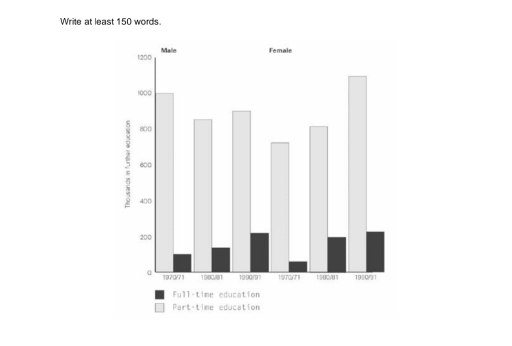
The image depicts the data in a bar chart divided into two categories: male and female, showing participation in full-time and part-time education for the years 1970/71, 1980/81, and 1990/91. In 1970/71, for males, full-time education participants are approximately 100 thousand, and part-time participants are around 1000 thousand; for females, full-time education participants are roughly 50 thousand, and part-time participants are roughly 700 thousand. In 1980/81, for males, full-time education participants are approximately 200 thousand, and part-time participants are around 900 thousand; for females, full-time education participants are about 100 thousand, and part-time participants are approximately 800 thousand. In 1990/91, for males, full-time education participants are roughly 300 thousand, and part-time participants total around 800 thousand; for females, full-time education participants are about 200 thousand, and part-time education participants are near 1000 thousand.
Given the complexity of the image, the above description may not be entirely accurate.
Skyrocket your IELTS band score by 1-2 points in under a month with our premium plan!
Note: Both the topic and the answer were created by one of our users.
The line graph presents the data about the number of male and female in full time and part time further education in three different time periods in Britain. Over all, it is evident that most students in both the genders preferred attending part-time throughout thirty years.
On analysing the chart, it gets crystal clear that the women in further education steadily followed an upward trend in both types of study and almost doubled and reached to 1200 in 1990/91 in Part-time where there were only 600 initially in 1970/71.Moreover, the full time attendees rocketed to nearly 200 people while only 50 were there in the previous decade, this proportion marginally escalated in the last consecutive year mentioned in the data.
In the same vein, the male Full-time students were also gradually soared almost with fifty individuals every year. On the other hand, the percentage of male Full-time’s in further education is fluctuated. There were 1000 in the beginning and dropped to around 800 and thereby nearly 900 by the end of 1990/91.
Word Count: 172
