Our system will evaluate the answer based on this AI-generated description.
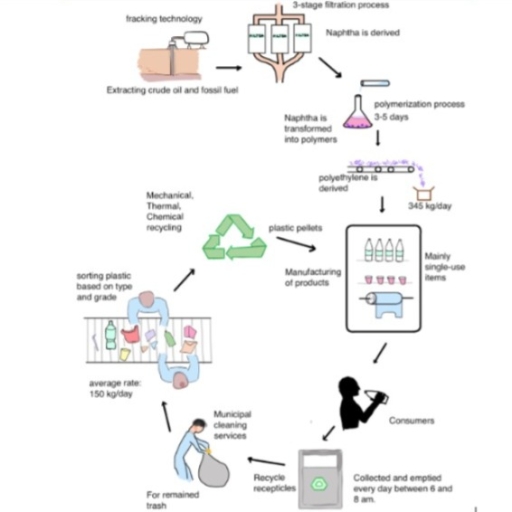
The image depicts the process of plastic product lifecycle starting with the extraction of crude oil and fossil fuel through fracking technology, leading to the derivation of naphtha via a 3-stage filtration process; naphtha then undergoes a polymerization process lasting 3-5 days, transforming into polymers from which polyethylene is derived at a rate of 345 kg/day; subsequent stages include mechanical, thermal, and chemical recycling into plastic pellets, which contribute to the manufacturing of mainly single-use items; a sorting process categorizes plastics by type and grade, maintaining an average sorting rate of 150 kg/day; for plastics not recycled, municipal cleaning services collect remaining trash, depositing it into recycle receptacles that are collected and emptied daily between 6 and 8 a.m., before reaching consumers.
Given the complexity of the image, the above description may not be entirely accurate.
Skyrocket your IELTS band score by 1-2 points in under a month with our premium plan!
Note: Both the topic and the answer were created by one of our users.
The diagram illustrates the procedure of production and recycling plastic.
Overall, the process constists of several stages, beginning with extraction of crude oil and fossil fuel and ending with manufacturing plastic products.
First of all, tracking technology – extraction of crude oil and fossil fuel, at the next stage 3 stage filtration process, which deriving Naptha, subsequently polymerizaton process taking three or five days consequently, naptha is transformed into polymers, moreover 345 kg of polyethylene is derived in day, following this there is mainly single use items like bottles and cups.
After that, consumers was using plastic to drink or something else, therefore people collecting used plastics every day between six and eight am, subsequently municipal cleaning services for remained trash, at the next stage people sorting plastic based on type and grade which average rate 150kg in day, next mechanical, thermal, chemical recycling for plastic pellets and manufacturing of plastic products.
Word Count: 152
