
LECTURES AND NOTE TAKING - IELTS Listening Answers & Explanations
From Oxford IELTS Practice Tests Academic Listening Test 1 · Part 3 · Questions 21–30
Audio
Questions
Questions 21–25 Flow Chart Completion
Label the flow chart. Write NO MORE THAN THREE WORDS for each answer.
LECTURES AND NOTE TAKING
Complete all 21 before lecture
↓
Think about likely 22 of lecture.
↓
Take notes during lecture.
↓
23 immediately after lecture.
↙ ↘
Revise before 24 | Revise every 25
Questions 26–29 Short Answers
Write NO MORE THAN THREE WORDS for each answer.
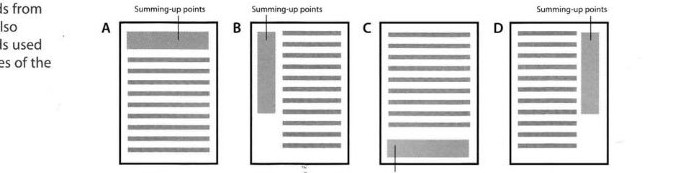
Questions 30–30 Diagram Labeling
Circle the correct letter A, B, C or D.
Answers & Explanations Summary
| # | Answer | Evidence | Explanation |
|---|---|---|---|
| Q21 | the background reading / the reading / background reading / reading | Let's begin by thinking about what you can do before you even go to the lecture. Any ideas? KAREENA Make sure you're up to date with all the background reading, so you know plenty about the subject already? TUTOR Yes, that's essential | Excerpt/Transcript Explanation: The transcript shows the tutor asking for ideas on what to prepare prior to attending a lecture, and Kareena mentions finishing all the background reading, which the tutor confirms is necessary. Answer Explanation: The answer refers to the study materials, articles, or books you should read beforehand to prepare for a lecture. Reason For Correctness: The correct answer is "(background) reading" because when the tutor asks what students should do before going to a lecture, Kareena suggests ensuring you are up to date with all the "background reading". The tutor agrees and calls this "essential", which corresponds to completing the reading before the lecture in the flow chart. |
| Q22 | the content / content | TUTOR I'd go a bit further than that and consider what the content may be | Excerpt/Transcript Explanation: The transcript shows the tutor suggesting that students think about what information and material the lecture will include before it starts. Answer Explanation: The answer "content" means the topics, ideas, or information that will be discussed during the lecture. Reason For Correctness: The correct answer is "content" because the tutor advises Carlos to go beyond just checking the lecture topic and "consider what the content may be" before attending. In the flow chart, the phrase "Think about likely" matches the tutor's advice to "consider what the ... may be". |
| Q23 | edit notes / edit / edit them | KAREENA When the lecture is over, you mean? TUTOR Yes, once you're able to sit down somewhere quiet with your notes. CARLOS Read them? TUTOR More than that. You need to make sure they'll still make sense to you weeks, months later. KAREENA Edit them? TUTOR Yes, that's what's needed. It's well worth spending a few minutes on it. Any missing words, anything difficult to read, details you didn't have time to jot down: now is the time to do so, while everything's still fresh in your mind | Excerpt/Transcript Explanation: The transcript shows Kareena asking if they should edit their notes once the lecture is finished, and the tutor strongly agrees that editing notes right away is necessary to fix missing or messy parts while memory is fresh. Answer Explanation: The answer means modifying, fixing, or polishing your written notes right after the lecture finishes. Reason For Correctness: The correct answer is "edit (notes)" because the tutor and students discuss the next stage immediately following a lecture ("When the lecture is over"). Kareena suggests "Edit them?", and the tutor confirms with "Yes, that's what's needed", explaining that right after the lecture—while everything is still fresh in mind—students should spend time adding missing words, fixing messy handwriting, and writing down details they missed. |
| Q24 | the next lecture / next lecture | CARLOS Um, I'd say just before the next lecture. In the same subject. TUTOR Precisely. That's a vital time to look at them again, for obvious reasons | Excerpt/Transcript Explanation: The transcript shows Carlos stating that notes should be revised right before the next class, and the tutor completely agreeing that it is an essential time to check them. Answer Explanation: The answer means the upcoming or following class in the same subject. Reason For Correctness: The correct answer is confirmed when Carlos suggests looking at the notes "just before the next lecture" and the tutor agrees that this is an important time to review them. In the flow chart, the prompt "Revise before" requires the words "next lecture". |
| Q25 | week | I'd recommend you look at them again once a week | Excerpt/Transcript Explanation: The transcript explains that the tutor advises students to check and review their notes again every single week. Answer Explanation: The answer means students should review their study notes one time each week. Reason For Correctness: The correct answer is "week" because when discussing how often students should go over and revise their lecture notes, Kareena asks if doing it a month later is good. The tutor corrects her and says they should do it much more frequently, recommending that they look at their notes again "once a week". Therefore, in the phrase "Revise every [input]", the missing time period is "week". |
| Q26 | at the front / the front | CARLOS Get a good seat at the front, if you can. Where you can hear clearly and avoid distractions | Excerpt/Transcript Explanation: The transcript explains that when entering the room, you should try to find a seat located in the front area so that you can hear well and not get distracted. Answer Explanation: The answer means sitting near the front of the lecture room, close to where the teacher or lecturer is speaking. Reason For Correctness: The correct answer is "at the front" because when the tutor asks what a student should do upon walking into the lecture room, Carlos advises finding a good seat "at the front" to hear clearly and stay focused. The tutor agrees with his recommendation. |
| Q27 | leave a space | TUTOR And what if you don't catch something, something you know must be important? KAREENA I'd leave a space, then I could check it later, perhaps by asking a question at the end, and fill it in afterwards | Excerpt/Transcript Explanation: The transcript shows the teacher asking what action to take when you fail to hear an important point, and the student answers that she leaves an empty blank area on the page to fill in later. Answer Explanation: The answer means you should keep an empty area or blank gap in your notes. Reason For Correctness: The correct answer is supported by the tutor asking what to do if you miss or "don't catch" something important during a lecture. Kareena replies that she would "leave a space" so she can check and write the information in later. The tutor agrees that this is an excellent method. |
| Q28 | it saves time / saves time / save time | it's absolutely vital that what you write is legible, for one very good reason - it saves time | Excerpt/Transcript Explanation: The transcript states that writing notes in a clear, readable way is extremely important because it saves time during study sessions. Answer Explanation: The answer "it saves time" means that writing notes clearly helps you avoid wasting time when you study them later. Reason For Correctness: The correct answer is supported by the tutor's statement about making notes clear and readable. The tutor mentions that it is essential for notes to be "legible" (which means easy to read) for one primary reason: "it saves time." Without clear handwriting, students waste many hours trying to understand what they wrote. |
| Q29 | signpost words / a signpost / signposts | KAREENA Well, I always listen out for signpost words. CARLOS Sorry, what are they? KAREENA They're the ones lecturers use to say where they're going. A bit like a signpost at a road junction, I suppose. Things like 'the first reason is ', 'however ', 'to sum up ', and so on. TUTOR Yes, they can tell you when something important is coming, and help you organize your notes, too |
Excerpt/Transcript Explanation: The transcript explains that "signpost words" are phrases teachers use to show where their speech is going and to alert listeners that important information is about to follow. Answer Explanation: The answer refers to connecting terms or guiding phrases that speakers use to signal the direction of a talk or what will be said next. Reason For Correctness: The correct answer is "signpost words" because Kareena and the tutor discuss how these words guide listeners. Kareena explains that lecturers use them to show "where they're going" (such as "the first reason is ...", "however ...", "to sum up ..."), and the tutor confirms that "they can tell you when something important is coming". Therefore, the term for expressions that show what is coming next is "signpost words". |
| Q30 | B | CARLOS Well what I do is go through what I've written down, summing up the main points in a few words in the margin, on the left-hand side of the page | Excerpt/Transcript Explanation: The transcript shows Carlos stating that after writing his notes, he writes brief summaries of the key points along the left margin of the page. Answer Explanation: The answer identifies the correct location (position B) on the page where Carlos writes summary points. Reason For Correctness: The correct answer is B because Carlos explains his note-taking method when reviewing his notes after a lecture. He clearly states that he writes a summary of the main points 'in the margin, on the left-hand side of the page', which corresponds to position B. |
Transcript
TUTOR Well, how are you both settling in?
CARLOS Fine.
KAREENA Yes, no problems - so far, anyway!
TUTOR Good. Remember that as your personal tutor I'm here to help you - if you do have any difficulties. Now as you know, lectures start on Monday. So I thought we'd look at a few ways of making the most of them, especially in terms of the notes you take. Let's begin by thinking about what you can do before you even go to the lecture. Any ideas?
KAREENA Make sure you're up to date with all the background reading, so you know plenty about the subject already?
TUTOR Yes, that's essential. The lecturer will assume you have that knowledge. Anything else, Carlos?
CARLOS Well, er, check what the topic's going to be. Of the lecture, that is.
TUTOR I'd go a bit further than that and consider what the content may be. Then you could ask yourself some questions that you want answering, and listen out for the relevant information during the lecture.
CARLOS OK.
TUTOR Now that brings us to the lecture itself, and the actual business of writing notes, but there's a lot to deal with there so we'll come back to that later. What I'd like to do for the moment is continue with the process of note taking, and move on to the next stage. Any suggestions for what that might be?
KAREENA When the lecture is over, you mean?
TUTOR Yes, once you're able to sit down somewhere quiet with your notes.
CARLOS Read them?
TUTOR More than that. You need to make sure they'll still make sense to you weeks, months later.
KAREENA Edit them?
TUTOR Yes, that's what's needed. It's well worth spending a few minutes on it. Any missing words, anything difficult to read, details you didn't have time to jot down: now is the time to do so, while everything's still fresh in your mind.
KAREENA Right. And after that, when's the best time to revise them?
TUTOR When do you think, Carlos?
CARLOS Um, I'd say just before the next lecture. In the same subject.
TUTOR Precisely. That's a vital time to look at them again, for obvious reasons. But it's definitely not the only time. When should you revise them again?
KAREENA A month later, maybe?
TUTOR Sooner, and much more often than that. I'd recommend you look at them again once a week. That's why it's so important they're complete and easy to follow.
TUTOR Right, let's go back to note-taking, and begin with the basics, before the lecture has even started. What should you do when you walk into the room?
CARLOS Get a good seat at the front, if you can. Where you can hear clearly and avoid distractions.
TUTOR Yes, though obviously others will have had the same idea, so it's as well to get there a bit early. So, when the lecture's under way and you're busy jotting things down, what should you try to ensure?
KAREENA That you're getting all the main points.
TUTOR And what if you don't catch something, something you know must be important?
KAREENA I'd leave a space, then I could check it later, perhaps by asking a question at the end, and fill it in afterwards.
TUTOR That's an excellent way to deal with it, yes. And there's something else I'd like to mention here, talking about going through notes afterwards: it's absolutely vital that what you write is legible, for one very good reason - it saves time. You'll waste many hours, during the course, if your revision is held up because you can't read what you've written. OK, what else can we do to make listening and note-taking more efficient?
KAREENA Well, I always listen out for signpost words.
CARLOS Sorry, what are they?
KAREENA They're the ones lecturers use to say where they're going. A bit like a signpost at a road junction, I suppose. Things like 'the first reason is ...', 'however ...', 'to sum up ...', and so on.
TUTOR Yes, they can tell you when something important is coming, and help you organize your notes, too.
TUTOR Is there anything else you can add, Carlos?
CARLOS Er ... there's something I think is very useful, but it's later: after the lecture has finished.
TUTOR That's fine. Go on.
CARLOS Well what I do is go through what I've written down, summing up the main points in a few words in the margin, on the left-hand side of the page. I try to use words that'll jog my memory, so that I can remember what everything's about when I look at them again.
TUTOR Yes, that can work very well. What some people do to review their notes is cover up their full notes from the lecture, maybe with a piece of paper or a card, and concentrate just on what they've put in the margin, trying to recall the details. Then they move the cover down a little and check whether they were right.
KAREENA Or you could put your main points on another piece of paper and clip them together. Instead of covering and uncovering, you just hold a page in each hand.
TUTOR Sure. It's down to personal preference, really. Everyone has their own learning style.