
THE LONDON EYE - IELTS Listening Answers & Explanations
From Expert on Cambridge IELTS 09 Academic Listening Test 3 · Part 4 · Questions 31–40
Audio
Questions
Questions 31–35 Summary Completion
Complete the summary below.
Write NO MORE THAN TWO WORDS AND/OR A NUMBER for each answer.
THE LONDON EYE
The London Eye, or 31 Wheel is an extremely large passenger-carrying Ferris wheel situated on the banks of the 32 in Central London in the United Kingdom. It attracts 33 people annually. Back in 2000, 34 was the main sponsor. Today, the London Eye is operated by the London Eye Company Limited, a Merlin Entertainments Group Company. Standing at a height of 35, it is the largest Ferris wheel in Europe, and has become the most popular paid tourist attraction in the United Kingdom, visited by over three million people in one year.
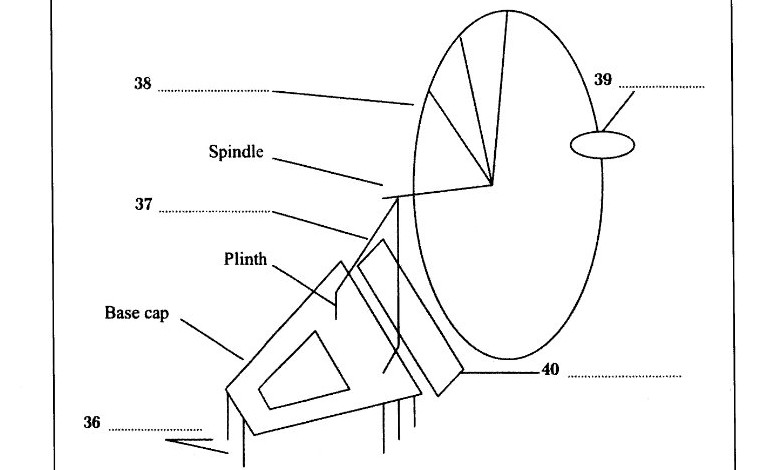
Questions 36–40 Diagram Labeling
Label the diagram below.
Write NO MORE THAN TWO WORDS for each answer.
Answers & Explanations Summary
| # | Answer | Evidence | Explanation |
|---|---|---|---|
| Q31 | Millennium | It is a huge wheel designed to celebrate the Millennium year 2000, so it's also known as the Millennium Wheel | Excerpt/Transcript Explanation: The transcript states that another name for this giant wheel is the Millennium Wheel because it was made to celebrate the year 2000. Answer Explanation: The answer means "Millennium", which is another name used for the London Eye. Reason For Correctness: The correct answer is "Millennium" because the summary introduces an alternative name for the London Eye, ending with the word "Wheel". The speaker explains that because the wheel was created to celebrate the year 2000, it is also called the "Millennium Wheel". |
| Q32 | River Thames | It stands at Millennium Pier, on the South Bank of the River Thames, close to the south end of Westminster Bridge, and within an easy walk of the Houses of Parliament and Big Ben | Excerpt/Transcript Explanation: The transcript explains that the London Eye is located right by the River Thames on its South Bank. Answer Explanation: The answer is the famous river flowing through London, called the River Thames. Reason For Correctness: The correct answer is supported by the text where the speaker describes the location of the London Eye. The summary asks where the wheel is located ("situated on the banks of the..."). The speaker directly states that it stands "on the South Bank of the River Thames". Therefore, "River Thames" correctly fills in the blank. |
| Q33 | 3.5 million | The London Eye is the UK's most popular paid for visitor attraction, visited by over 3.5 million people a year | Excerpt/Transcript Explanation: The transcript states that more than 3.5 million visitors come to see the London Eye each year. Answer Explanation: The answer means that three and a half million tourists visit this attraction every year. Reason For Correctness: The correct answer is confirmed by the speaker mentioning visitor numbers. The text states that the London Eye is "visited by over 3.5 million people a year." In the summary, the word "annually" has the same meaning as "a year," and "attracts ... people" matches "visited by ... people." |
| Q34 | British Airways | The Eye was sponsored by British Airways, and for several years after opening it was referred to as the British Airways Millennium Wheel | Excerpt/Transcript Explanation: The transcript states that the company British Airways was the sponsor for the London Eye, so the attraction was even named after them for a few years after it opened. Answer Explanation: The answer "British Airways" refers to the airline company that supported and paid money for the London Eye attraction when it first opened. Reason For Correctness: The correct answer is British Airways because the text directly states that the London Eye "was sponsored by British Airways" around the time it opened in 2000. The prompt asks who "was the main sponsor," which matches the word "sponsored" in the audio transcript. |
| Q35 | 135 metres / 135 meters | It's the tallest cantilevered observation wheel in the world, rising high above the London skyline at 135 metres | Excerpt/Transcript Explanation: The transcript explains that the London Eye is the tallest wheel of its kind and reaches a height of 135 metres above the city. Answer Explanation: The answer means that the total height of the wheel reaches 135 metres. Reason For Correctness: The correct answer is "135 metres" because the speaker discusses the size of the London Eye and states that it rises above the city skyline at 135 metres. The words "rising high above the London skyline" mean the same thing as "Standing at a height of". |
| Q36 | Tension Piles | tension piles were being driven into the ground beside the River Thames | Excerpt/Transcript Explanation: The transcript states that large support columns called tension piles were pushed deep into the earth next to the river. Answer Explanation: The answer refers to deep support poles placed into the ground to hold the structure firmly. Reason For Correctness: The correct answer is confirmed because the speaker explains the initial building process of the London Eye. When starting from the ground, the very first step was driving "tension piles" into the earth near the River Thames to secure the foundation. |
| Q37 | A-Frame | The wheel was supported on huge A-frame legs, made up of 2,200 tonnes of concrete on 44 concrete piles set 33 meters deep in the earth | Excerpt/Transcript Explanation: The transcript explains that the massive London Eye wheel is held up and supported by gigantic legs shaped like the letter A. Answer Explanation: The answer refers to the "A-frame," which is a large support structure shaped like the capital letter "A" that holds up the giant wheel. Reason For Correctness: The correct answer is "A-Frame" because the speaker explains how the giant wheel is held up. Specifically, the speaker notes that "an A-frame was attached, like a giant letter" and that "the wheel was supported on huge A-frame legs." Therefore, the part of the diagram showing the main support legs corresponds to the A-frame. |
| Q38 | Rim | Now the project really was in business, and the vast rim with spokes like an outsized bicycle wheel could be brought in | Excerpt/Transcript Explanation: The transcript explains that the outer circular frame, called the rim, was added to the structure, looking like a giant bicycle wheel. Answer Explanation: The answer "Rim" means the large outer circular ring or edge of the wheel. Reason For Correctness: The correct answer is confirmed because the speaker describes the construction of the wheel comparing it to a huge bicycle wheel, stating that "the vast rim with spokes" was brought in and held in place by spoke cables connected to the central spindle. |
| Q39 | Passenger Capsules | unlike traditional ferries wheel designs that you might see at a local fairground, the passenger capsules were not suspended under the wheel, they were set within a circular mounting ring attached to the outside surface of the wheel | Excerpt/Transcript Explanation: The transcript explains that the special compartments where riders travel, called passenger capsules, are fixed to the outer edge of the wheel. Answer Explanation: The answer refers to the enclosed glass cabins or pods attached to the outside of the wheel where people ride and view the city. Reason For Correctness: The correct answer is supported by the part of the talk describing the different parts of the London Eye wheel. The speaker mentions that, unlike regular Ferris wheels, the "passenger capsules" are mounted on the outer rim of the wheel so that riders can enjoy a clear view of London. |
| Q40 | Boarding Platform | And the last thing to be built is the first thing the visitor encounters, the boarding platform laid down underneath | Excerpt/Transcript Explanation: The transcript explains that the structure placed at the bottom where visitors first arrive is the boarding platform. Answer Explanation: The answer means the special walking area where passengers step onto or get off the ride. Reason For Correctness: The correct answer is confirmed because the speaker describes the final part built at the bottom of the structure where visitors first arrive to get on the capsules. The speaker explicitly names this area the "boarding platform". |
Transcript
The London Eye
Today I want to focus on some of the major sights that attract tourists to cities, and I am going to begin with the London Eye. The London Eye is London's newest major tourist attraction. It is a huge wheel designed to celebrate the Millennium year 2000, so it's also known as the Millennium Wheel. It stands at Millennium Pier, on the South Bank of the River Thames, close to the south end of Westminster Bridge, and within an easy walk of the Houses of Parliament and Big Ben. Though it looks like a huge Ferris wheel, the London Eye is no fairground thrill-ride, but a slow and stately way to experience London in a unique way. The London Eye is the UK's most popular paid for visitor attraction, visited by over 3.5 million people a year.
The Eye was built between 1998 and 2000. It seems remarkable that a site that has so quickly become a symbol of modern London has been around for such a short time! It took fully seven years from start of the design process to create the Eye. It was intended to stand for only a few years, but it proved to be such a popular attraction that the decision was made to make the wheel a permanent feature of the London landscape. The Eye was sponsored by British Airways, and for several years after opening it was referred to as the British Airways Millennium Wheel. Today the London Eye is under the ownership of the London Eye Company, a subsidiary of Merlin Entertainments Group Company.
Constructing The Merlin Entertainments London Eye was a massive challenge. It's the tallest cantilevered observation wheel in the world, rising high above the London skyline at 135 metres. It was a piece of daring innovation and revolutionary design which combined the best of British design, architecture and engineering with an exceptional team of experts.
So, how is that great wheel held up? How did it get there? The starting point was, of course, the ground, and while parts of the wheel itself were still being constructed in various countries, tension piles were being driven into the ground beside the River Thames. This was the first step, and once these were securely in place, a base cap was installed over them as a kind of lock, with two giant plinths pointing up, onto which an A-frame was attached, like a giant letter. The wheel was supported on huge A-frame legs, made up of 2,200 tonnes of concrete on 44 concrete piles set 33 meters deep in the earth. All this took many months and incredible effort, but meant that the spindle could be installed, around which the great wheel would turn. The spindle itself was too large to cast as a single piece so instead was produced in eight smaller sections. Now the project really was in business, and the vast rim with spokes like an outsized bicycle wheel could be brought in. 64 spoke cables, which are similar to bicycle spokes, hold the rim tight to the central spindle. And the view was enhanced by the capsule design; unlike traditional ferries wheel designs that you might see at a local fairground, the passenger capsules were not suspended under the wheel, they were set within a circular mounting ring attached to the outside surface of the wheel. What this means in practice is that travelers within the capsule have a full 360 degree panoramic view, unhindered by spokes of wheel struts. And the last thing to be built is the first thing the visitor encounters, the boarding platform laid down underneath. The wheel does not usually stop to take on passengers; the rotation rate is slow enough to allow passengers to walk on and off the moving capsules at ground level. It is, however, stopped to allow disabled or elderly passengers time to embark and disembark safely.