
The Treloar Valley - IELTS Listening Answers & Explanations
From IELTS Recent Actual Test 5 Academic Listening Test 3 · Part 2 · Questions 11–20
Audio
Questions
Questions 11–14 One Choice
Choose the correct letter, A, B or C.
Questions 15–20 Map Labeling
Label the map below.
Write the correct letter, A-H, next to Questions 15-20.
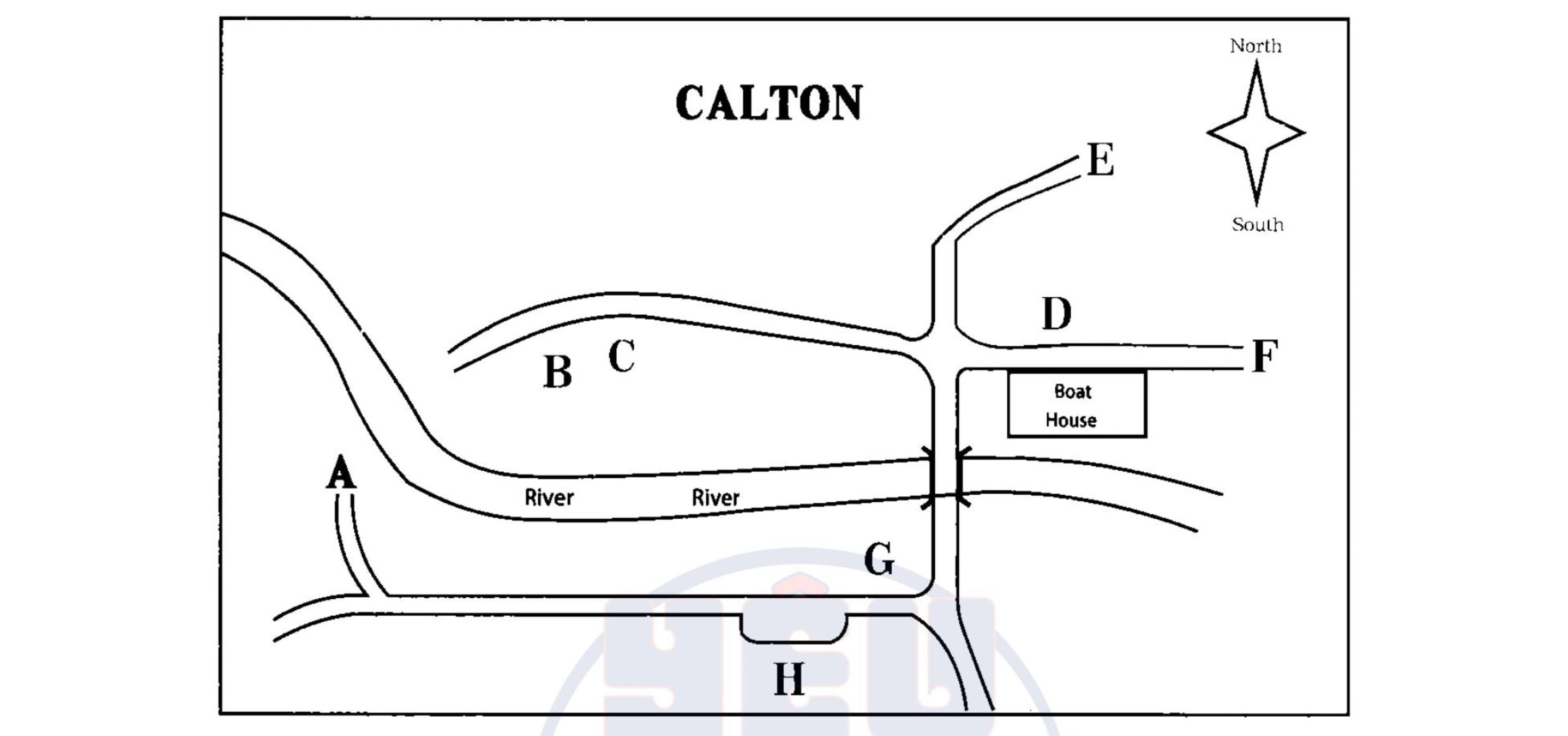
Answers & Explanations Summary
| # | Answer | Evidence | Explanation |
|---|---|---|---|
| Q11 | A | The ferry is also seasonal, usually running its businesses during the period between April and September depending on the weather | Excerpt/Transcript Explanation: The transcript explains that the boat service only runs during specific months of the year. It starts in April and ends in September, though the exact dates might change depending on the weather. Answer Explanation: The answer says that the boat service generally begins operating in the month of April. Reason For Correctness: The correct answer is A because the text explicitly states that the ferry is seasonal and operates during the period between April and September. This confirms that its usual start time is in April. It also clarifies that the schedule was not the same every day because it changed based on the water levels (the tide), which makes option B incorrect. |
| Q12 | A | You can travel up river by boat and return to Plymouth by train if you prefer | Excerpt/Transcript Explanation: The transcript explains that you can choose to go one way on the river by boat and then use the train to go back to Plymouth. Answer Explanation: The answer says you can use both a boat and a train for the same trip. Reason For Correctness: The correct answer is A because the transcript says you can use more than one type of transport for your visit. It mentions that you can go one way by boat (the river cruise) and come back by train. Choice B is wrong because the text says boats have wheelchair access. Choice C is wrong because it says the whole round trip takes 4 to 5 hours, not just the return part. |
| Q13 | B | What highlighted the journey most is going across the river on the amazing viaduct which was constructed at the early period of the 20th century, and it towers 120 feet over the water | Excerpt/Transcript Explanation: The transcript notes that the most special part of the train ride is crossing a river on a very high bridge (viaduct). This bridge stands 120 feet above the water. Answer Explanation: The answer B means that a part of the railway track is built high up above the water or ground. Reason For Correctness: The correct answer is B because the text describes an 'amazing viaduct' that the train crosses. A viaduct is a type of long bridge. The text says it 'towers 120 feet over the water,' which confirms that this section of the track is raised high in the air. We can rule out A because the text mentions 'different stations in between' the two towns, meaning the train does stop along the way. We can rule out C because it says 'it is unnecessary to book ahead' and you can buy tickets right on the train. |
| Q14 | C | The rover ticket offers great value for money and is now even cheaper than it was last year | Excerpt/Transcript Explanation: The transcript states that the rover ticket has a lower price this year compared to the previous year. Answer Explanation: The answer means that the cost of the rover bus ticket is currently lower than it used to be. Reason For Correctness: The correct answer is C because the text says the ticket is 'now even cheaper than it was last year.' This matches the idea of the price going down. Choice A is wrong because the ticket allows 'unlimited journeys,' and the number 5 is only mentioned for the number of people on a family ticket. Choice B is wrong because the ticket works on both 'weekends and national holidays,' not just weekends. |
| Q15 | H | The main road comes into the village from the south and for those who are riding by bus it turns left just before the bridge and stops in the lay-by on the left hand | Excerpt/Transcript Explanation: The transcript explains that when traveling by bus from the southern side, the bus turns left before it crosses the bridge and stops at a specific spot on the left side of the road. Answer Explanation: The answer H is the location of the bus stop on the map. Reason For Correctness: The correct answer is H because the speaker provides specific directions from the south of the village. They explain that the bus turns left before reaching the bridge. A 'lay-by' is a small area next to a road where vehicles like buses stop to let people on and off. Position H matches the description of turning left before the bridge and stopping on the left side. |
| Q16 | F | Go over the bridge, take the first turning on the right, then go on until you come to the end of that road. It's the only place to park in Carlton but there's no charge | Excerpt/Transcript Explanation: The transcript explains exactly how to reach the car park by giving driving directions: cross the bridge, turn right at the first opportunity, and go to the end of the road. Answer Explanation: The answer F is the specific letter on a map that shows where visitors can leave their cars. Reason For Correctness: The correct answer is F because it matches the directions given for finding the car park. The transcript says that after crossing the bridge from the south, a driver should take the first right turn and follow that road to the very end. The text identifies this specific location as the main car park and the only place to park in the village. Keywords like 'over the bridge', 'first turning on the right', and 'end of that road' provide the step-by-step path to this spot. |
| Q17 | E | As you come in from the south, cross the river and go straight on the same road until you reach the end | Excerpt/Transcript Explanation: The transcript tells the listener to go across the water and continue moving straight ahead on the road without turning until the road finishes. Answer Explanation: The answer is E, which is the location of the museum on the map. Reason For Correctness: The correct answer is E because the speaker gives specific directions to find the museum from the village's entrance. Starting from the south, you must go over the river and then keep moving forward on that same road until it stops. This location at the end of the straight road after the bridge matches point E. |
| Q18 | A | Turn left before you come to the bridge then go straight on and take the first turning on the right. This leads straight there | Excerpt/Transcript Explanation: The transcript explains exactly how to get to the old mill: you should turn left just before you get to the bridge, go forward, and then turn right at the first street you see. Answer Explanation: The answer is the letter on the map that shows where the old mill is located. Reason For Correctness: The correct answer is A because the transcript provides specific driving or walking directions to reach the old mill starting from the south of the village. It tells the listener to turn left before reaching the bridge, continue straight, and then take the first right turn, which leads directly to the mill. Keywords like 'turn left', 'before the bridge', and 'first turning on the right' are the main clues. |
| Q19 | B | After crossing the bridge, turn left and it's the second building on the left | Excerpt/Transcript Explanation: The transcript tells the listener to go over the bridge and then turn left. It says the potter studio is the second house or building on the left side after you turn. Answer Explanation: The answer B is the location of the potter studio on the map. Reason For Correctness: The correct answer is B because the speaker explains how to get to the potter studio starting from the south of the village. You have to cross the bridge first. After that, you make a left turn. The potter studio is the second building you will see on the left-hand side of that road. |
| Q20 | D | Finally when you in need of refreshments, there's a cafe opposite the old boat house, and a picnic area near the mill | Excerpt/Transcript Explanation: The transcript states that if visitors want food or drinks (refreshments), they can find a cafe. This cafe is located directly across from the building where old boats are kept (the old boat house). Answer Explanation: The answer D is the location of the cafe on the map. Reason For Correctness: The correct answer is D because the speaker describes the location of the cafe in relation to another building. The speaker uses the word 'opposite,' which means across from or facing something. By identifying the 'old boat house' on the map, the listener can find the cafe right across from it. |
Transcript
An unspoiled splendid scenery take its shape in the valley and estuary of river Treloar, abundant with wildlife as well as views of historic interest. There are lots of channels to explore the area with the wonderful public transport networks. With just short walks in between spots, it is possible for you to leave the car behind and travel by boat, train or bus.
There is Treloar Valley passenger ferry running between villages, alongside the river estuary and serves as a link with the train station at Barry, from which it takes only 10-minute walk from the riverside village of Carlton. In the past, the main transport way in the area was the river and as the past, the ferry timetable varied from day to day according to the time and height of the tide. The ferry is also seasonal, usually running its businesses during the period between April and September depending on the weather. Visiting our website, www.treloarferry.co.uk, it's convenient to download the timetable. If you would like to relax and enjoy the wonderful scenery, just take a river cruise to Carlton and back from the nearby City of Plymouth. Visitors were carried along the same route by steamships in the past. Queen Victoria and her family also enjoyed such trip in 1856.
Today, it takes you few hours during journey; the round trip only lasts for 4 to 5 hours, varying in terms of the tides and weather. You can travel up river by boat and return to Plymouth by train if you prefer. There will be wheelchair access on all the cruise boats and trains. For more information and departure times, please ring Plymouth boat cruise on 01752823104.
Trains travel between Carlton and Plymouth many times a day with different stations in between throughout the year. Local commuters as well as visitors who fancy the lovely scenery prefer to use the service. What highlighted the journey most is going across the river on the amazing viaduct which was constructed at the early period of the 20th century, and it towers 120 feet over the water. Tickets can be directly bought on the train so it is unnecessary to book ahead. You can reach National Rail Inquiries by phone or online for more details about fares and timetables. The bus service is now linking all train stations and villages in the zone, specially for holidaymakers. There is a rover ticket including unlimited journeys, which can be used on weekends and national holidays. The rover ticket offers great value for money and is now even cheaper than it was last year. For adults, a ticket costs 5.50 pounds per day, for senior citizens the cost is 4.50 pounds and a family ticket for up to 5 people only costs 12 pounds. You can purchase tickets on the bus.
At the centre of the Treloar estuary area is the historic riverside village of Carlton. The main road comes into the village from the south and for those who are riding by bus it turns left just before the bridge and stops in the lay-by on the left hand.
From there, it's just a short walk to Carlton's various attractions. If you are arriving by car you have to leave it in the main car park. Go over the bridge, take the first turning on the right, then go on until you come to the end of that road. It's the only place to park in Carlton but there's no charge.
If you're interested in local history, there is a museum in Carlton with farming, fishing and household implements from the late 19th century. As you come in from the south, cross the river and go straight on the same road until you reach the end. Also, on the subject of history you can go and see the old mill which is recently been renovated and put back into use. Turn left before you come to the bridge then go straight on and take the first turning on the right. This leads straight there.
If you're interested in arts and crafts there's a potter studio where you can watch the artist at work. After crossing the bridge, turn left and it's the second building on the left. Finally when you in need of refreshments, there's a cafe opposite the old boat house, and a picnic area near the mill.