
Water-mill Scene - IELTS Listening Answers & Explanations
From IELTS Trainer 1 Academic Listening Test 1 · Part 3 · Questions 21–30
Audio
Questions
Questions 21–26 Flow Chart Completion
Complete the flow-chart below.
Choose SIX answers from the box and write the correct letter, A-I, next to questions 21-26.
A. actors | B. furniture | C. background noise
D. costumes | E. local council | F. equipment
G. shooting schedule | H. understudies | I. shopowners
FILM PROJECT
visit locations and discuss 21
↓
contact the 22 about roadworks
↓
plan the 23
↓
hold auditions and recheck availability of the 24
↓
choose the 25 from the volunteers
↓
rehearse
↓
collect 26 and organise food and transport
Questions 27–30 Diagram Labeling
Choose four answers from the box and write the correct letter, A-G, next to questions 27-30.
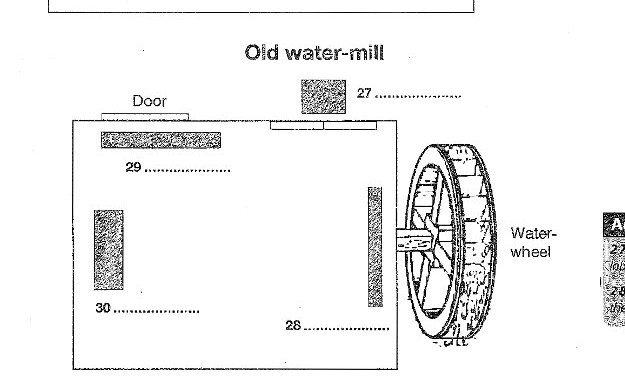
A. lights | B. fixed camera | C. mirror
D. torches | E. wooden screen | F. bike
G. large box
Answers & Explanations Summary
| # | Answer | Evidence | Explanation |
|---|---|---|---|
| Q21 | C | We need to talk about the levels of background noise so we know they're all going to be reasonable places to film | Excerpt/Transcript Explanation: The transcript shows that the group plans to visit the filming spots to check if the loud or quiet sounds in the area will cause problems for their video. Answer Explanation: The answer is the sound from the environment that the team needs to talk about when they visit the different places where they will film. Reason For Correctness: The correct answer is 'background noise' (C) because Reza explains that visiting the locations is important for discussing the sounds around them. He specifically mentions that they need to check if the noise levels are okay for filming, giving examples like traffic, planes, and trains. This matches the flow-chart step of visiting locations and discussing this specific technical detail. |
| Q22 | E | The local council have to be informed about things like that so you can find out from them | Excerpt/Transcript Explanation: The transcript states that the student should talk to the local government office because they are told about road repairs or construction, allowing the students to get that information from them. Answer Explanation: The answer is the local council, which is the official government group that manages a specific town or area. Reason For Correctness: The correct answer is the local council because Reza suggests checking for roadworks or building activities to avoid interruptions during filming. He explains that because the local council receives information about these public works, the students can contact them to find out where and when they are happening. |
| Q23 | G | We need to prepare the shooting schedule, day by day | Excerpt/Transcript Explanation: The transcript shows that Mike wants to make a plan for the time and days they will use to record the movie. Answer Explanation: The answer is the shooting schedule, which is a detailed plan showing what time and on what day every part of a film will be recorded. Reason For Correctness: The correct answer is G because Mike says they need to make a list of all the film's scenes and decide when to film each one. This daily plan for filming is called a shooting schedule. Using the word 'prepare' is another way to say you are going to 'plan' something. |
| Q24 | A | OK, so as soon as we can, we'll audition, and then when we contact people to offer them parts we can send the exact dates and make really sure they are free. Because often the actors are all enthusiastic but then when you try to pin them down about whether they're really free at that time, you find they've got exams or something, or they're off to a festival just before and you have to rush about looking for replacements | Excerpt/Transcript Explanation: The transcript explains that the students will find performers through auditions and then confirm the specific dates with them to make sure they do not have other plans, like tests at school or trips, that would stop them from filming. Answer Explanation: The answer is 'actors,' which refers to the people who will perform the roles in the movie. Reason For Correctness: The correct answer is 'A' (actors) because Helen describes the sequence of events after the planning phase. Once the team knows the filming dates (the shooting schedule), they plan to hold auditions to find their cast. She emphasizes that it is crucial to check the availability of these performers again because even if they are 'enthusiastic,' they might later find they have schedule conflicts like 'exams' or are 'off to a festival.' Rechecking their availability ensures the team doesn't have to find last-minute 'replacements.' |
| Q25 | H | Reza: Yes, I agree. So offer the main parts to the people we really want, and then look at other volunteers who were OK. Helen: Yes. We can select the understudies once the main roles have been confirmed | Excerpt/Transcript Explanation: The transcript shows the students agreeing to pick the main actors first. Then, they will look at the other people who volunteered and choose the backup actors, known as understudies, from that group. Answer Explanation: The answer is understudies, which refers to people who learn an actor's part so they can perform if the main actor is unable to. Reason For Correctness: The correct answer is determined by the conversation between Mike, Reza, and Helen. Mike mentions that they need people to replace the main actors if they get sick. Reza suggests choosing these people from the group of volunteers who performed well. Helen then confirms that they will choose these 'understudies' after the main actors are chosen. This matches the flow-chart step which involves choosing a group from the 'volunteers'. |
| Q26 | B | My family has agreed to lend us some pieces of furniture which we need, so we'll go and fetch those the weekend before we start | Excerpt/Transcript Explanation: The transcript shows Mike explaining that he will go and pick up the items needed for the movie set from his family's home. Answer Explanation: The answer is furniture. These are items like chairs and tables that the students will use for the scenes in their movie. Reason For Correctness: The correct answer is B because Mike mentions that his family is letting them borrow 'furniture' and that they will go and 'fetch' these items right before filming starts. In this context, 'fetch' is a synonym for 'collect,' matches the action described in the flow-chart. |
| Q27 | B | Our plan is to fix one camera outside by the window next to the door, to film through the window, and then have another handheld camera inside the mill | Excerpt/Transcript Explanation: The transcript explains that the students will put one camera in a permanent position outdoors near a window to capture the action from outside the building. Answer Explanation: The answer is the camera that is set in a steady spot. Reason For Correctness: The correct answer is B because when Helen talks about the scene at the mill, she describes their plan to place a camera in a specific, unmoving position outside. She uses the word 'fix,' which in this context means to attach or set something in place so it stays there. This matches the term 'fixed camera' from the options, as a fixed camera is one that does not move around during filming. |
| Q28 | A | Yes, by doing it that way, all we'll need is lights on the inside, next to the wall behind the wheel which can shine across to the opposite wall | Excerpt/Transcript Explanation: The transcript shows Mike explaining that they only need to place lights inside the building, specifically on the wall that is behind the wheel. Answer Explanation: The answer is 'A', which represents the lights that will be used for filming inside the water-mill. Reason For Correctness: The correct answer is 'A' because Mike explains the lighting setup for the film's final scene. He mentions that they will place lights inside the mill, specifically on the wall located behind the water-wheel. This is done so the light can shine across the room to provide enough brightness for the evening scene. Mentioning 'lights' in relation to the 'wall behind the wheel' confirms that item A belongs in that specific location. |
| Q29 | E | And we'll have an old screen made of wood just inside the door, because it's a new door and it'll look wrong | Excerpt/Transcript Explanation: The transcript shows that Mike plans to put a screen made of wood near the entrance because the real door looks too new for their movie. Answer Explanation: The answer is E, meaning a wooden screen is one of the items they will use in the mill location. Reason For Correctness: The correct answer is E because Mike mentions they will place an old screen made of wood right inside the door to hide a new door that doesn't fit the style of the film. The phrase 'screen made of wood' is a direct synonym for 'wooden screen.' This item helps make the setting look more old-fashioned and correct for the scene. |
| Q30 | G | There's a huge box on the floor against the wall farthest from the wheel. We'll see the girl approaching the mill on her bike. Then we see through the window and the man is inside looking at it, then the next shot is the girl, in the room with him, opening the box | Excerpt/Transcript Explanation: The transcript talks about a big box on the floor. It is placed next to the wall that is the longest distance away from the wheel, and the girl in the movie scene will open it. Answer Explanation: The answer G means a "large box" is the object located in a specific part of the film set. Reason For Correctness: The correct answer is G because Mike describes a "huge box" sitting on the floor of the mill. He explains that it is placed against the wall that is the farthest distance from the water-wheel. "Huge" is another word for "large," which matches option G. |
Transcript
You will hear three students on a media studies course talking about a film they are planning to make. First you have some time to look at questions 21 to 26.
[Pause the recording for 30 seconds.]
Now listen carefully and answer questions 21 to 26.
Reza: Hi Mike.
Mike: Hi Reza, this is Helen.
Helen: Hello!
Mike: We're really pleased you've agreed to join us on this film project.
Helen: Yes, your experience is going to be so useful.
Reza: Well, I hope so. It's the technical side I know best - lighting, sound and stuff.
Mike: But you think the script is OK?
Reza: Yes, I think it's great! Um, have you decided where you're going to shoot?
Helen: Well, there's the water-mill scene at the end. And we've thought about some locations in town we can use. They're behind the shopping mall and on a couple of residential streets. And in an empty shop on campus. It means we don't have to worry about getting permission from a shopowner.
Mike: So do you think we should go to all the locations with you?
Reza: It would be a good idea. We need to talk about the levels of background noise so we know they're all going to be reasonable places to film.
Mike: But the sounds of traffic will make it more natural.
Helen: I think Reza means things like aeroplanes, trains and so on that would mean we have to stop filming.
Reza: Exactly. And also I'll make notes for myself about what lighting I'm going to need. I think the university department has a good range of equipment, but I'll need to make a list for each location for my own reference. Anyway, once we've had a look round, you can do the roadworks check.
Mike: What do you mean?
Reza: You need to find out about building work or roadworks. Because you could start filming one day and come back in the morning to find one of the roads has been dug up! The local council have to be informed about things like that so you can find out from them.
Mike: OK. Then I think we need to work from the script and put together a list of all the scenes and decide which ones we're going to film when. We need to prepare the shooting schedule, day by day.
Reza: You're right. Then when you know how long filming is going to last, you can tell everyone when they're needed.
Helen: OK, so as soon as we can, we'll audition, and then when we contact people to offer them parts we can send the exact dates and make really sure they are free. Because often the actors are all enthusiastic but then when you try to pin them down about whether they're really free at that time, you find they've got exams or something, or they're off to a festival just before and you have to rush about looking for replacements.
Mike: Then, we need people who can take over the main parts if one of our stars falls ill or something.
Reza: Yes, I agree. So offer the main parts to the people we really want, and then look at other volunteers who were OK.
Helen: Yes. We can select the understudies once the main roles have been confirmed. So, once we've got that sorted and we've held all the rehearsals of the main scenes, we'll be ready to start filming.
Reza: Yes, that sounds good. Anything else?
Mike: Er, well, just housekeeping, really. We don't actually need costumes because actors will wear their own clothes. My family has agreed to lend us some pieces of furniture which we need, so we'll go and fetch those the weekend before we start.
Helen: We'll provide food and drink during shooting so I'm going to borrow some cool-boxes.
Mike: And I've got a little van. Most of the locations are within walking distance of the halls of residence anyway. The only one further away is the water-mill.
Reza: Ah, yes, can you tell me about that?
Mike: Um, OK. Er, hang on a minute, I'll get my notes. There's a plan in them.
Before you hear the rest of the conversation, you have some time to look at questions 27 to 30.
[Pause the recording for 30 seconds.]
Now listen and answer questions 27 to 30.
Mike: Here's the mill. You see, basically you have a vertical water-wheel which was used to power the grinding stones.
Reza: Mm, it sounds really interesting. Will we film inside?
Helen: Yes. That's where the final scene between the girl and the man takes place. Our plan is to fix one camera outside by the window next to the door, to film through the window, and then have another handheld camera inside the mill. That means we can get two views of the same scene. We were going to do something using a mirror, but we decided that would be too complicated.
Mike: Yes, by doing it that way, all we'll need is lights on the inside, next to the wall behind the wheel which can shine across to the opposite wall.
Reza: Hmm. Will that give enough light?
Helen: I think so, because the scene is in the evening; it shouldn't be too bright. The actors will be carrying torches too.
Mike: And we'll have an old screen made of wood just inside the door, because it's a new door and it'll look wrong. The lights won't shine directly on it so it'll be fine.
Reza: So you won't actually show the door open?
Mike: No. There's a huge box on the floor against the wall farthest from the wheel. We'll see the girl approaching the mill on her bike. Then we see through the window and the man is inside looking at it, then the next shot is the girl, in the room with him, opening the box.
Reza: So it'll be a mysterious ending! Well, I think it's going to be a great project.
Mike: Good.
Helen: Thanks!
That is the end of section 3. You now have half a minute to check your answers.
[Pause the recording for 30 seconds.]