
Astronaut Ice Cream, Anyone? - IELTS Reading Answers & Explanations
From IELTS Practice Test Plus 2 Academic Reading Test 6 · Part 1 · Questions 1–13
Reading Passage
You should spend about 20 minutes on Questions 1-13, which are based on Reading Passage 1 below.
Astronaut ice cream, anyone?
Freeze-drying is like suspended animation for food; you can store a freeze-dried meal for years, and then, when you're finally ready to eat it, you can completely revitalise it with a little hot water. Even after several years, the original foodstuff will be virtually unchanged.
The technique basically involves completely removing the water from some material, such as food, while leaving the rest of the material virtually intact. The main reason for doing this is either to preserve the food or to reduce its weight. Removing the water from food keeps it from spoiling, because the microorganisms such as bacteria that cause spoiling cannot survive without it. Similarly, the enzymes which occur naturally in food cannot cause ripening without water, so removing water from food will also stop the ripening process.
Freeze-drying significantly reduces the total weight of the food because most food is largely made up of water, for example, many fruits are more than 80-90% water. Removing this makes the food much lighter and therefore makes transportation less difficult. The military and camping-supply companies freeze-dry foods to make them easier for an individual to carry and NASA has also freeze-dried foods for the cramped quarters on board spacecraft.
The process is also used to preserve other sorts of material, such as pharmaceuticals. Chemists can greatly extend pharmaceutical shelf life by freeze-drying the material and storing it in a container free of oxygen and water. Similarly, research scientists may use freeze-drying to preserve biological samples for long periods of time. Even valuable manuscripts that had been water damaged have been saved by using this process.
Freeze-drying is different from simple drying because it is able to remove almost all the water from materials, whereas simple drying techniques can only remove 90-95%. This means that the damage caused by bacteria and enzymes can virtually be stopped, rather than just slowed down. In addition, the composition and structure of the material is not significantly changed, so materials can be revitalised without compromising the quality of the original.
This is possible because in freeze-drying, solid water - ice - is converted directly into water vapour, missing out the liquid phase entirely. This is called 'sublimation', the shift from a solid directly into a gas. Just like evaporation, sublimation occurs when a molecule gains enough energy to break free from the molecules around it. Water will sublime from a solid (ice) to a gas (vapour) when the molecules have enough energy to break free but the conditions aren't right for a liquid to form. These conditions are determined by heat and atmospheric pressure. When the temperature is above freezing point, so that ice can thaw, but the atmospheric pressure is too low for a liquid to form (below 0.06 atmospheres (ATM)) then it becomes a gas.
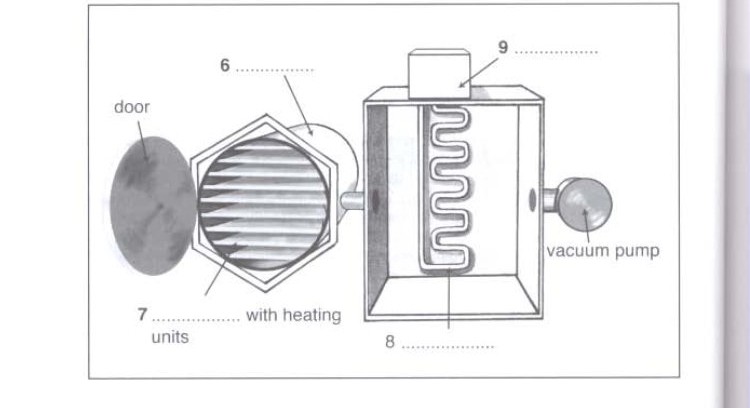
This is the principle on which a freeze-drying machine is based. The material to be preserved is placed in a freeze-drying chamber which is connected to a freezing coil and refrigerator compressor. When the chamber is sealed the compressor lowers the temperature inside it. The material is frozen solid, which separates the water from everything around it on a molecular level, even though the water is still present. Next, a vacuum pump forces air out of the chamber, lowering the atmospheric pressure below to 0.06 ATM. The heating units apply a small amount of heat to the shelves in the chamber, causing the ice to change phase. Since the pressure in the chamber is so low, the ice turns directly into water vapour, which leaves the freeze-drying chamber, and flows past the freezing coil. The water vapour condenses onto the freezing coil in the form of solid ice, in the same way that water condenses as frost on a cold day.
The process continues for many hours (even days) while the material gradually dries out. This time is necessary to avoid overheating, which might affect the structure of the material. Once it has dried sufficiently, it is sealed in a moisture-free package. As long as the package is secure, the material can sit on a shelf for years and years without degrading, until it is restored to its original form with a little hot water. If everything works correctly, the material will go through the entire process almost completely unscathed.
In fact, freeze-drying, as a general concept, is not new but has been around for centuries. The ancient Incas of Peru used mountain peaks along the Andes as natural food preservers. The extremely cold temperatures and low pressure at those high altitudes prevented food from spoiling in the same basic way as a modern freeze-drying machine and a freezer.
Questions
Questions 1–5 Note Completion
Complete the notes below.
Choose NO MORE THAN THREE WORDS from the passage for each answer.
Uses of freeze-drying:
• food preservation
• easy 1 of food items
• long-term storage of 2 and biological samples
• preservation of precious 3
Freeze-drying
• is based on process of 4
• is more efficient than 5
Questions 6–9 Diagram Labeling
Label the diagram below.
Choose NO MORE THAN TWO WORDS from the passage for each answer.
Questions 10–13 Summary Completion
Complete the summary below.
Choose NO MORE THAN THREE WORDS AND/OR A NUMBER from the passage for each answer.
Freeze-drying prevents food from going bad by stopping the activity of microorganisms or 10. Its advantages are that the food tastes and feels the same as the original because both the 11 and are preserved. The process is carried out slowly in order to ensure that 12 does not take place. The people of one ancient mountain civilisation were able to use this method of food preservation because the conditions needed were present at 13.
Answers & Explanations Summary
| # | Answer | Evidence | Explanation |
|---|---|---|---|
| Q1 | transportation | Removing this makes the food much lighter and therefore makes transportation less difficult | Excerpt/Passage Explanation: The passage says that taking water out of food makes it weigh much less. Because it is lighter, it is easier to move (transport) it. Answer Explanation: The answer, 'transportation,' means moving things from one place to another. For freeze-dried food, it's about how easy it is to carry or send it. Reason For Correctness: The correct answer is 'transportation' because the passage explains that taking water out of food makes it much lighter. This significant reduction in weight then makes it less difficult to move the food around. The passage explicitly states that 'transportation' becomes 'less difficult' as a direct result of freeze-drying. |
| Q2 | pharmaceuticals | The process is also used to preserve other sorts of material, such as pharmaceuticals. Chemists can greatly extend pharmaceutical shelf life by freeze-drying the material and storing it in a container free of oxygen and water. Similarly, research scientists may use freeze-drying to preserve biological samples for long periods of time | Excerpt/Passage Explanation: The passage says that freeze-drying is used for things other than food, like medicines (pharmaceuticals). Scientists can make medicines last much longer by freeze-drying them. Also, scientists use this method to keep samples from living things (biological samples) safe for a very long time. Answer Explanation: The answer 'pharmaceuticals' means medicines or drugs. So, freeze-drying helps keep medicines good for a long time. Reason For Correctness: The correct answer is 'pharmaceuticals' because the passage states that freeze-drying is used to 'preserve other sorts of material, such as pharmaceuticals' and to 'greatly extend pharmaceutical shelf life'. This directly answers the part of the question about long-term storage of items alongside biological samples. |
| Q3 | manuscripts | Even valuable manuscripts that had been water damaged have been saved by using this process | Excerpt/Passage Explanation: The passage says that freeze-drying has helped to save 'valuable manuscripts' that were hurt by water. This means old and important written documents, which are 'precious', can be fixed using this method. Answer Explanation: The answer 'manuscripts' means old books or documents written by hand, which are often very important or valuable. Reason For Correctness: The correct answer is 'manuscripts' because the passage explains that freeze-drying can save 'valuable manuscripts'. The word 'valuable' means something is 'precious' or worth a lot, which matches what the question is looking for in terms of preservation of precious items. The text talks about different things freeze-drying can preserve, and valuable manuscripts are specifically mentioned alongside pharmaceuticals and biological samples. |
| Q4 | sublimation | This is possible because in freeze-drying, solid water - ice - is converted directly into water vapour, missing out the liquid phase entirely. This is called 'sublimation', the shift from a solid directly into a gas This is the principle on which a freeze-drying machine is based |
Excerpt/Passage Explanation: The passage explains that freeze-drying works because ice turns straight into a gas, skipping the liquid stage. This process is named 'sublimation'. The passage then says that this 'sublimation' is the main idea behind how a freeze-drying machine works. Answer Explanation: The answer 'sublimation' refers to a special way water changes form, from solid ice directly into a gas, without becoming liquid water first. Reason For Correctness: The correct answer is 'sublimation' because the passage clearly states that freeze-drying works by this process. It explains that in freeze-drying, the ice (solid water) inside the food becomes water vapour (a gas) without ever turning into liquid water. This special change is called 'sublimation', which is the basic idea behind how the freeze-drying machine operates. The key information is found when the passage describes how water changes phase in freeze-drying. |
| Q5 | simple drying techniques / simple drying | Freeze-drying is different from simple drying because it is able to remove almost all the water from materials, whereas simple drying techniques can only remove 90-95% | Excerpt/Passage Explanation: The passage says that freeze-drying is not like regular drying. It removes almost all the water from things, but regular drying methods can only remove about 90 to 95 percent of the water. Answer Explanation: The answer means that freeze-drying works better than simply drying things using basic methods. Reason For Correctness: The correct answer is "simple drying (techniques)" because the passage clearly states that freeze-drying performs better in removing water compared to these other methods. The text explains that freeze-drying is "different from simple drying" and elaborates that it can "remove almost all the water from materials," which is a higher amount than the "90-95%" that "simple drying techniques" can achieve. This greater water removal makes freeze-drying more efficient in preserving materials and stopping spoilage. |
| Q6 | freeze-drying chamber / chamber | The material to be preserved is placed in a freeze-drying chamber which is connected to a freezing coil and refrigerator compressor | Excerpt/Passage Explanation: The passage says that the item you want to keep fresh, like food, goes into a 'freeze-drying chamber'. This means the chamber is the part of the machine where the item is put to start the special drying process. Answer Explanation: The answer 'chamber' means a special room or space where something is put. Reason For Correctness: The correct answer is 'chamber' because the passage explains how a freeze-drying machine works. It states that the 'material to be preserved' (the food or other item) is placed into a specific part of the machine. This part is identified as the 'freeze-drying chamber', meaning it's the main space where the freeze-drying process begins for the material. |
| Q7 | shelves | The heating units apply a small amount of heat to the shelves in the chamber, causing the ice to change phase | Excerpt/Passage Explanation: The passage says that parts that make things warm put a little bit of heat on the 'shelves' inside the machine. This makes the ice there turn into gas. Answer Explanation: The answer 'shelves' means flat surfaces inside the freeze-drying machine where things are put. Reason For Correctness: The correct answer is 'shelves' because the passage describes how a freeze-drying machine works. It explains that after the material is frozen, special heaters put a little bit of warmth onto the 'shelves' inside the chamber. This heat helps the ice turn into vapor, which is a key part of how the machine dries the food or other items. |
| Q8 | freezing coil | The material to be preserved is placed in a freeze-drying chamber which is connected to a freezing coil and refrigerator compressor The water vapour condenses onto the freezing coil in the form of solid ice, in the same way that water condenses as frost on a cold day |
Excerpt/Passage Explanation: The passage explains that the item we want to dry is put into a special box called a 'freeze-drying chamber'. This box is linked to a 'freezing coil' and another part called a 'refrigerator compressor'. Later, when water turns into a gas and leaves the drying item, it then sticks to the 'freezing coil' and becomes solid ice again. This helps remove the water from the food. Answer Explanation: The answer 'freezing coil' names a part inside the freeze-drying machine. Reason For Correctness: The correct answer is 'freezing coil' because the passage describes how a freeze-drying machine works. It mentions that the material is put into a chamber, which is connected to both a 'freezing coil' and a refrigerator compressor. Later, the text explains that water vapor, after leaving the material, 'condenses onto the freezing coil' as ice. This shows that the 'freezing coil' is a key part of the machine where the water vapor collects and turns back into solid ice. |
| Q9 | refrigerator compressor / compressor | The material to be preserved is placed in a freeze-drying chamber which is connected to a freezing coil and refrigerator compressor. When the chamber is sealed the compressor lowers the temperature inside it | Excerpt/Passage Explanation: The passage says that the part of the machine where food is placed connects to a 'refrigerator compressor'. It also says that this 'compressor lowers the temperature', meaning it makes the inside of the machine colder. Answer Explanation: The answer, 'compressor', is a machine part that helps make things cold in the freeze-drying process. Reason For Correctness: The correct answer is 'compressor' because the passage explains how a freeze-drying machine works. It specifically mentions that the freeze-drying chamber is connected to a 'refrigerator compressor', and that this 'compressor lowers the temperature inside' the chamber. This action of lowering the temperature is crucial for the material to freeze solid, which is the first step in the freeze-drying process. |
| Q10 | enzymes | Similarly, the enzymes which occur naturally in food cannot cause ripening without water, so removing water from food will also stop the ripening process | Excerpt/Passage Explanation: The passage says that 'enzymes' are natural parts of food. These enzymes need water to cause the food to ripen. So, when the water is taken away from the food, these enzymes cannot make the food ripen, which helps keep the food fresh and stops it from going bad. Answer Explanation: The answer is 'enzymes'. Enzymes are like tiny things in food that can make it change or go bad, similar to how small living things (microorganisms) do. Reason For Correctness: The correct answer is 'enzymes' because the passage explains how removing water from food prevents it from 'spoiling'. It states that 'microorganisms such as bacteria' cannot survive without water, and also that 'enzymes which occur naturally in food' cannot cause ripening without water. Since the summary already mentions 'microorganisms', 'enzymes' is the other key factor mentioned by the passage that freeze-drying prevents from acting to stop food from going bad. |
| Q11 | composition and structure | In addition, the composition and structure of the material is not significantly changed, so materials can be revitalised without compromising the quality of the original | Excerpt/Passage Explanation: The passage says that with freeze-drying, what the food is made of (its 'composition') and its form or texture (its 'structure') do not change much. This means that when you add water back, the food will be like it was before, keeping its 'original' good feeling and taste (its 'quality'). Answer Explanation: The answer 'composition and structure' means how the food is put together (what it's made of) and its shape or arrangement, like its texture. These two things stay almost the same after freeze-drying. Reason For Correctness: The correct answer is 'composition and structure' because the passage explains that freeze-drying is different from other drying methods. It makes sure that the food's 'composition' (what it's made of) and 'structure' (its form or texture) are not really changed. This is why the food can be brought back to life and still be like the 'original' quality, meaning it will taste and feel the same. The passage says this special quality of freeze-drying helps keep the food's original characteristics. |
| Q12 | overheating | The process continues for many hours (even days) while the material gradually dries out. This time is necessary to avoid overheating, which might affect the structure of the material | Excerpt/Passage Explanation: The passage says the freeze-drying takes a long time, 'many hours (even days)'. This long time is needed to 'avoid overheating' or getting too hot. Getting too hot would 'affect the structure' of the material, meaning it would be damaged. Answer Explanation: The answer, 'overheating,' means getting too hot. Reason For Correctness: The correct answer is 'overheating' because the passage explains that the freeze-drying process takes a long time, 'many hours (even days),' specifically 'to avoid overheating'. If the material gets too hot, it could 'affect the structure' of the food, meaning it wouldn't be as good. So, the process is done slowly to prevent the food from getting too hot and being damaged. |
| Q13 | high altitudes | The ancient Incas of Peru used mountain peaks along the Andes as natural food preservers. The extremely cold temperatures and low pressure at those high altitudes prevented food from spoiling in the same basic way as a modern freeze-drying machine and a freezer | Excerpt/Passage Explanation: The passage says that the old Incas from Peru used tall mountains in the Andes to keep food fresh. It explains that the very cold weather and low air pressure in those 'high altitudes' stopped food from going bad, just like a machine that freeze-dries food today. Answer Explanation: The answer is "high altitudes". This means tall places, like the tops of mountains. Reason For Correctness: The correct answer is "high altitudes" because the passage explains that the ancient Incas used mountain peaks to preserve food. These 'high altitudes' provided the natural conditions—extremely cold temperatures and low pressure—that are necessary for freeze-drying to occur, thereby preventing food from spoiling. The passage clearly links the success of the Incas' food preservation to these natural conditions found at such great heights. |