
Mrs. Carlill And The Carbolic Smoke Ball - IELTS Reading Answers & Explanations
From IELTS Recent Actual Test 1 Academic Reading Test 6 · Part 2 · Questions 14–26
Reading Passage
You should spend about 20 minutes on Questions 14-26 which are based on Reading Passage 2 below.
Mrs. Carlill and the Carbolic Smoke Ball
On 14 January 1892, Queen Victoria's grandson Prince Albert Victor, second in line to the British throne, died from flu. He had succumbed to the third and most lethal wave of the Russian flu pandemic sweeping the world. The nation was shocked. The people mourned. Albert was relegated to a footnote in history.
Three days later, London housewife Louisa Carlill went down with flu. She was shocked. For two months, she had inhaled thrice daily from a carbolic smoke ball, a preventive measure guaranteed to fend off flu – if you believed the advert. Which she did. And why shouldn't she when the Carbolic Smoke Ball Company had promised to cough up £100 for any customer who fell ill? Unlike Albert, Louisa recovered, claimed her £100 and set in train events that would win her lasting fame.
It started in the spring of 1889. The first reports of a flu epidemic came from Russia. By the end of the year, the world was in the grip of the first truly global flu pandemic. The disease came in waves, once a year for the next four years, and each worse than the last.
Whole cities came to a standstill. London was especially hard-hit. As the flu reached each annual peak, normal life stopped. The postal service ground to a halt, trains stopped running, banks closed. Even courts stopped sitting for lack of judges. At the height of the third wave in 1892, 200 people were buried every day at just one London cemetery. This flu was far more lethal than previous epidemics, and those who recovered were left weak, depressed, and often unfit for work. It was a picture repeated across the continent.
Accurate figures for the number of the sick and dead were few and far between but Paris, Berlin and Vienna all reported a huge upsurge in deaths. The newspapers took an intense interest in the disease, not just because of the scale of it but because of who it attacked. Most epidemics carried off the poor and weak, the old and frail. This flu was cutting as great a swathe through the upper classes, dealing death to the rich and famous, and the young and fit.
The newspaper-reading public was fed a daily diet of celebrity victims. The flu had worked its way through the Russian imperial family and invaded the royal palaces of Europe. It carried off the Dowager Empress of Germany and the second son of the king of Italy, as well as England's future king. Aristocrats and politicians, poets and opera singers, bishops and cardinals – none escaped the attentions of the Russian flu.
The public grew increasingly fearful. The press might have been overdoing the doom and gloom, but their hysterical coverage had exposed one terrible fact. The medical profession had no answer to the disease. This flu, which might not even have begun in Russia, was a mystery. What caused it and how did it spread? No one could agree on anything.
By now, the theory that micro-organisms caused disease was gaining ground, but no one had identified an organism responsible for flu (and wouldn't until 1933). In the absence of a germ, many clung to the old idea of bad airs, or miasmas, possibly stirred by some great physical force – earthquakes, perhaps, or electrical phenomena in the upper atmosphere, even a passing comet.
Doctors advised people to eat well avoiding "unnecessary assemblies", and if they were really worried, to stuff cotton wool up their nostrils. If they fell ill, they should rest, keep warm and eat a nourishing diet of "milk, eggs and farinaceous puddings". Alcohol figured prominently among the prescriptions: one eminent English doctor suggested champagne, although he conceded "brandy in considerable quantities has sometimes been given with manifest advantages". French doctors prescribed warm alcoholic drinks, arguing that they never saw an alcoholic with flu. Their prescription had immediate results: over a three-day period, 1,200 of the 1,500 drunks picked up on the streets of Paris claimed they were following doctor's orders.
Some doctors gave drugs to ease symptoms – quinine for fever, salicin for headache, heroin for an "incessant cough". But nothing in the pharmacy remotely resembled a cure. Not surprisingly, people looked elsewhere for help. Hoping to cash in while the pandemic lasted, purveyors of patent medicines competed for the public's custom with ever more outrageous advertisements. One of the most successful was the Carbolic Smoke Ball Company.
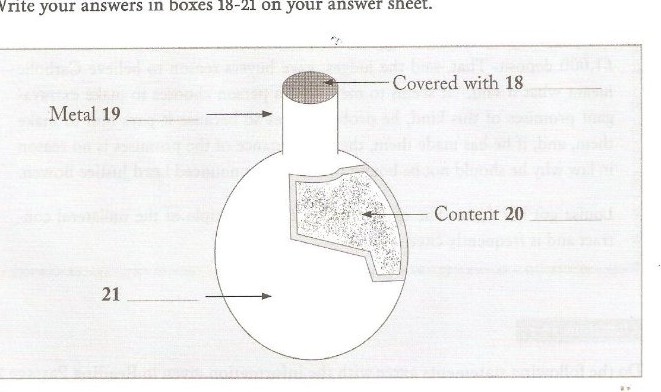
The carbolic smoke ball was a hollow rubber ball, 5 centimetres across, with a nozzle covered by gauze. Inside was a powder treated with carbolic acid, or phenol. The idea was to clutch it close to the nose and squeeze gently, inhaling deeply from the emerging cloud of pungent powder. This, the company claimed, would disinfect the mucous membranes, curing any condition related to "taking cold". In the summer of 1890, sales were steady at 300 smoke balls a month. In January 1891, the figure skyrocketed to 1,500.
Eager to exploit the public's mounting panic, the Carbolic Smoke Ball Company made increasingly extravagant claims. On 13 November 1892, its latest advert in the Pall Mall Gazette caught the eye of south London housewife Louisa Carlill. "Carbolic Smoke Ball," it declared, "will positively cure colds, coughs, asthma, bronchitis, hoarseness, influenza, croup, whooping cough ...". And the list went on. But it was the next part Mrs. Carlill found compelling. "A £100 reward will be paid by the Carbolic Smoke Ball Company to any person who contracts the increasing epidemic influenza, colds or any disease caused by taking cold, after having used the carbolic smoke ball according to the printed directions supplied with each ball. £1,000 is deposited with the Alliance bank, Regent Street, showing our sincerity in the matter."
Mrs. Carlill hurried off to buy a smoke ball, price 10 shillings. After carefully reading the instructions, she diligently dosed herself thrice daily until 17 January – when she fell ill.
On 20 January, Louisa's husband wrote to the Carbolic Smoke Ball Company. Unfortunately for them, Mr. Carlill happened to be a solicitor. His wife, he wrote, had seen their advert and bought a smoke ball on the strength of it. She had followed the instructions to the letter, and yet now – as their doctor could confirm – she had flu.
There was no reply. But £100 was not a sum to be sneezed at. Mr. Carlill persisted. The company resisted. Louisa recovered and sued. In June, Mr. Justice Hawkins found in Mrs. Carlill's favour. The company's main defence was that adverts were mere "puffery" and only an idiot would believe such extravagant claims. Judge Hawkins pointed out that adverts were not aimed at the wise and thoughtful, but at the credulous and weak. A vendor who made a promise "must not be surprised if occasionally he is held to his promise".
Carbolic appealed. In December, three lord justices considered the case. Carbolic's lawyers tried several lines of defence. But in the end, the case came down to a single matter: not whether the remedy was useless, or whether Carbolic had committed fraud, but whether its advert constituted a contract – which the company had broken. A contract required agreement between two parties, argued Carbolic's lawyers. What agreement had Mrs. Carlill made with them?
There were times, the judges decided, when a contract could be one-sided. The advert had made a very specific offer to purchasers: protection from flu or £100. By using the smoke ball as instructed, Mrs. Carlill had accepted that offer. The company might just have wriggled out of it if it hadn't added the bit about the £1,000 deposit. That, said the judges, gave buyers reason to believe Carbolic meant what it said. "It seems to me that if a person chooses to make extravagant promises of this kind, he probably does so because it pays him to make them, and, if he has made them, the extravagance of the promises is no reason in law why he should not be bound by them," pronounced Lord Justice Bowen.
Louisa got her £100. The case established the principle of the unilateral contract and is frequently cited today.
Questions
Questions 14–17 True / False / Not Given
Do the following statements agree with the information given in Reading Passage 2?
write
TRUE if the statement agrees with the information
FALSE if the statement contradicts the information
NOT GIVEN if there is no information on this
Questions 18–21 Diagram Labeling
Complete the diagram below.
Choose NO MORE THAN TWO WORDS from the passage for each answer.
Questions 22–25 Matching Features
Look at the following people and the list of statements on the next page.
Match each person with the correct statement.
Write the correct letter A-F.
A. Filed a complaint which was never responded to
B. Broke the contract made with Carbolic Smoke Ball Company
C. Initiated a legal case
D. Described the audience of advertisement
E. Claimed that most advertisements are fraudulent
F. Treated advertisement as a type of contract
Questions 26–26 One Choice
Choose the correct letter A, B, C or D.
Answers & Explanations Summary
| # | Answer | Evidence | Explanation |
|---|---|---|---|
| Q14 | NOT GIVEN | Whole cities came to a standstill. London was especially hard-hit | Excerpt/Passage Explanation: The passage says that because of the flu, life in whole cities stopped. It mentions that London was a city that was affected very badly. Answer Explanation: The answer means that the text does not tell us if the flu was worse in cities than in the countryside. Reason For Correctness: The correct answer is 'NOT GIVEN' because the passage says that cities like London, Paris, and Berlin were badly affected by the flu. However, it does not give any information about how the flu affected rural areas or the countryside. Since there is no information about rural areas, we cannot compare them to the cities to see which was affected more. |
| Q15 | FALSE | By now, the theory that micro-organisms caused disease was gaining ground, but no one had identified an organism responsible for flu (and wouldn't until 1933) | Excerpt/Passage Explanation: The passage says that during this time, the idea ('theory') that very small living things ('micro-organisms') were the cause of sickness ('disease') was becoming more accepted and popular ('gaining ground'). However, they still did not know which specific one caused the flu. Answer Explanation: The answer is FALSE. This means the statement 'people didn't know the link between micro-organisms and illnesses' is not true. Reason For Correctness: The correct answer is FALSE because the passage states that the idea of germs causing diseases was actually becoming more popular at the time. The question claims that people did not know about this link at all, which contradicts the passage. The passage uses the phrase 'gaining ground' to show that this knowledge was spreading and being accepted, even if not everyone believed it and even if the specific germ for the flu had not been found yet. |
| Q16 | TRUE | In the absence of a germ, many clung to the old idea of bad airs, or miasmas, possibly stirred by some great physical force – earthquakes, perhaps, or electrical phenomena in the upper atmosphere, even a passing comet | Excerpt/Passage Explanation: The passage says that because a specific germ causing the flu had not been found, many people held on to the old belief that the disease was caused by 'bad airs', also known as 'miasmas'. Answer Explanation: The answer is 'TRUE'. This means the statement that people once thought flu was caused by 'miasmas' is correct based on the text. Reason For Correctness: The correct answer is TRUE. The passage explains that during the flu pandemic, nobody knew what caused the flu. Because there was no known 'germ', many people believed in an 'old idea'. This old idea was that diseases were caused by 'bad airs, or miasmas'. The passage clearly links this old belief to the time of the flu pandemic, confirming the statement. |
| Q17 | NOT GIVEN | Some doctors gave drugs to ease symptoms – quinine for fever, salicin for headache, heroin for an "incessant cough". But nothing in the pharmacy remotely resembled a cure | Excerpt/Passage Explanation: The passage says that doctors gave some medicines to help people feel better from the flu. For example, they gave heroin for a cough that would not stop. But the passage also says that none of these medicines could actually fix the illness. It does not say if these medicines were bad or 'harmful' for people. Answer Explanation: The answer is NOT GIVEN. This means the passage does not tell us if the medicines for the flu had ingredients that were bad for people's health. Reason For Correctness: The correct answer is NOT GIVEN because the passage mentions some treatments and drugs used for flu symptoms, like quinine, salicin, and heroin. However, it never says whether these ingredients were 'harmful' or dangerous. The text only states that these drugs were not a 'cure' for the flu. There is no information in the passage to confirm or deny that the prescriptions often contained harmful substances. |
| Q18 | gauze | The carbolic smoke ball was a hollow rubber ball, 5 centimetres across, with a nozzle covered by gauze | Excerpt/Passage Explanation: The passage says that the carbolic smoke ball was a rubber ball. It had a small part for the smoke to come out, called a 'nozzle'. This nozzle had a piece of thin cloth, or 'gauze', on top of it. Answer Explanation: The answer is 'gauze', which is a type of thin, see-through cloth. Reason For Correctness: The correct answer is 'gauze' because the passage gives a detailed description of the carbolic smoke ball. It mentions that the ball had a small opening called a 'nozzle' which was 'covered by gauze'. The diagram question asks to identify this part. |
| Q19 | nozzle | The carbolic smoke ball was a hollow rubber ball, 5 centimetres across, with a nozzle covered by gauze | Excerpt/Passage Explanation: The passage says that the carbolic smoke ball was a rubber ball with a hole in it. This ball had a part called a 'nozzle' that was covered with a thin cloth material called gauze. Answer Explanation: The answer is 'nozzle', which is a small tube at the end of an object that substance comes out of. Reason For Correctness: The correct answer is 'nozzle' because the passage gives a detailed description of the carbolic smoke ball. It explains that the smoke ball was a rubber ball that had a specific part called a 'nozzle', which was covered by a thin cloth material. |
| Q20 | powder | Inside was a powder treated with carbolic acid, or phenol | Excerpt/Passage Explanation: The passage says that inside the smoke ball, there was a powder. This powder was mixed with a chemical called carbolic acid. This tells us that the substance inside the ball was a powder. Answer Explanation: The answer is "powder". This means a dry, fine substance was inside the carbolic smoke ball. Reason For Correctness: The correct answer is "powder" because the passage gives a detailed description of the carbolic smoke ball. It explains that the ball was hollow and what was put inside it. The text states that a "powder" treated with carbolic acid was inside the rubber ball. The diagram for this question likely shows the different parts of the smoke ball, and the question asks what was inside it. |
| Q21 | Rubber ball | The carbolic smoke ball was a hollow rubber ball, 5 centimetres across, with a nozzle covered by gauze | Excerpt/Passage Explanation: The passage says that the smoke ball was a ball made of rubber. The word 'hollow' means it was empty inside. It was 5 centimeters wide and had a small opening (a 'nozzle') covered with a type of thin cloth ('gauze'). Answer Explanation: The answer means that the smoke ball was a ball made from a material called rubber. Reason For Correctness: The correct answer is 'Rubber ball' because the passage gives a specific description of what the carbolic smoke ball looked like and what it was made of. It says the device was a 'hollow rubber ball', which directly provides the answer. |
| Q22 | C | Louisa recovered and sued | Excerpt/Passage Explanation: The passage says that after Louisa got better from her illness, she 'sued' the company. To sue someone means to start a legal case against them in a court of law. Answer Explanation: The answer means that Mrs. Carlill was the person who started a lawsuit, which is a legal case in court. Reason For Correctness: The correct answer is C because the passage explains that after Mrs. Carlill used the smoke ball and still got sick, her husband wrote to the company to ask for the promised £100 reward. When the company did not pay, Mrs. Carlill took them to court. The word 'sued' in the passage means she started a legal case. |
| Q23 | A | On 20 January, Louisa's husband wrote to the Carbolic Smoke Ball Company. Unfortunately for them, Mr. Carlill happened to be a solicitor. His wife, he wrote, had seen their advert and bought a smoke ball on the strength of it. She had followed the instructions to the letter, and yet now – as their doctor could confirm – she had flu There was no reply |
Excerpt/Passage Explanation: The passage first states that Mrs. Carlill's husband wrote a letter to the company. In the letter, he said his wife used the smoke ball correctly but still got the flu. The passage then says that the company did not answer his letter. Answer Explanation: The answer means that Mrs. Carlill's husband sent a letter to the company to complain, but the company did not write a letter back to him. Reason For Correctness: The correct answer is 'A' because the passage says that Mrs. Carlill's husband 'wrote to the Carbolic Smoke Ball Company' to complain that his wife got the flu. The passage then immediately states, 'There was no reply.' This directly matches the statement that he filed a complaint ('wrote to the company') which was 'never responded to' ('no reply'). |
| Q24 | D | Judge Hawkins pointed out that adverts were not aimed at the wise and thoughtful, but at the credulous and weak | Excerpt/Passage Explanation: The passage says that Judge Hawkins explained that advertisements ('adverts') are not for smart ('wise') and careful ('thoughtful') people. He said they are for people who believe things easily ('credulous') and are not strong ('weak'). Answer Explanation: The answer means that Judge Hawkins explained the kind of people that advertisements are made for. Reason For Correctness: The correct answer is correct because the passage states what Judge Hawkins said about advertisements. He explained that ads are not made for smart and careful people. Instead, they are made for people who are easily convinced and not very strong. This is a description of the 'audience' or the people who see the advertisements. |
| Q25 | F | "It seems to me that if a person chooses to make extravagant promises of this kind, he probably does so because it pays him to make them, and, if he has made them, the extravagance of the promises is no reason in law why he should not be bound by them," pronounced Lord Justice Bowen | Excerpt/Passage Explanation: The passage quotes Lord Justice Bowen. He said that if a company makes very big or amazing promises (extravagant promises) in its advertisements, it is because doing so helps them sell their product. He decided that if they make such promises, the law should make sure they keep them (be bound by them), no matter how big the promises are. Answer Explanation: The answer means that Lord Justice Bowen saw the company's advertisement as a serious, legal promise, which is a type of contract. Reason For Correctness: The correct answer is F because the passage describes the final court case where the main legal question was whether the advertisement was a contract. Lord Justice Bowen, one of the judges, made a final statement explaining his decision. He said that if a company makes "extravagant promises" in its advertisements, the law should require them to keep those promises, meaning they are "bound by them." This shows he treated the advertisement as a legally binding contract. |
| Q26 | B | The case established the principle of the unilateral contract and is frequently cited today | Excerpt/Passage Explanation: The passage says that Mrs. Carlill's case created a new legal rule about a special kind of promise called a 'unilateral contract,' which is a one-sided agreement. Because it created this important rule, it is often mentioned ('cited') in courts even now. Answer Explanation: The answer means that Mrs. Carlill's case was important because it proved that a 'one-sided contract' is a real and legal promise. Reason For Correctness: The correct answer is B because the last sentence of the passage clearly states the legal importance of the case. The word 'unilateral' means one-sided. The court decided that the company's advertisement was a one-sided offer, and Mrs. Carlill accepted it by using the product. This created a valid contract. The passage ends by saying this case 'established the principle of the unilateral contract' and is 'frequently cited today' for this specific reason. |