Our system will evaluate the answer based on this AI-generated description.
The image is a bar chart depicting estimated world illiteracy rates by region and gender for the last year. The vertical axis represents the percentage of illiteracy, with markers at 10% intervals up to 60%. The horizontal axis displays regions: Developed Countries, Latin America, Sub-Saharan Africa, Arab States, South Asia, and South East Asia. Each region has two bars side by side, representing male and female illiteracy percentages. Developed Countries shows around 1% male and less than 1% female illiteracy. Latin America indicates just under 10% for males and just over 10% for females. Sub-Saharan Africa displays around 30% male and over 40% female illiteracy. Arab States present just over 20% for males and approximately 40% for females. South Asia has roughly 30% male and just over 50% female illiteracy. South East Asia reveals around 10% male and below 20% female illiteracy.
Given the complexity of the image, the above description may not be entirely accurate.
Skyrocket your IELTS band score by 1-2 points in under a month with our premium plan!
Note: Both the topic and the answer were created by one of our users.
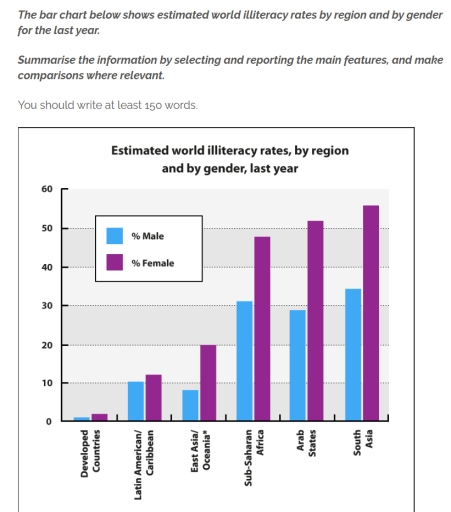
The graph illustrates last year’s estimates of what percentages of people were illiterate by region and by gender. Overall, it can be seen that women had higher illiteracy rates than men in every region. This trend was less significant in developed countries and Latin American /
Caribbean countries than other four regions.
More than 50% of women and over 30% of men in South Asia were illiterate. This region had the highest illiteracy rate both in men and women.
In contrast, developed countries had the lowest number of people who were illiterate, with less than 3% of the population in both sexes respectively.
Finally, it can be said that most women in Arab states and South Asia were illiterate. Illiteracy rates in these two regions exceeded 50%, meaning that more than half of the total population of women were not able to read.
Word Count: 143
