Our system will evaluate the answer based on this AI-generated description.
The image contains two bar graphs, one representing data from 1996 and the other from 2008, depicting the age when getting married by age group, divided by gender (Female/Male). In 1996, for age group 16-19, females had a percentage around 12%, while males were just above 2%; for 20-24, females were just above 8%, males around 6%, for 25-29, females were just under 6%, males just under 4%; for 30-34, females were around 4%, males just over 2%; for 35-39, females were just under 2%, males just above 0%; for 40-44, females were around 0%, males around 0%. In 2008, for age group 16-19, females had a percentage around 2%, while males were around 0%; for 20-24, females were around 6%, males around 4%; for 25-29, females were above 10%, males around 6%; for 30-34, females were under 14%, males around 8%; for 35-39, females were around 6%, males around 4%; for 40-44, females and males were around 2%.
Given the complexity of the image, the above description may not be entirely accurate.
Skyrocket your IELTS band score by 1-2 points in under a month with our premium plan!
Note: Both the topic and the answer were created by one of our users.
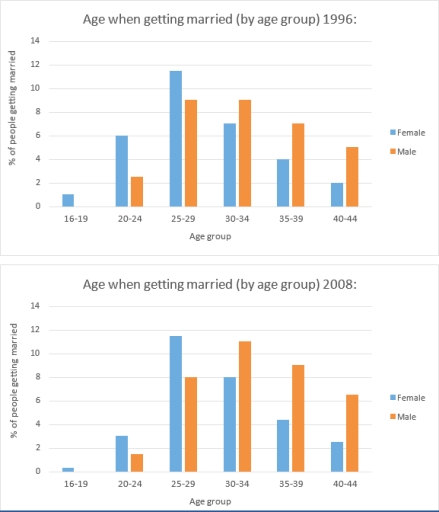
The graphs show the comparison of people broken into six main age groups in both genders getting married in two separated years: 1996 and 2008.
Overall, there was an upward trend in all groups with an exception for the ages of from 16-24 in female and 16-29 in male. Additionally, female in the ages of 25-29 had the highest figures in two given years while it switched from the ages of 30-34 to 35-39 in male.
Regarding the common age groups in female. Women in the ages of 25-29 stayed stable between 1996 and 2008, keeping the highest number at around 12 people. While the number of people in three groups at 16-19, and 30-34 show a slight increase from one,
Word Count: 121
