Our system will evaluate the answer based on this AI-generated description.
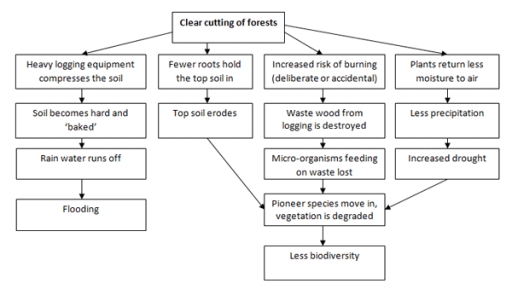
The image displays a flowchart diagram explaining the negative effects of clear-cutting forests, starting point Clear-cutting of forests lead to three initial consequences: Heavy logging equipment compresses the soil, Fewer roots hold the topsoil in, Increased risk of burning (deliberate or accidental). The first leads to Soil becomes hard and 'baked', resulting in Rainwater runs off which causes Flooding. The second leads to Topsoil erodes. The third leads to Waste wood from logging is destroyed, and Plants return less moisture to air. Destruction of waste wood means Micro-organisms feeding on waste lost which results in Pioneer species move in, vegetation is degraded leading to Less biodiversity. Plants returning less moisture results in Less precipitation which leads to Increased drought. No numerical data points/percentages provided.
Given the complexity of the image, the above description may not be entirely accurate.
Skyrocket your IELTS band score by 1-2 points in under a month with our premium plan!
Note: Both the topic and the answer were created by one of our users.
The following chart shows the results of deforestation.
One of the four main consequences of clear cutting process is heavy logging equipment, that compresses the soil. As a result, soil is tough, and ‘baked’. Eventually, flooding begins as rain water runs off.
Another result is smaller roots holding the cover soil in place; consequently, the top soil erodes. This leads to loss of vegetation.
Third consequence is the higher chance of deliberate or accidental burning. Micro organisms are lost, because waste wood from logging is demolished. Therefore, pioneer organisms start moving in, and less biodiversity appears.
Last consequence of logging is fewer moisture to air returned by plants. It triggers low levels of precipitation, and increased drought. As a result, it leads to degration of vegetation.
Word Count: 126
