
Riverside Industrial Village - IELTS Listening Answers & Explanations
From Cambridge IELTS 04 Academic Listening Test 1 · Part 2 · Questions 11–20
Audio
Questions
Questions 11–13 Sentence Completion
Complete the sentences below.
Write NO MORE THAN THREE WORDS AND/OR A NUMBER for each answer.
- Riverside Village was a good place to start an industry because it had water, raw materials and fuels such as 11 .
- The metal industry was established at Riverside Village by 12 who lived in the area.
- There were over 13 water-powered mills in the area in the eighteenth century.
Questions 14–20 Plan Labeling
Label the plan below.
Write NO MORE THAN TWO WORDS for each answer.
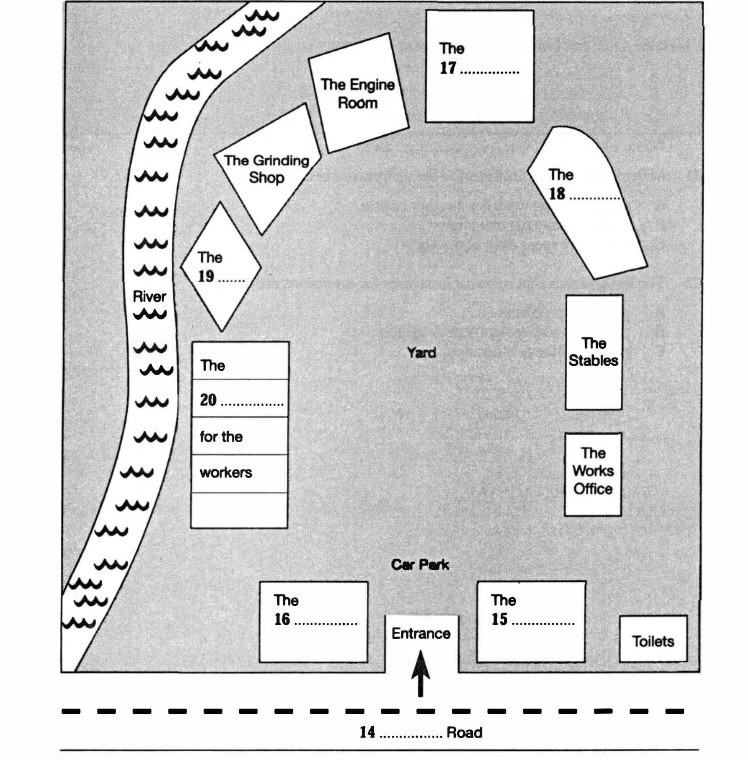
Answers & Explanations Summary
| # | Answer | Evidence | Explanation |
|---|---|---|---|
| Q11 | coal and firewood / coal firewood / coal,firewood | The water and the availability of raw materials in the area, like minerals and iron ore, and also the abundance of local fuels, like coal and firewood, all made this site suitable for industry from a very early time | Excerpt/Transcript Explanation: The transcript states that the village was a good location for manufacturing because it had water, raw materials (like iron), and plenty of local fuels (like coal and wood to burn). Answer Explanation: The answer identifies two types of materials used for fuel that were found in the local area. Reason For Correctness: The correct answer is 'coal and firewood' because the speaker lists these as specific examples of 'local fuels' that made the location ideal for industry in the past. To have an industry, you need energy, and the text mentions 'the abundance' (meaning a lot of) substances like coal and firewood nearby provided that power. |
| Q12 | local craftsmen | At that time, local craftsmen first built an iron forge just behind the village here, on the bend in the river | Excerpt/Transcript Explanation: The transcript states that long ago, workers from the nearby area built the first building used for processing iron near the river. Answer Explanation: The answer 'local craftsmen' refers to the skilled manual workers who lived in the nearby area. Reason For Correctness: The correct answer is 'local craftsmen' because the text says these people were the first to build an 'iron forge' (a place to work with metal) at this site. In the sentence, 'who lived in the area' matches the meaning of the word 'local' and 'established' matches the phrase 'first built'. |
| Q13 | 160 | By the seventeenth and eighteenth centuries the region's rivers supported more than a hundred and sixty water mills – and many of these continued to operate well into the nineteenth century | Excerpt/Transcript Explanation: The transcript explains that during the 1600s and 1700s, there were many water mills in the area—specifically, more than 160 of them. Answer Explanation: The answer 160 is the number of machines (mills) that used water for power in that area. Reason For Correctness: The correct answer is 160 because the speaker mentioned that during the seventeenth and eighteenth centuries, the rivers in that region had more than "a hundred and sixty water mills." In the question, the word "over" is a synonym for the phrase "more than," which confirms that 160 is the specific number the listener should identify. |
| Q14 | Woodside | And of course, running along the bottom is Woodside Road, got it | Excerpt/Transcript Explanation: The transcript explains that there is a road called Woodside Road situated at the lower edge of the area they are looking at. Answer Explanation: The answer Woodside is the name of the road located at the bottom of the map or plan. Reason For Correctness: The correct answer is Woodside because the speaker describes the layout of the site while giving the visitors a plan. He mentions that Woodside Road is the road found at the bottom of the map. In map descriptions, 'running along the bottom' is a common way to say where a street or boundary is located. |
| Q15 | Ticket Office | Now we're standing at the entrance, see it at the bottom, and immediately to our right is the Ticket Office | Excerpt/Transcript Explanation: The transcript explains that the group is currently at the entrance shown at the bottom of the layout, and right next to them on the right side is the building for tickets. Answer Explanation: The answer is the Ticket Office, which is the place where visitors buy their entry tickets. Reason For Correctness: The correct answer is identified by following the speaker's directions on the map. The speaker mentions they are at the entrance, which is located at the bottom of the plan. Then, the speaker points out that the building located right next to the entrance on the right-hand side is the Ticket Office. |
| Q16 | Gift Shop | In front of us is the car park, as you can see, and to the left, by the entry gate is the Gift Shop | Excerpt/Transcript Explanation: The transcript explains that if you look to the left side of the entrance area, near the gate where you come in, you will find the building called the Gift Shop. Answer Explanation: The answer is the Gift Shop, which is a store where visitors can buy souvenirs or books. Reason For Correctness: The correct answer is determined by the guide's description of the site layout. When standing at the entrance, the guide points out that the Gift Shop is located to the left, near the entry gate. This helps visitors find where they can buy the guide book. |
| Q17 | main Workshop / Workshop | The big, stone building at the top is the main Workshop | Excerpt/Transcript Explanation: The transcript says that the large building made of stone at the very top of the industrial area is the main Workshop. Answer Explanation: The answer is the name of a big stone building located at the top of the site layout. Reason For Correctness: The correct answer is the main Workshop because the guide clearly describes its location and physical characteristics. The speaker mentions it is 'big', made of 'stone', and situated at the 'top' of the map or plan. This building is significant because it contains the furnace where tools were made. |
| Q18 | Showroom | Now, in the top right-hand corner, that building with bigger windows is the Showroom, where samples of all the tools that were made through the ages are on display | Excerpt/Transcript Explanation: The transcript explains that the building located in the top right corner of the area, which has large windows, is called the Showroom. This is where the tools made in the past are shown to visitors. Answer Explanation: The answer is Showroom, which is the name of a specific building in the industrial village where people can look at tools. Reason For Correctness: The correct answer is Showroom because the speaker describes the layout of the buildings and says that the one in the top right-hand corner is the Showroom. This building is easy to identify because it has bigger windows and displays samples of tools. |
| Q19 | Café / Cafe | In the top left corner is the Grinding Shop, where the tools were sharpened and finished. And on one side of that you can see the Engine Room and on the other is the Café, which isn't an antique, you'll be pleased to know, though they do serve very nice old-fashioned teas | Excerpt/Transcript Explanation: The transcript explains that the Grinding Shop is located in the corner. It then explains that there are buildings on either side of the shop: the Engine Room is on one side, and the Café is on the other side. Answer Explanation: The answer is the Café, which is a place where visitors can buy food and drinks like tea. Reason For Correctness: The correct answer is determined by the guide's description of how the buildings are positioned around a central area. After mentioning the Grinding Shop in the top left corner, the speaker identifies two buildings right next to it: the Engine Room and the Café. |
| Q20 | cottages | The row of buildings you can see on the left are the cottages. These were built for the workers towards the end of the eighteenth century and they're still furnished from that period so you can get a good idea of ordinary people's living conditions | Excerpt/Transcript Explanation: The transcript identifies the group of buildings on the left as the cottages and explains that they were the homes of the workers. Answer Explanation: The answer cottages refers to the small houses where the people who worked at the site used to live. Reason For Correctness: The correct answer is cottages because the speaker points out a series of buildings located on the left side of the map. These buildings were homes for the museum's historical workers. Pay attention to the phrase 'row of buildings' and the direction 'on the left' to find this location on the plan. |
Transcript
Good afternoon everybody and welcome to Riverside Industrial Village. To start your visit I'm just going to give you a brief account of the history of the museum before letting you roam about on your own. I won't keep you long. OK?
Now, from where we're standing you've got a good view of the river over there. And it was because of this fast-flowing water that this site was a natural place for manufacturing works. The water and the availability of raw materials in the area, like minerals and iron ore, and also the abundance of local fuels, like coal and firewood, all made this site suitable for industry from a very early time.
Water was the main source of power for the early industries and some of the water wheels were first established in the twelfth century, would you believe? At that time, local craftsmen first built an iron forge just behind the village here, on the bend in the river. By the seventeenth and eighteenth centuries the region's rivers supported more than a hundred and sixty water mills – and many of these continued to operate well into the nineteenth century. But then the steam engine was invented and then the railways came and the centres of industry were able to move away from the rivers and the countryside and into the towns. So, industrial villages like this one became very rare.
So that's the history for you. If you'd like any more information, you can ask me some questions, or you can read further in our excellent guide book.
Now I'm going to give you a plan of the site and I'd just like to point out where everything is and then you can take a look at everything for yourself.
I've already pointed out the river, which is on the left. And of course, running along the bottom is Woodside Road, got it? OK. Now we're standing at the entrance, see it at the bottom, and immediately to our right is the Ticket Office. You won't need that because you've got your group booking, but just past it are the toilets – always good to know where they are. In front of us is the car park, as you can see, and to the left, by the entry gate is the Gift Shop. That's where you can get copies of the guide, like this one here.
Now, beyond the car park all the buildings are arranged in a half circle with a yard in the middle. The big, stone building at the top is the main Workshop. That's where the furnace is and where all the metal was smelted and the tools were cast, as you'll be able to see. Now, in the top right-hand corner, that building with bigger windows is the Showroom, where samples of all the tools that were made through the ages are on display. In the top left corner is the Grinding Shop, where the tools were sharpened and finished. And on one side of that you can see the Engine Room and on the other is the Café, which isn't an antique, you'll be pleased to know, though they do serve very nice old-fashioned teas.
The row of buildings you can see on the left are the cottages. These were built for the workers towards the end of the eighteenth century and they're still furnished from that period so you can get a good idea of ordinary people's living conditions. Across the yard from them, you can see the stables where the horses were kept for transporting the products. And the separate building in front of them is the Works Office and that still has some of the old accounts on display.
Right, if anyone wants a guided tour then I'm starting at the Engine Room. If you'd like to come along, this way please, ladies and gentlemen.