Our system will evaluate the answer based on this AI-generated description.
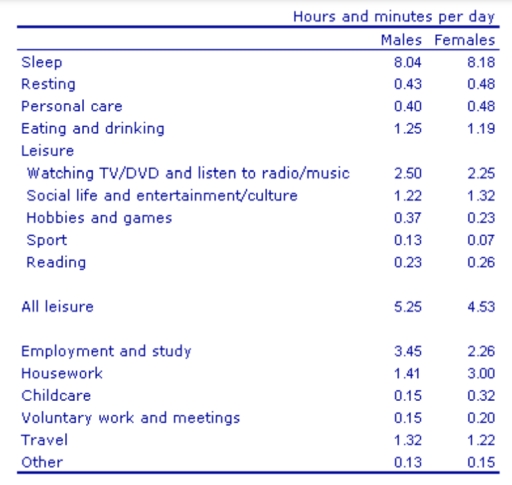
The image contains a table with two columns, one for males and one for females, listing hours and minutes per day spent on various activities: Sleep (Males: 8.04, Females: 8.18), Resting (Males: 0.43, Females: 0.48), Personal care (Males: 0.40, Females: 0.48), Eating and drinking (Males: 1.25, Females: 1.19), Leisure (Watching TV/DVD and listen to radio/music: Males 2.50, Females 2.25; Social life and entertainment/culture: Males 1.22, Females 1.32; Hobbies and games: Males 0.37, Females 0.33; Sport: Males 0.13, Females 0.07; Reading: Males 0.23, Females 0.26), All leisure (Males: 5.25, Females: 4.53), Employment and study (Males: 3.45, Females: 2.26), Housework (Males: 1.41, Females: 3.00), Childcare (Males: 0.15, Females: 0.32), Voluntary work and meetings (Males: 0.15, Females: 0.20), Travel (Males: 1.32, Females: 1.22), Other (Males: 0.13, Females: 0.15).
Given the complexity of the image, the above description may not be entirely accurate.
Skyrocket your IELTS band score by 1-2 points in under a month with our premium plan!
Note: Both the topic and the answer were created by one of our users.
A glance at the table provided reveal the distrebution of the average hours spent on daily activities by British men and women.
Notably, it can be expected that both genders spent majority of each day sleeping . On the contrary, sport owned the least amount of time among all the daily activities with less than 15 minutes.
Overall, the table indicates that women slept more than men on average. On the other hand, in general with 5 hours and 25 minutes compare to 4 hours and 53 minutes respectively , males dedicated more time to entertainments such as watching TV,sport and games than females.However reading and socializing was more popular among women than men.
Men tend to work and study more while housework and childcare consumed more hours every day for females than males. Suprisingly, there is not much of a difference between two genders when it comes to travel.
Word Count: 150
