Our system will evaluate the answer based on this AI-generated description.
The image shows a line chart with four lines representing different data trends plotted against years 1995, 2000, 2005, 2010, 2015, 2020 on the x-axis and percentages ranging from 0% to 45% on the y-axis; the topmost line starts just above 15% in 1995, increases steadily to just under 25% by 2005, follows a steeper incline to almost 35% by 2010, and continues the rise to surpass 40% by 2020; the second-highest line begins just below 15% in 1995, experiences a slight dip to above 10% by 2000, ascends to just over 20% by 2010 and finishes near 30% by 2020; the third line, starting near 5%, progresses modestly to approach 10% in 2010 and concludes near 15% by 2020; the lowest line also commences at approximately 5%, shows a gradual incline to 10% by 2010, and reaches above 10% by 2020; no specific data points are labeled or marked on any lines.
Given the complexity of the image, the above description may not be entirely accurate.
Skyrocket your IELTS band score by 1-2 points in under a month with our premium plan!
Note: Both the topic and the answer were created by one of our users.
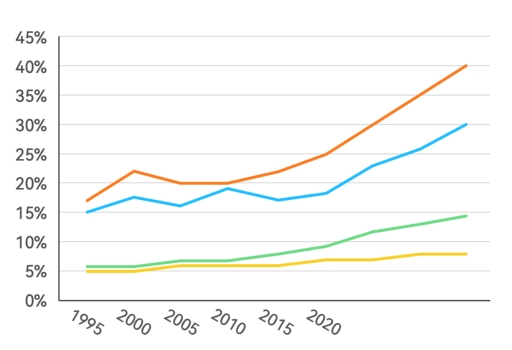
The line chart illustrates the percentage of Europeans from four different age groups who visited the gym at least once per month between 1995 and 2025.
Overall, gym attendance increased across all age groups over the 30-year period. The highest participation was consistently recorded among the youngest age group (18-24), while the oldest group (45 and over) showed the lowest but steady growth.
In 1995, around 17% of individuals aged 18-24 reported attending the gym monthly. This figure rose sharply, surpassing 20% by 2000, and continued to increase steadily to reach over 40% by 2025, marking the most dramatic growth among all groups. Similarly, the 25-34 age group began at roughly 15%, experienced a slight dip around 2005, but then followed a steady upward trajectory, ending at about 30% in 2025.
In contrast, the two older age groups demonstrated much lower participation. The 35-44 cohort started just above 5% in 1995 and saw a gradual rise to nearly 15% by 2025. Meanwhile, those aged 45 and over commenced at a similar level but experienced the slowest growth, finishing the period slightly above 10%.
Word Count: 183
