Our system will evaluate the answer based on this AI-generated description.
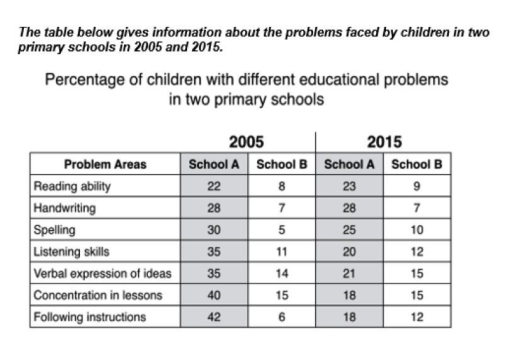
The image contains a table with data from 2005 and 2015 comparing the percentage of children with different educational problems in two primary schools, A and B. Problem areas listed include Reading ability, Handwriting, Spelling, Listening skills, Verbal expression of ideas, Concentration in lessons, and Following instructions. In 2005, School A percentages: Reading ability 22, Handwriting 28, Spelling 30, Listening skills 35, Verbal expression of ideas 35, Concentration in lessons 40, Following instructions 42. School B percentages: Reading ability 8, Handwriting 7, Spelling 5, Listening skills 11, Verbal expression of ideas 14, Concentration in lessons 15, Following instructions 6. In 2015, School A percentages: Reading ability 23, Handwriting 28, Spelling 25, Listening skills 20, Verbal expression of ideas 21, Concentration in lessons 18, Following instructions 18. School B percentages: Reading ability 9, Handwriting 7, Spelling 10, Listening skills 12, Verbal expression of ideas 15, Concentration in lessons 15, Following instructions 12.
Given the complexity of the image, the above description may not be entirely accurate.
Skyrocket your IELTS band score by 1-2 points in under a month with our premium plan!
Note: Both the topic and the answer were created by one of our users.
The given table depicts the difficulties found children in their education in two primary schools namely school A and school B in 2005 and 2015.The measure is represented in percentages.
Looking from an overall prospective, the majority of student faced difficult plight in academic A rather than academic B while the least problems found pupils in handwriting and spelling in school B in both years.
In the beginning, in 2005, around 22% of learner got obstacle in Reading ability in school A whilst just 8% in school B. However, handwriting and spelling mistakes created problem for sophomore it was a similar around 28% and 30%.whereas only 7% and 5% in school B. Moreover, listening skills and verbal expressions of ideas also big plights for trainees in school A (approximately 35% ).It showed an upward trend in school B(around 11% and 14%).Another two most noticeable problem were concentration in lessons and following the instruction for juveniles in both school A and B.
As for the table,In 2015 , school A children gained more difficulties in handwriting and spelling (Almost 28% and 25% )respectively.and in other problems it presented a fluctuating trend.In addition, in school B the highest plights faced Students in verbal expressions of idea and concentrations around 15% of them as compared to other problems.
Word Count: 215
