Our system will evaluate the answer based on this AI-generated description.
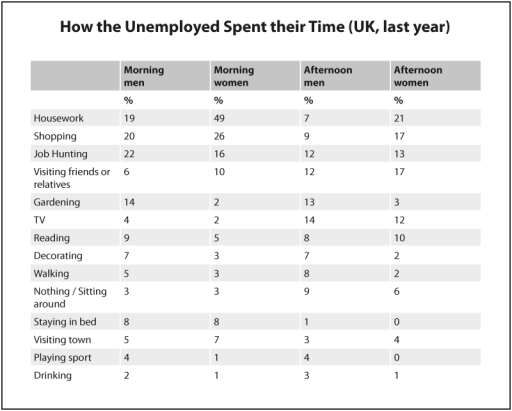
The image shows a chart of how unemployed individuals in the UK spent their time last year, divided into morning and afternoon activities for both men and women. Housework was the most common activity for women in the morning (49) and afternoon (21), while job hunting was the highest for men in the morning (22) and afternoon (12). Women also spent significant time visiting friends or relatives in the afternoon (17). Gardening was more common in the afternoon for both men (13) and women (3). Morning reading was slightly higher for men (9) than women (5), but the opposite was true in the afternoon with women at 10 and men at 8. Walking was more common in the afternoon for men (8) than women (2). Both men and women spent equal time staying in bed in the morning (8), but only men stayed in bed in the afternoon (1). Playing sports and drinking were the least common activities, with both being slightly higher in the afternoon for men (4).
Given the complexity of the image, the above description may not be entirely accurate.
Skyrocket your IELTS band score by 1-2 points in under a month with our premium plan!
Note: Both the topic and the answer were created by one of our users.
The table shows how men and women who were out of work last year spent their time. The information is broken down into parts of the day and fourteen different activities.
First of all, it is interesting to note that the majority of both men and women who are unemployed are engaged in productive activities in the morning with 61% of men and 91% of women either shopping, trying to secure employment or doing housework, with women being twice as likely to do the latter in the afternoon. However, figures for the afternoon show that the unemployed devote more time to leisure activities such as watching television, visiting friends or reading.
When looking at differences between genders it seems that men were more likely to be engaged with home improvement, gardening or active pursuits such as walking or taking part in sports. More sedentary activities such as staying in bed or sitting around were similar for both sexes. Twice the number of men than women spent their time drinking but this still only accounted for a very small proportion.
Overall, it appears that contrary to many stereotypical preconceptions of the unemployed both men and women do spend a proportion of each day on productive tasks with their being some interesting differences between genders.
Word Count: 213
