Our system will evaluate the answer based on this AI-generated description.
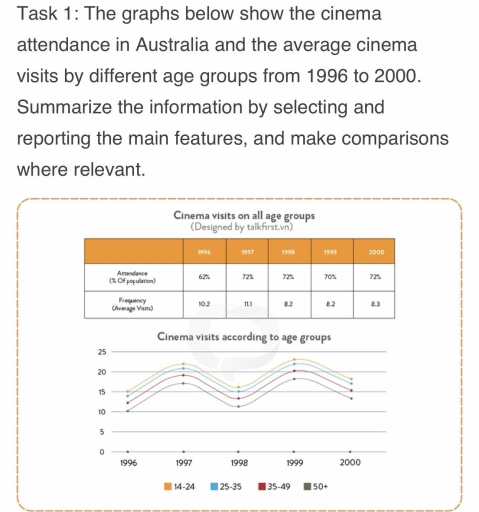
The image displays data on cinema attendance in Australia from 1996 to 2000: Attendance averaged as percentages of the population are 62% in 1996, 72% in 1997, 72% in 1998, 70% in 1999, and 72% in 2000; Frequency averaged as visits are 10.3 in 1996, 11.1 in 1997, 8.2 in 1998, 8.2 in 1999, and 8.3 in 2000; Cinema visits segmented by age groups from 1996-2000 where age 14-24 recorded approximately 19 visits in 1996, 23 visits in 1997, 15 visits in 1998, 18 visits in 1999, 13 visits in 2000; age 25-34 logged about 14 visits in 1996, 15 visits in 1997, 10 visits in 1998, 13 visits in 1999, 11 visits in 2000; age 35-49 noted close to 11 visits in 1996, 16 visits in 1997, 9 visits in 1998, 12 visits in 1999, 13 visits in 2000; age 50+ reported roughly 13 visits in 1996, 12 visits in 1997, 5 visits in 1998, 11 visits in 1999, 12 visits in 2000.
Given the complexity of the image, the above description may not be entirely accurate.
Skyrocket your IELTS band score by 1-2 points in under a month with our premium plan!
Note: Both the topic and the answer were created by one of our users.
The table denotes movie shows visited by Australians and the line illustrates different age groups that went to watch movies from year 1996 to 2000.
Overall, it is shown here that attendance remained consistent approximately. The teenager group visited was exclamated all over the age group.
At a glance, in 1966, attendance is 62 and for the next 4 years, it was roughly 72%. The frequency was maximum for the initial first 2 years. It was 102 and 112 for year 1998, 1999, and 2000. It was 8.2.
Moving on to further information, the teenager group went to cinema was 15 for 1996, which rose for the next year 20 in 1997. It slightly decreased for 15 in 1998. The same trend was seen for the next years. Adult age group and 35-36 allocated at 15, which remained the number seen with slightly decrease. Grey-haired people least preferred to watch movie at cinema.
Word Count: 153
